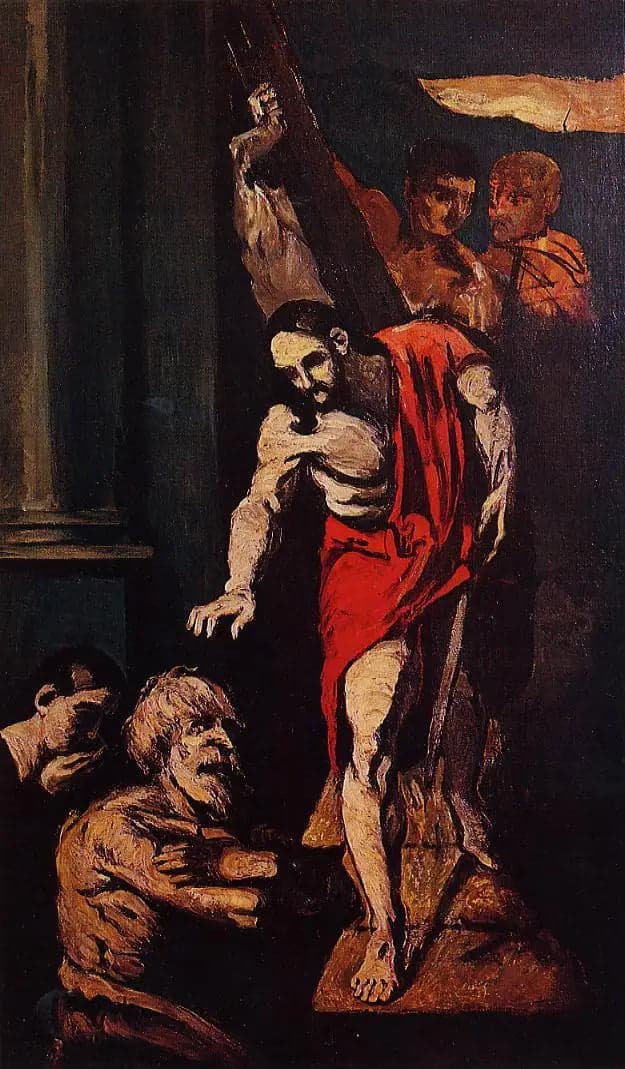
Christ in Limbo
- Original dimensions
- 100.5 x 168.5 cm
- Museum
- Orsay Museum
- Year
- 1869
Scene depicted
In this painting, Cézanne depicts an enigmatic scene, where Christ, surrounded by an ethereal light, stands at the gates of paradise. This captivating representation questions the human condition and evokes a profound sense of transcendence. The unique composition embodies a reflection on life after death, inviting each viewer to an inner contemplation.
Historical context
Created in 1869, in the charming city of Paris, The Christ in Limbo belongs to the artistic movement of post-impressionism . This painting is set in a time when artists, including Paul Cézanne , sought to reinvent light, form, and color. Currently exhibited at the Orsay Museum , this canvas, measuring 100.5 by 168.5 cm, will capture the attention and emotion of visitors.
Place in the artist's career
The painting The Christ in Limbo represents a significant turning point in the career of Paul Cézanne . This work illustrates a time when the painter refined his style. Compared to his youth period in The House of Russia , and to The Card Players in his maturity, this painting shows an evolution of his technique and an intensification of emotion.
Anecdote
“Every brushstroke is a testament to the soul,” Cézanne is said to have declared while contemplating his masterpiece. This pictorial work was inspired by a spring morning in his studio, where the soft light danced on his canvases. This fleeting moment gave birth to a painting imbued with emotion, revealing the captivating spirituality of the scene.