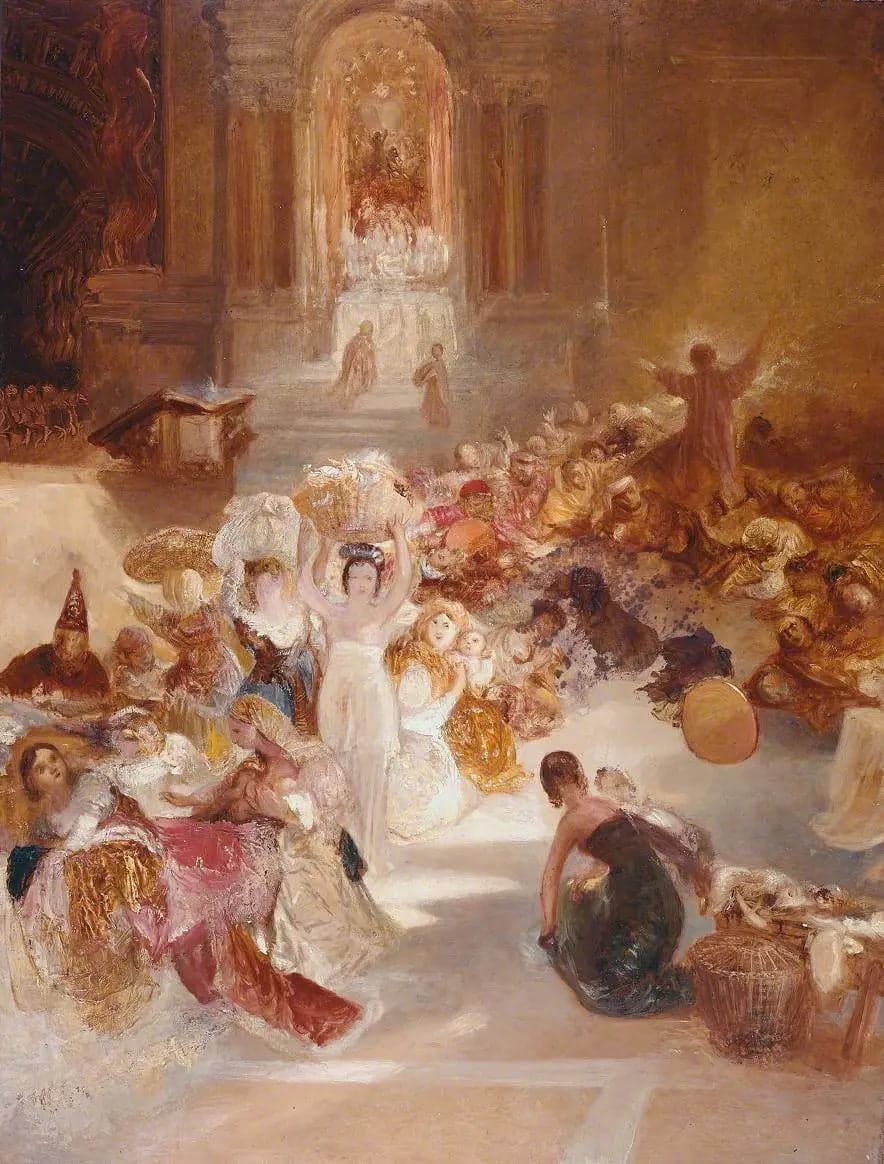
Christ Driving the Traders from the Temple
- Original dimensions
- 92.1 x 70.5 cm
- Museum
- Tate
- Year
- 1832
Scene depicted
In this painting , Turner immortalizes a biblical episode where Christ expels the merchants from the temple. With strength and determination, he restores order in a sacred place that has become a marketplace. The dynamic of the scene, both spiritual and tumultuous, is accentuated by the expressive gestures of the characters, making this pictorial work particularly captivating.
Historical context
Created in 1832 in London, this painting is part of the romantic period, an artistic movement that emphasizes the expression of emotions and the power of nature. It is in this vibrant context that Christ Driving the Traders from the Temple comes to life, capturing the tumult and spiritual fervor of its time. Now displayed at the Tate museum, this canvas reveals a rich cultural history and an intense dialogue between humanity and the divine.
Place in the artist's career
Christ Driving the Traders from the Temple stands as a turning point in Turner’s career, marking his rise to the pinnacle of the romantic movement. Far from being a mere technical aspect, this canvas resonates with the echoes of his other works, such as The Fighting Temeraire and Rain, Steam and Speed , where the artist explores the interaction between light and atmosphere, thus revealing his emotional and stylistic evolution.
Anecdote
“Light is my guide, and nature is my master.” This is a thought that may have crossed Turner’s mind while painting this powerful scene. Imagine a misty morning in London, where the first light of day illuminates a troubled face, as the artist passionately captures the palpable tension between the sacred and the profane, thus enhancing his masterpiece .