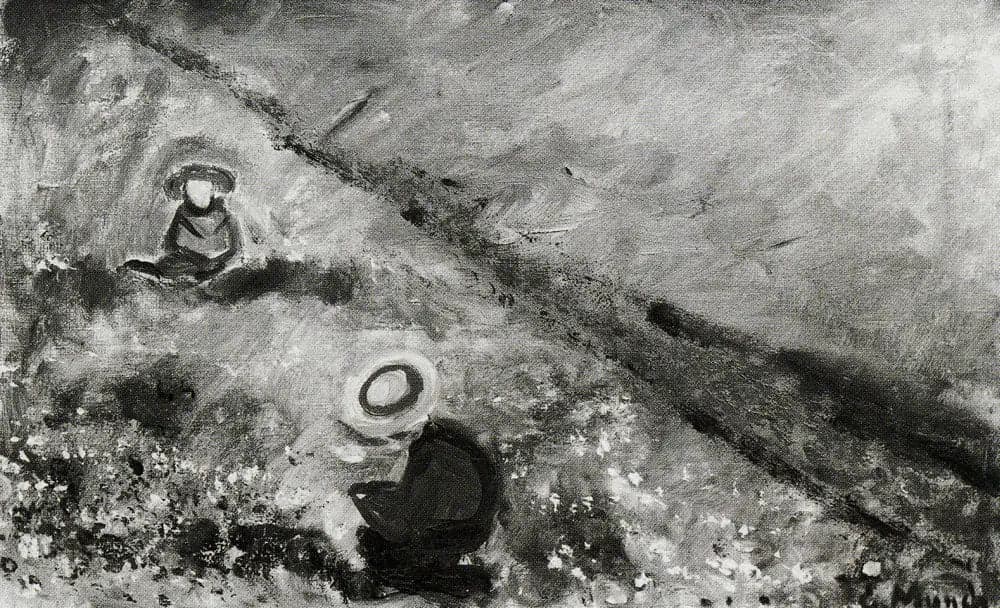
Children in a Flowering Meadow
- Original dimensions
- 46 x 28 cm
- Museum
- Not specified
- Year
- 1902
Scene depicted
In this pictorial work, Munch offers an intimate vision of childhood. The scene depicts children playing in a meadow bursting with colors, an invitation to savor the innocence of early ages. The carefree child figures vibrate to the rhythm of nature, capturing the pure essence of the joy of living.
Historical context
Created in 1902, in Oslo, Norway, this canvas emanates from Symbolism, an artistic movement that explores emotions and dreams. Children in a Flowering Meadow reflects the context of the time, where the artist was in search of a poetic representation of childhood. Currently, this painting is not exhibited in many museums, leaving its history to be discovered in private collections.
Place in the artist's career
Children in a Flowering Meadow represents a significant milestone in the career of Edvard Munch . This painting was created before his most famous works such as The Scream and The Madonna , reflecting a stylistic evolution towards a deeper and more emotional expression. It shows a Munch in full search of his own artistic language, oscillating between reality and symbolism.
Anecdote
“Childhood is a secret garden where dreams and laughter bloom.” This quote could perfectly summarize the inspiration of Edvard Munch when creating his masterpiece . Imagine a spring morning, with children's laughter resonating in a meadow dotted with colorful flowers. This light and joyful atmosphere undoubtedly nourished the essence of Children in a Flowering Meadow .