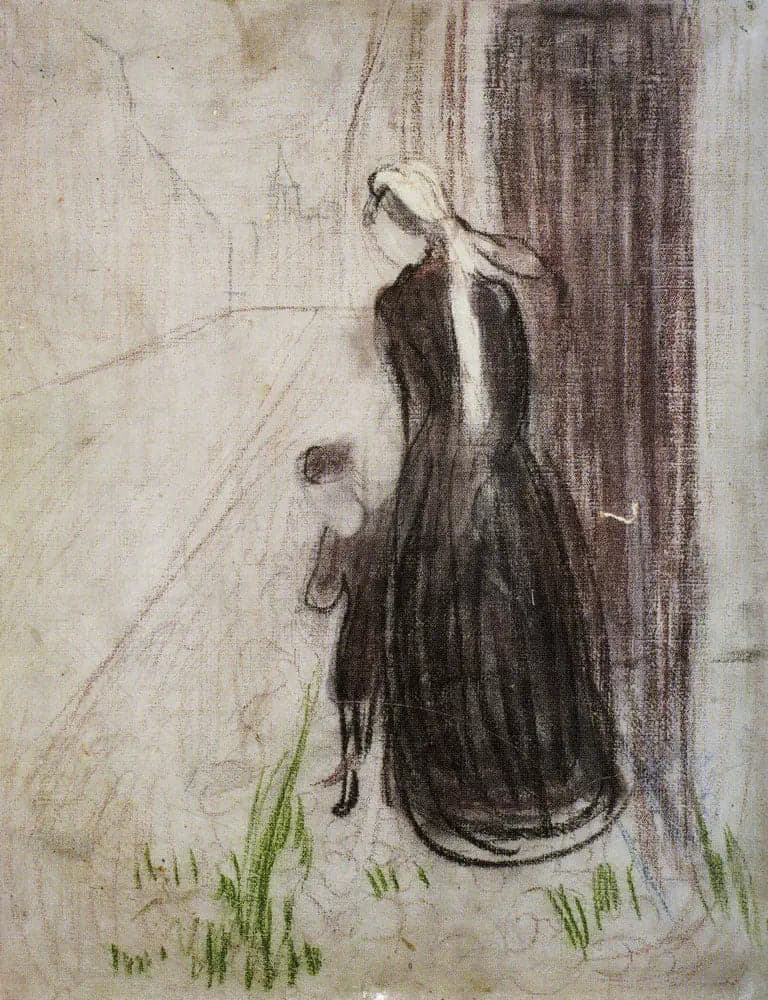
Childhood Memory
- Original dimensions
- 32.5 x 40.5 cm
- Museum
- Not specified
- Year
- 1892
Scene depicted
The composition of Childhood Memory represents a sweet panorama of shared moments, lost innocence, and simple joys. This painting, enveloped in gentle melancholy, manages to immortalize the tenderness of memories of a loved one, at a time when life seemed simpler and more peaceful. The blurred and delicate forms testify to the fleeting impressions we carry within us, tinged with nostalgia and love.
Historical context
Created in 1892, in the vibrant alleys of Oslo, this painting is part of the expressionist movement. Edvard Munch , famous for his exploration of the human psyche, offers us here a window into his inner world. The canvas is not currently displayed in a known museum, but remains a key piece in understanding his creative genius.
Place in the artist's career
Childhood Memory represents a pivotal moment in Edvard Munch 's career. Indeed, it falls within a period of inner questioning, between his iconic work "The Scream" and his innovative vision in "The Madonna." Here, the canvas reveals the fragile humanity of the artist, face to face with his emotions.
Anecdote
Edvard Munch once stated: “The painting is a silent confession of my memories.” In this light, each brushstroke of Childhood Memory evokes nostalgic moments stolen from time, like an ode to the peace of childhood. This moment of inspiration may well have been captured one spring morning, as a sweet scent of flowers floated in the air, bringing reminiscences of a bygone past.