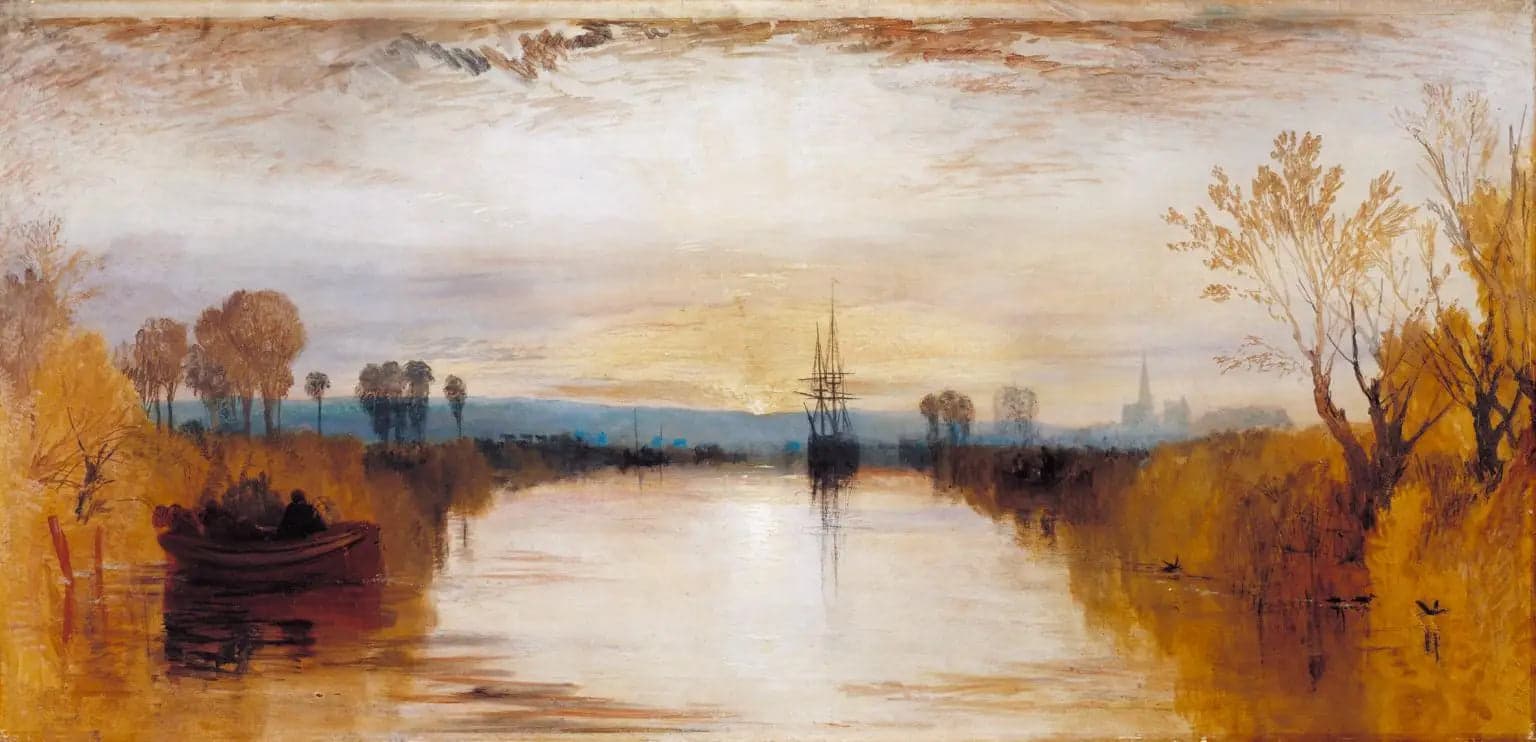
Chichester Canal
- Original dimensions
- 65.4 x 134.6 cm
- Museum
- Tate Britain
- Year
- 1828
Scene depicted
In this pictorial work , Turner deploys a masterful composition where the harmony between sky and water creates a peaceful atmosphere. The boats glide slowly on the canal, while the daylight reflects in shades of azure and gold, revealing the timeless charm of this picturesque place. This painting showcases the beauty of nature in southern England, while highlighting human interaction with its environment.
Historical context
Created in 1828, in Chichester, this iconic painting is part of the romantic movement of the 19th century. Through this painting , Turner explores the magic of British light and marks a turning point in his artistic journey. Currently, the painting is displayed at the Tate Britain in London, where it continues to fascinate art lovers with its impressive dimensions.
Place in the artist's career
The painting "Canal de Chichester" stands as an essential work in Turner's career, symbolizing his stylistic peak and mastery of light. Compared to other masterpieces, such as "The Fighting Temeraire" and "Snow Storm," it shows a remarkable technical evolution and an increased sensitivity to the relationship between man and nature.
Anecdote
Joseph Mallord William Turner once declared: "I do not paint what I see, but what I feel." Inspired by the shimmering reflections on the waters of the canal during a gentle spring morning, he managed to capture the essence of this fleeting moment, thus connecting his soul to the vibrant energy of the canvas .