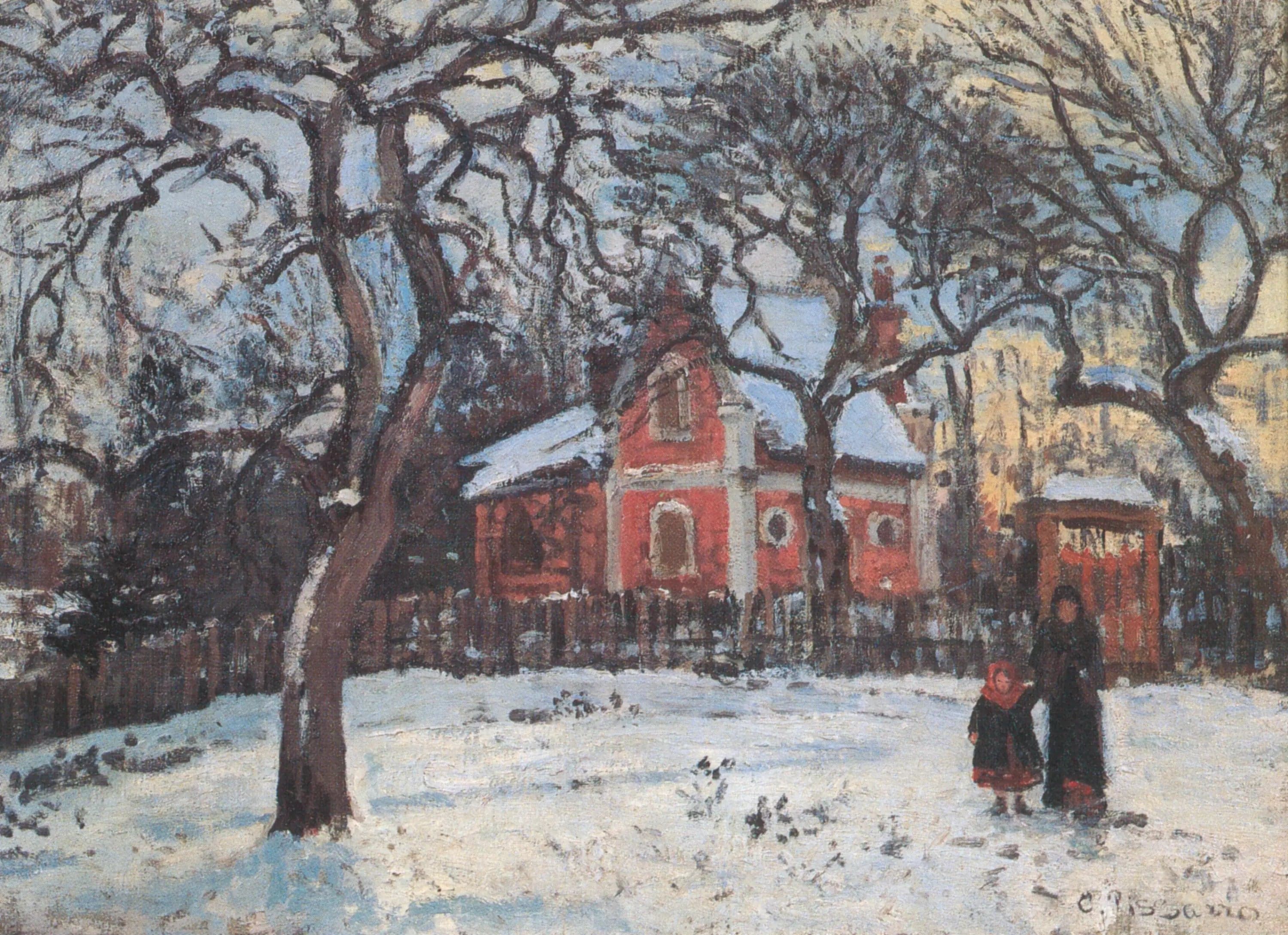
Chestnut Trees at Louveciennes
- Original dimensions
- 54 x 40 cm
- Museum
- Orsay Museum
- Year
- 1872
Scene depicted
In this composition, the canvas immerses us in a landscape imbued with serenity. The chestnut trees, with their thick foliage, stand proudly against a azure sky. The light dances on the leaves, like a gentle whisper of nature. This vision rests on peace, evoking the suspended moments that life offers us.
Historical context
Created in 1872, the painting "Chestnut Trees in Louveciennes" by Camille Pissarro is part of the Impressionist landscape. Louveciennes, a small town in France, becomes the privileged theater of an Art that captures the ephemeral. This canvas , exhibited at the Orsay Museum , reveals a timeless beauty in the measured format of 54 x 40 cm.
Place in the artist's career
The canvas "Chestnut Trees in Louveciennes" marks a crucial turning point in the career of Camille Pissarro , signifying an Impressionist maturity. Alongside works such as "Boulevard Montmartre, Spring" and "La Grenouillère," this painting testifies to the captivating evolution of his Art, where rural life and its nuances take on their full dimension.
Anecdote
Pissarro shared: "Nature is a melody to which one must learn to dance." On the way to Louveciennes, on a sunny morning, he found his inspiration in the majestic chestnut trees, defying the shadows of the past. This pictorial work then materialized his burning desire to capture the effervescence of light.