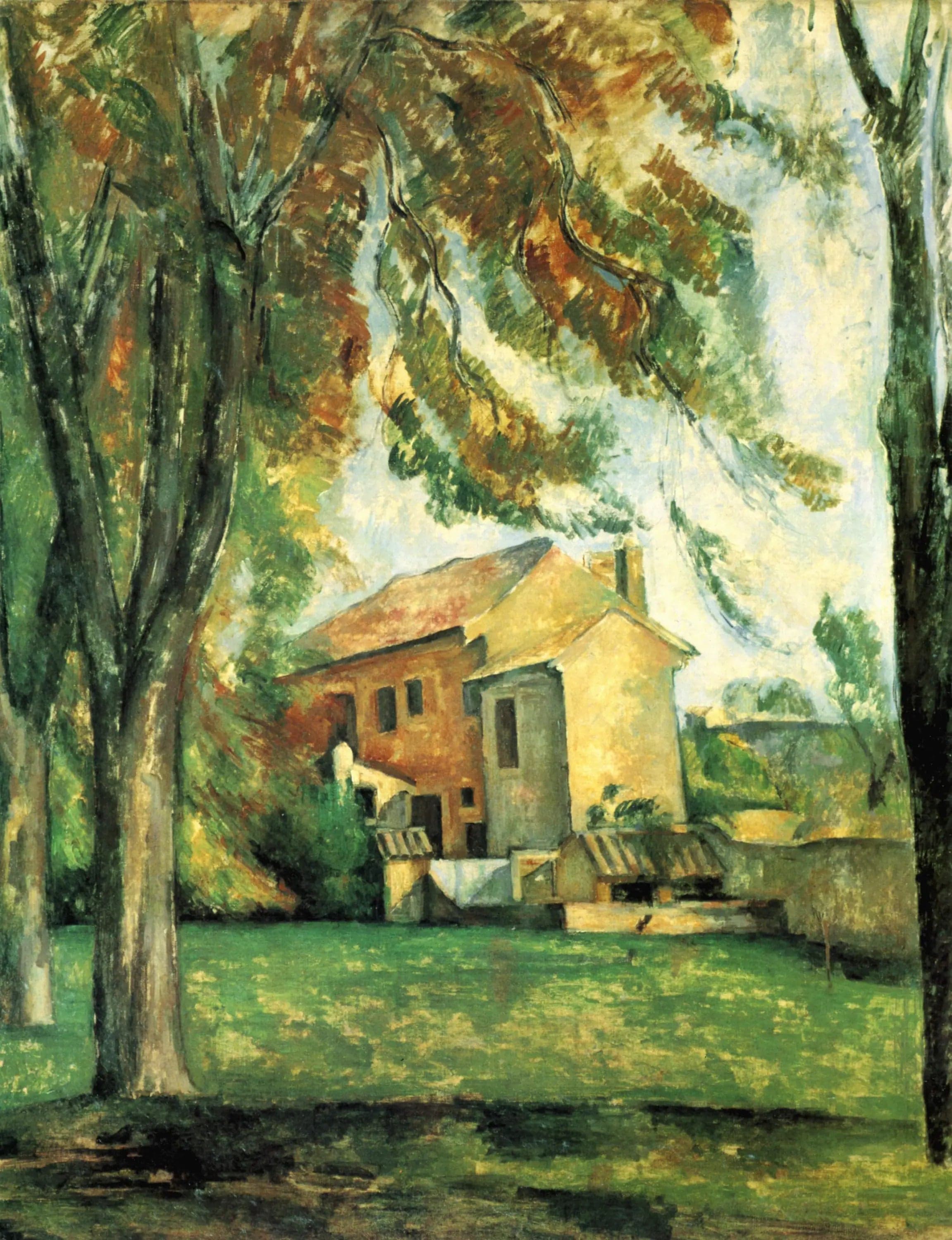
Chestnut Trees and Farm at Jas de Bouffan
- Original dimensions
- 81.3 x 65.5 cm
- Museum
- New York
- Year
- 1885
Scene depicted
In this pictorial work, Cézanne immortalizes the Provençal landscape, where majestic chestnut trees stand proudly, overlooking the Jas de Bouffan farm. The lush foliage and geometric shapes of the buildings reflect a deep respect for nature and its harmonious integration into daily life. Each brushstroke conveys the affection the artist has for his native region.
Historical context
Work : Chestnut Trees and the Jas de Bouffan |BRK| Artist: Paul Cézanne |BRK| Year: 1885 |BRK| Museum : New York |BRK| Dimensions: 81.3 x 65.5 cm |BRK|
Place in the artist's career
Chestnut Trees and the Jas de Bouffan Farm represents a significant turning point in Cézanne's career. Set at a time when he begins to assert his own artistic voice, this canvas parallels two other major paintings: The Montagne Sainte-Victoire and The Card Players, each exploring a unique facet of his stylistic evolution. Here, the synthesis of forms and shimmering light foreshadow the ingenuity that will make him famous.
Anecdote
“Painting is an idea that one must smell like a perfume,” said Cézanne, recalling the moment he stood before his chestnut trees, rocked by the softness of the morning breeze. That morning, as the sun played hide and seek with the clouds, magic happened and he decided to capture this ephemeral vision through his painting, transforming a simple scene of life into an eternal masterpiece.