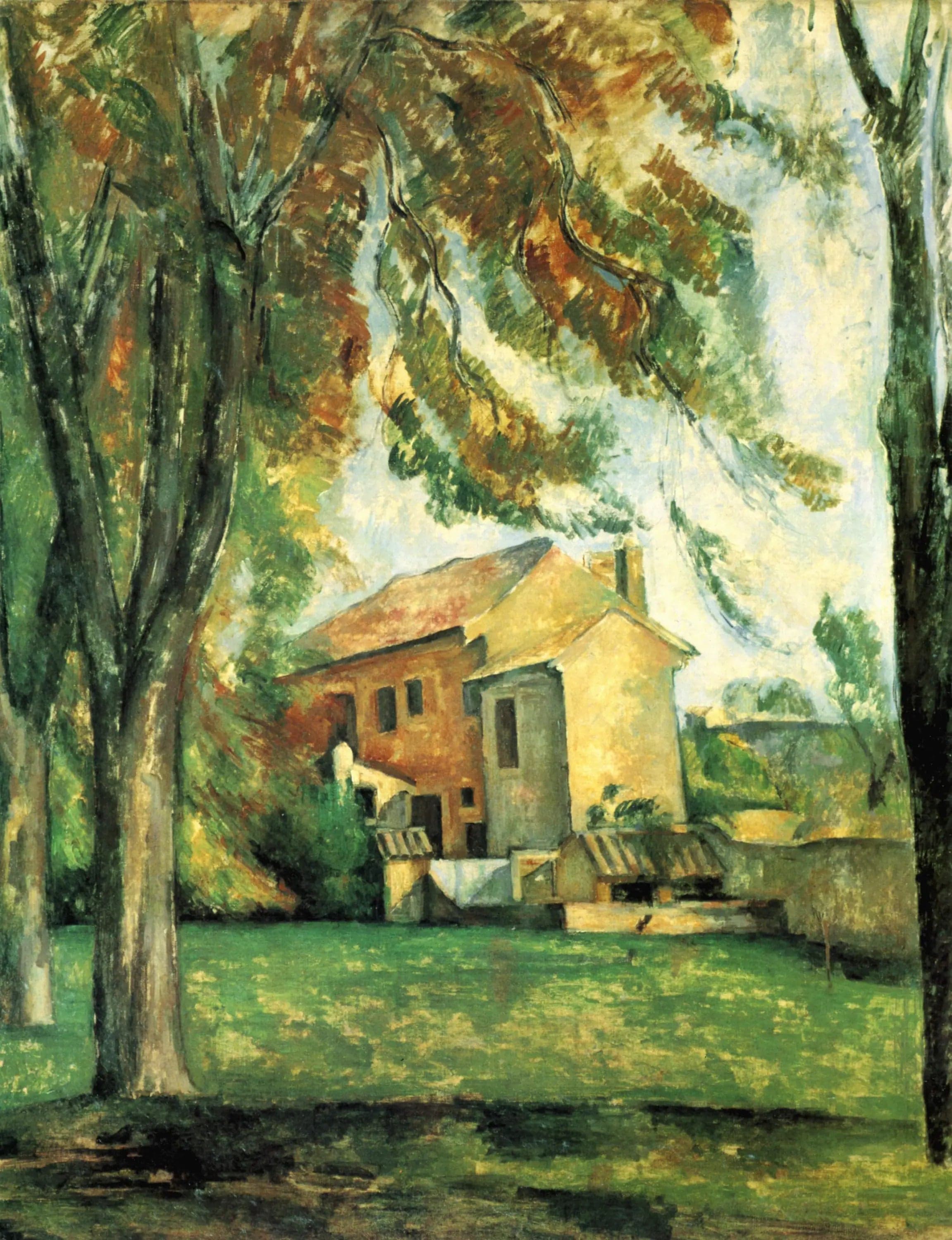
Chestnut Trees and Farm at Jas de Bouffan
- Original dimensions
- 72.9 x 91.8 cm
- Museum
- Norton Simon Museum
- Year
- 1884
Scene depicted
In Marronniers et ferme au Jas de Bouffan , Cézanne transports us to a world where nature and architecture merge into perfect harmony. Majestic chestnut trees, carefully planted, rise in the background, while a rustic farmhouse stands proudly. This composition represents not just a landscape, but a celebration of daily life and Provençal beauty, thus revealing the very soul of the region.
Historical context
Created in 1884, in the charming town of Aix-en-Provence, in Provence-Alpes-Côte d'Azur, Marronniers et ferme au Jas de Bouffan belongs to the Impressionist movement, a revolutionary artistic movement that redefined the perception of light and colors. This painting is currently located at the Norton Simon Museum , where it continues to dazzle art lovers. Its dimensions of 72.9 x 91.8 cm suggest an intimate presence, conducive to evoking wonder.
Place in the artist's career
Marronniers et ferme au Jas de Bouffan represents a significant milestone in Cézanne's career, situated at the dawn of his exploration of forms and perspectives. This painting is part of a period of artistic maturation. Alongside works like Les Grandes Baigneuses and Nature morte aux pommes , one can perceive the artist's transition to a unique personal vision, solidifying his status as a pioneer of Post-Impressionism .
Anecdote
“Nature is a book, and I seek to turn its pages.” These words from Cézanne resonate particularly when considering the creation of this masterpiece . Imagine him, one spring morning, piercing the mists of Aix-en-Provence to capture this scene imbued with golden light, the chestnut trees dancing in the breath of the wind, forming an unbreakable bond with the earth and the sky.