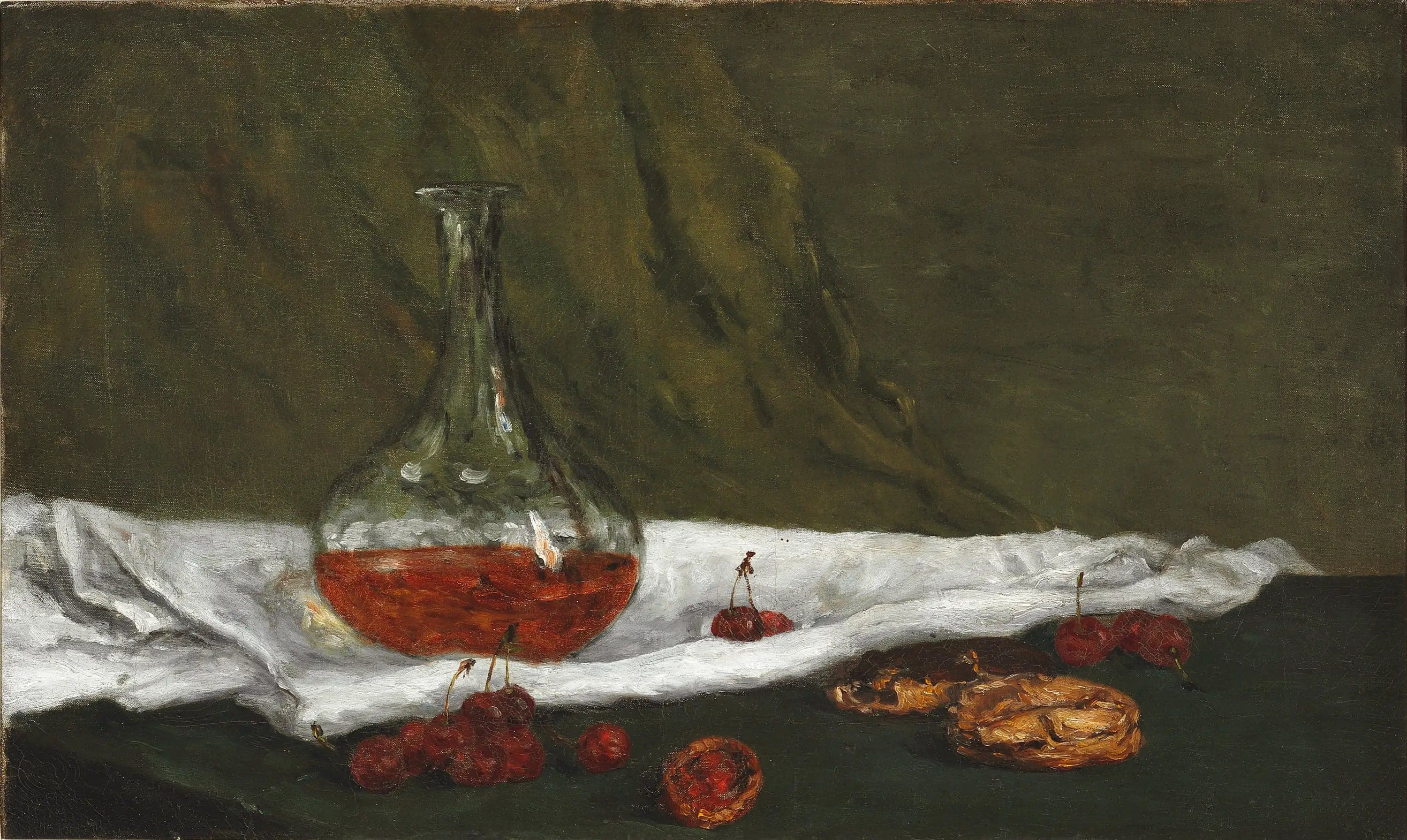
Cherries and Carafe
- Original dimensions
- 54 x 33 cm
- Museum
- Not specified
- Year
- 1875
Scene depicted
In the painting "Cherries and Carafe," Gauguin depicts an intimate scene where delicate fruits, prominently displayed, are alongside a terracotta carafe. This painting highlights the sensuality of forms and the richness of colors, celebrating the ephemeral beauty of everyday life. The composition invites serene contemplation, each detail capturing the very essence of a living nature.
Historical context
Created in 1875, in Paris, this painting embodies the spirit of an era when post-impressionism was emerging, with vibrant colors and bold compositions. Paul Gauguin , an iconic figure of this artistic movement, immerses us in his universe rich in emotions and sensations. Although this painting is not housed in a well-known museum, it continues to fascinate with its striking aesthetics and its dimensions, 54 by 33 centimeters, making it perfect for an intimate exhibition.
Place in the artist's career
Cherries and Carafe marks a turning point in Gauguin's career, illustrating his shift towards a more free and bold expression. By comparing it to other works like "Vision After the Sermon" and "The Dream," one can appreciate his technical and emotional evolution, from more traditional compositions to a radiant freedom, serving as an ode to color and feelings.
Anecdote
Gauguin once stated: "Art is a form of rebellion against the banality of life." Imagine him, that spring morning, in the shade of a blooming cherry tree, observing the juicy fruits that inspire him. It is in this privileged moment that he brought to life the masterpiece that is Cherries and Carafe , a tribute to nature and the simplicity of everyday pleasures.