Chemistry
- Original dimensions
- 200 x 455 cm
- Museum
- Munch Museum
- Year
- 1910
Scene depicted
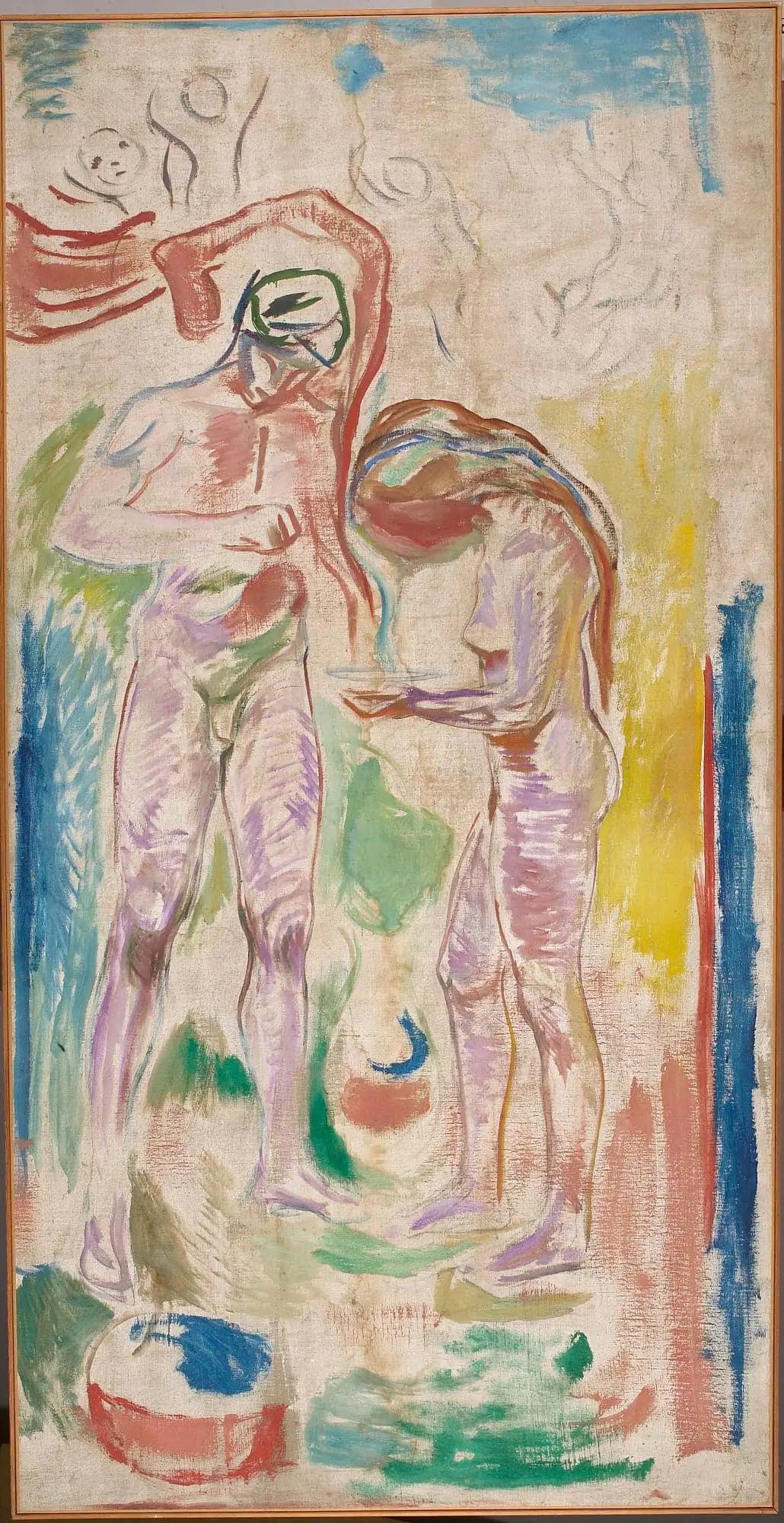
In Chemistry , Munch illustrates an intriguing scene of the chemical process, where human figures seem to absorb and dissolve into natural elements. This painting reveals a dialogue between the human and the scientific world, exploring the tensions of modern existence. Every detail, from the movement of bodies to the symbolic representation of colors, combines to create an atmosphere that is both captivating and unsettling.
Historical context
Created in 1910 in the vibrant city of Oslo, this painting is emblematic of the expressionist movement, known for its ability to transcend reality and explore human emotions. The painting is housed in the Munch Museum, a sanctuary that celebrates the legacy of this visionary artist. The canvas, with its impressive dimensions, stands as a gateway to the lived experience, capturing the very essence of its time.
Place in the artist's career
Chemistry positions itself as a pivot in the career of Edvard Munch , illustrating an evolution towards greater emotional complexity. When compared to other works like The Scream and Madonna , one observes a maturation in his use of color and composition, reflecting a deep artistic introspection.
Anecdote
“The painting is the expression of the soul,” said Edvard Munch . His inspiration for Chemistry was born one spring morning, when the soft light filtered through the trees in the park. Crossing the troubled gazes of passersby, he felt the complex and transformative energy that floats in the air, thus cultivating the emotions that would nourish this canvas .