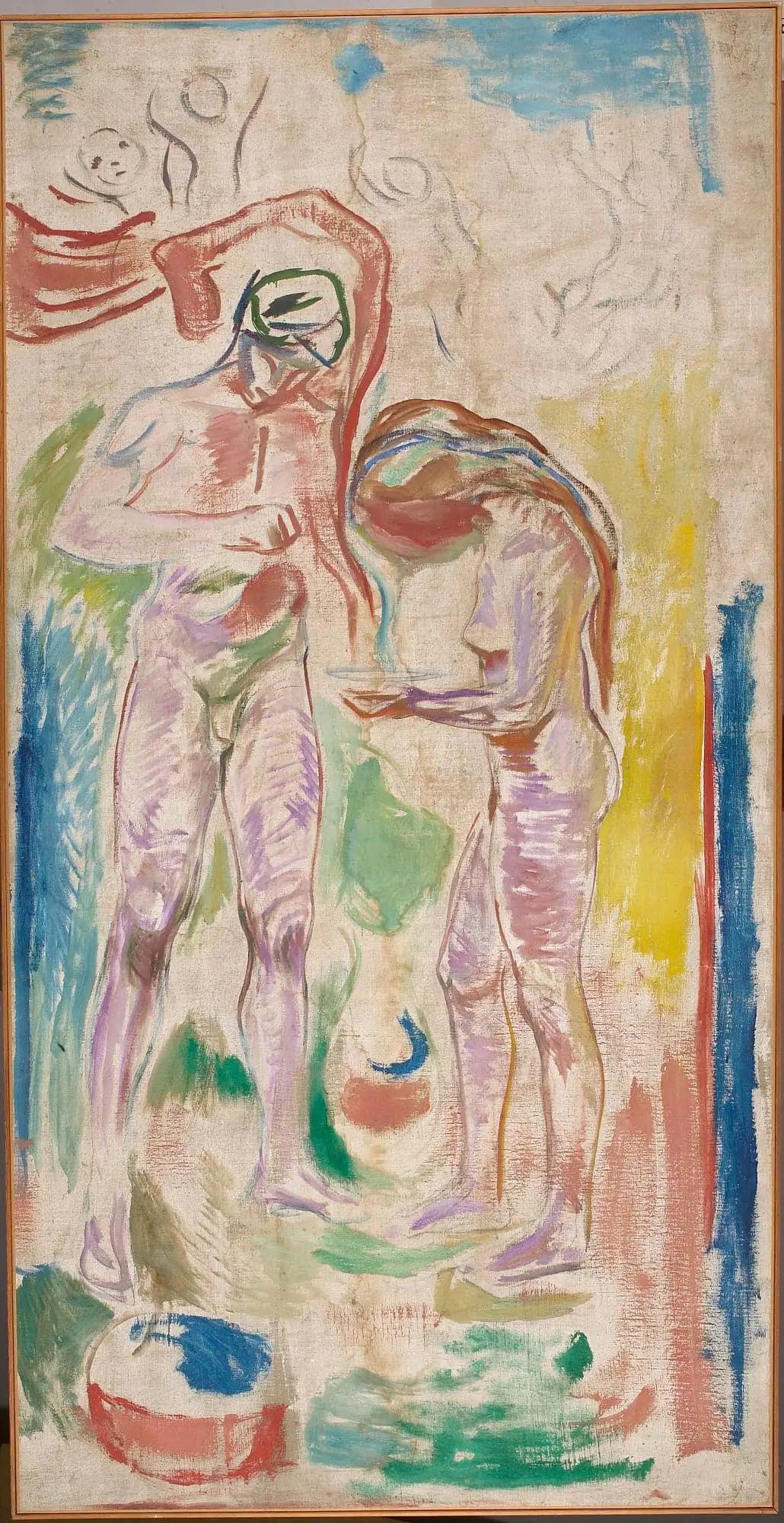
Chemistry
- Original dimensions
- 225 x 448 cm
- Museum
- University of Oslo Aula
- Year
- 1914
Scene depicted
In the painting “Chemistry - Edvard Munch ,” Munch explores the tensions between humanity and nature through a symbolic composition that combines human figures with natural elements. The characters, lost in their thoughts, capture the anxiety and emotion of existence, revealing the internal struggles that inhabit each of us. This vibrant scene, both disturbing and soothing, makes this canvas a significant work in Munch's catalog.
Historical context
Created in 1914 in Oslo, this painting is part of the expressionist movement that influenced modern art. The era marked by social and emotional upheavals is reflected in this fascinating composition. The painting is now displayed at the University of Oslo Aula, where it fascinates visitors with its impressive dimensions, a true testament to Munch's genius.
Place in the artist's career
This painting marks a turning point in Munch's career, illustrating his mastery in incorporating human emotions. Compared to other iconic paintings like “The Scream” and “The Madonna,” “Chemistry” reveals the evolution of his exploration of themes of pain, love, and mortality. It is a work that testifies to Munch's stylistic maturity and his unique ability to touch the soul.
Anecdote
“The painting is the expression of my soul,” said Munch. Inspired by a morning walk through the streets of Oslo, he captured the essence of a changing world. The delicate light of spring, the subtle scent of flowers, and the distant murmurs of the city created a perfect backdrop for the realization of this masterpiece .