Chemistry
- Original dimensions
- 118 x 230 cm
- Museum
- Munch Museum
- Year
- 1912
Scene depicted
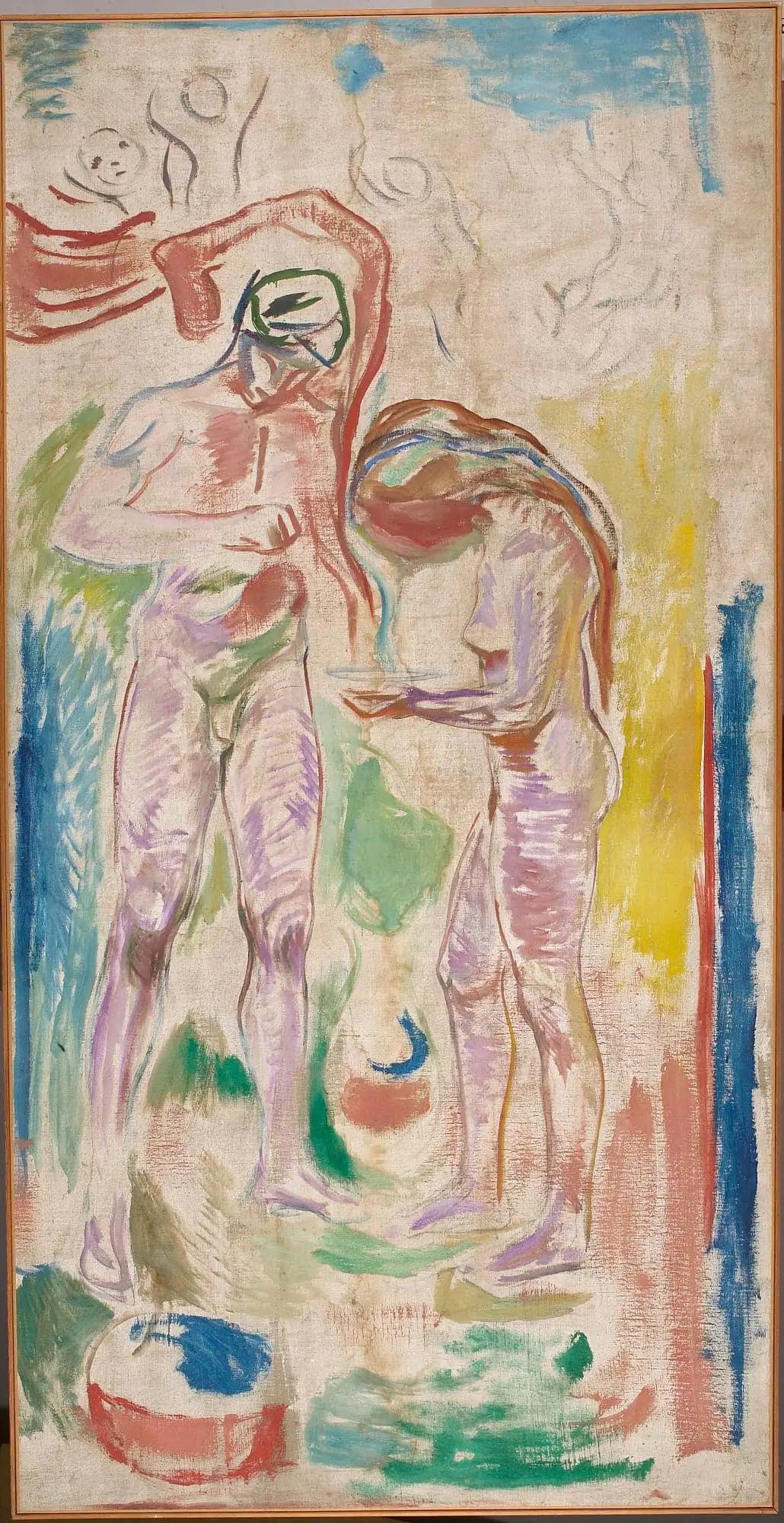
The painting presents a fascinating composition, where intertwined human figures, wrapped in flows of colors, seem to capture moments of reflection and awakening. The elements of chemistry, not only visible but also felt, illustrate a strong link between science and the human condition, while offering a visual spectacle imbued with mystery and contemplation.
Historical context
Created in 1912, the painting "Chemistry" finds its roots in the vibrant city of Oslo, Norway, at the heart of the Symbolist movement. This era is marked by a quest for inner expression that resonates deeply in the work of Edvard Munch . Today, the canvas is displayed at the Munch Museum, where visitors can immerse themselves in the emotional universe of the artist. The impressive dimensions of this canvas bring a presence that is both majestic and intimate in the space where it is admired.
Place in the artist's career
"Chemistry" stands out as a crucial milestone in the career of Edvard Munch . It is a testament to his maturity period, equaling other masterpieces like "The Scream" and "The Madonna." Each canvas shows a stylistic and emotional evolution, from inner turmoil to the celebration of human existence in all its facets.
Anecdote
"I paint my dreams and my nightmares," said Munch. One April morning, cradled by the sweet song of birds, he reportedly saw a scene in a laboratory that marked his vision of chemistry and humanity. This inspiration gave birth to an instant evocative force embodied by the painting "Chemistry," translating the duality between science and deep emotions.