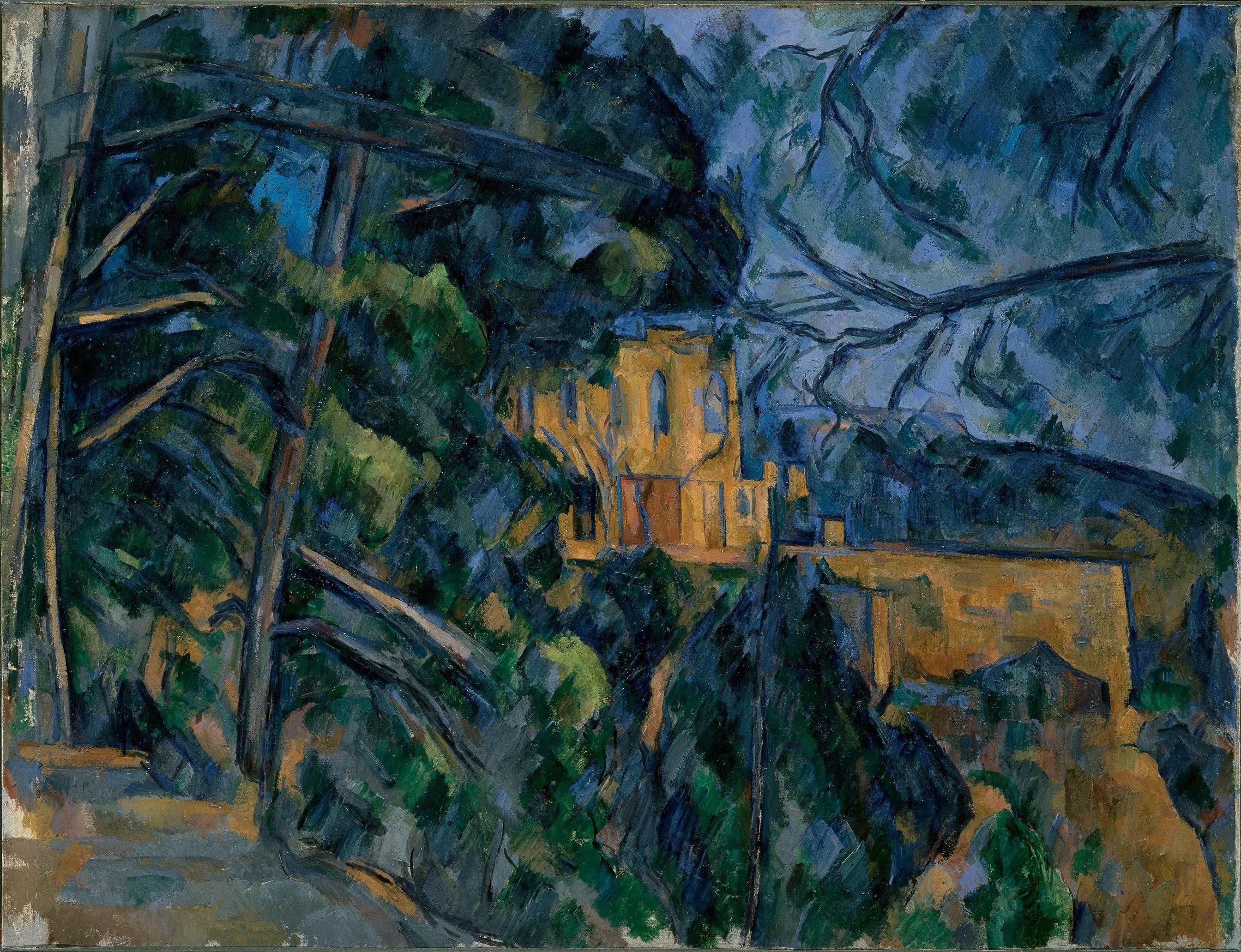
Château Noir
- Original dimensions
- 80 x 70 cm
- Museum
- Not specified
- Year
- 1904
Scene depicted
This iconic painting depicts the majestic Château Noir, overlooking the Provençal landscape. Cézanne, with his unique technique, transports us through light, transforming this scene into a visual symphony. The well-defined contours and vibrant colors unite the earth, sky, and architecture in a harmonious composition. Each brushstroke tells the story of a place, an invitation to escape.
Historical context
It was in 1904, in the heart of Provence, that Paul Cézanne , emblem of post-impressionism , brought to life Château Noir . This canvas, the result of an intense creative period, is a masterful exploration of forms and light. The region around Aix-en-Provence, where Cézanne drew his inspiration, is steeped in a rich artistic history. Although the painting is now in a private collection, its dimensions, 80 x 70 cm, give it a striking presence.
Place in the artist's career
Château Noir is at the heart of Cézanne's artistic evolution, a decisive turning point towards his mature style. When compared to La Montagne Sainte-Victoire and Piscine à Estaque , one can observe a deepening in the palette and treatment of forms. Château Noir represents a striking balance between abstraction and representation.
Anecdote
“Nature is my model and light is my muse.” These words of Cézanne resonate particularly during the creation of his masterpiece , Château Noir . A light scent of the warm summer pines, the painter was there, inspired by the sculptural forms of nature, capturing the essence of a moment of grace.