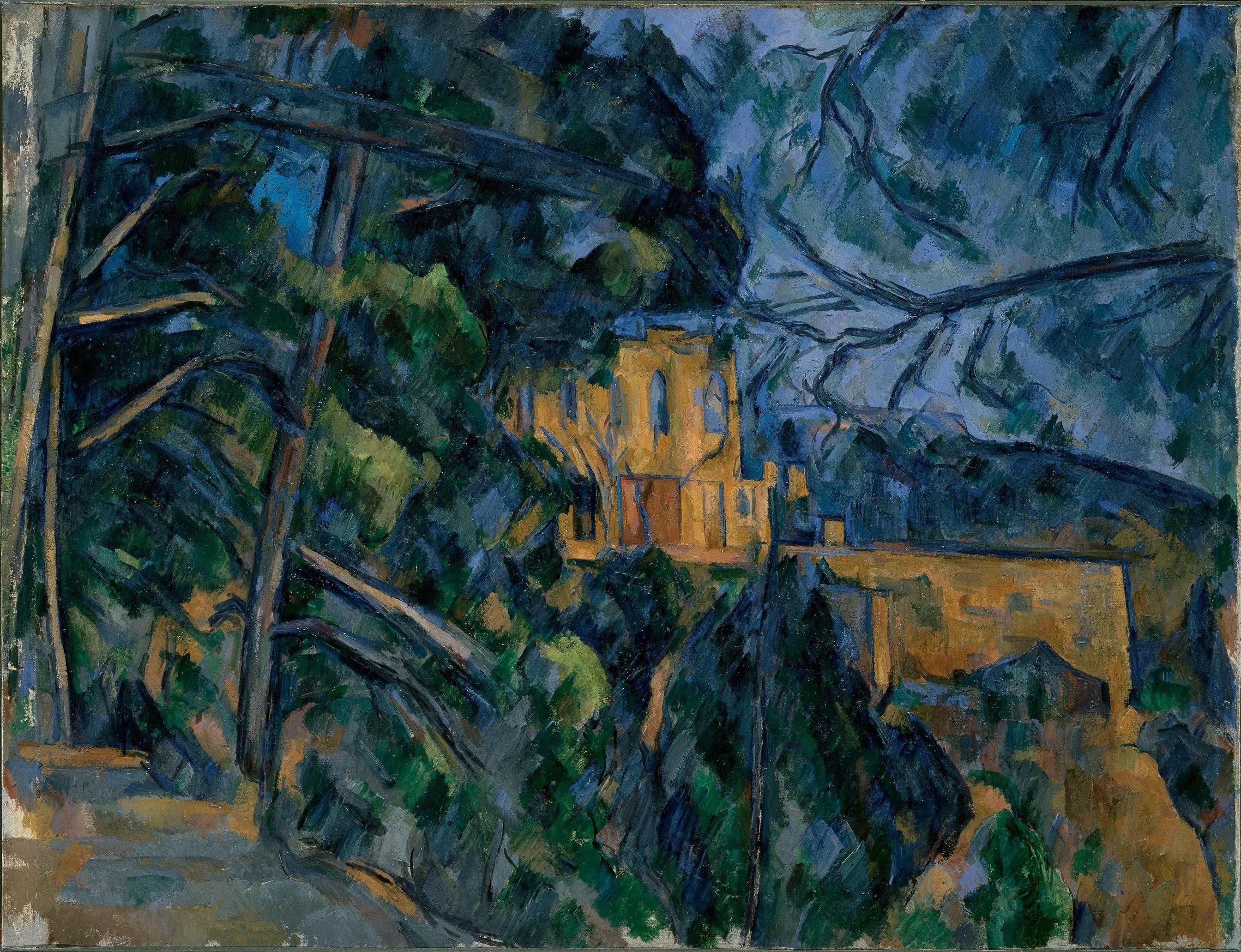
Château Noir
- Original dimensions
- 92 x 73 cm
- Museum
- national museum Picasso - Paris
- Year
- 1903
Scene depicted
In this lively painting, Cézanne transcribes the majesty of Château Noir, enveloped by the surrounding nature. The sky mingles with the earth, creating a dialogue between the elements. The structure of the castle stands proudly, the vibrant hues of the surrounding landscapes awaken our senses to the absolute harmony of the architecture with its natural environment.
Historical context
This painting, immortalized in 1903, emerges from the hands of one of the giants of impressionism , Paul Cézanne . Created in Provence, this masterpiece is part of a period when the artist revisited the French landscape with a new and stimulating perspective. Currently exhibited in the galleries of the national museum Picasso in Paris, this pictorial work measures 92 by 73 cm, reflecting the importance of the format in presenting his art.
Place in the artist's career
Château Noir represents a turning point in Cézanne's career, a passage to his artistic maturity. By placing it alongside paintings such as La Montagne Sainte-Victoire and Les Joueurs de Cartes, we can observe the evolution of his technique and vision. This painting is a beacon of his unique style, characterized by its simplified forms and bold palettes.
Anecdote
“The beauty of nature reveals itself only to those who know how to observe it,” said Cézanne. Inspiration came from a spring morning, where the light gently caresses the castle, revealing its shadows and vibrant lights. It is this vision, captured on canvas, that allows each observer to feel the soul of the painting .