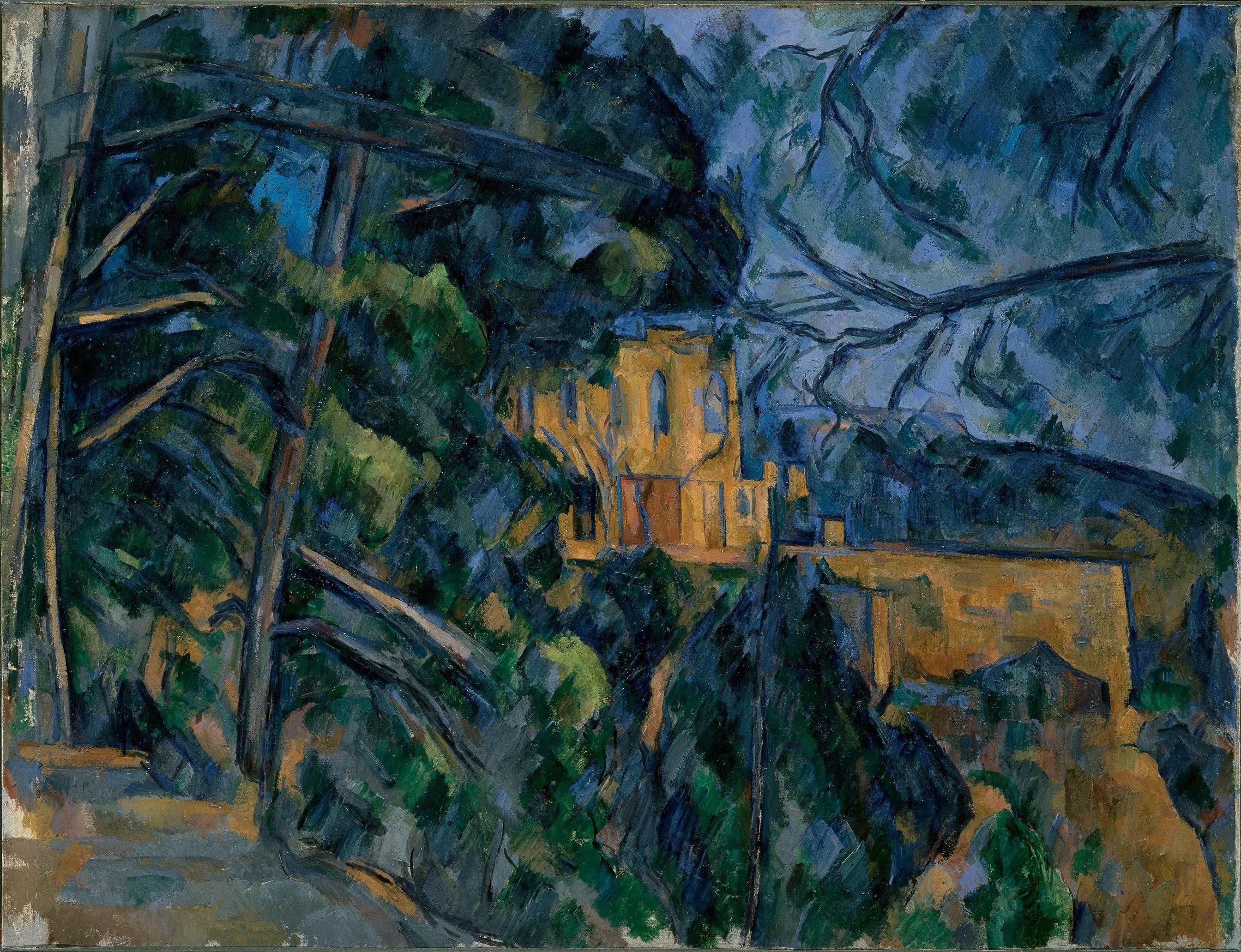
Château Noir
- Original dimensions
- 93.2 x 73.6 cm
- Museum
- Museum of Modern Art
- Year
- 1903
Scene depicted
The painting “Château Noir” celebrates an atmosphere of timelessness, where the majestic mountain stands proudly against a troubled sky, while the dark hues evoke both mystery and serenity. The natural elements blend with the historical structure of the castle, creating a visual symphony that transports the viewer to another world, where past and present coexist in perfect harmony.
Historical context
Created in 1903, this painting is an iconic work of the great master post-impressionist Paul Cézanne , rooted in the city of Aix-en-Provence, a region rich in artistic history. It belongs to the post-impressionism movement, a period marked by a deep reflection on color and form. Today, the canvas is carefully preserved at the Museum of Modern Art in New York, where its generous dimensions of 93.2 x 73.6 cm burst forth under modern light.
Place in the artist's career
“Château Noir” is at the heart of Cézanne's career, reflecting a period of maturity. This painting marks an important milestone, on par with other works like “Les Grandes Baigneuses” and “Mont Sainte-Victoire,” where the artist explores similar themes of structure and light, but with an ever-finer technical evolution and a deep emotional commitment.
Anecdote
“Nature must speak for itself, I only listen to it.” These words resonate like a melody in Cézanne's mind as he seeks the essence of “Château Noir” in the heart of the Provençal hills. On a spring morning, when the sun gently caresses the stones of the canvas , the artist perceives the harmony between the landscape and the architecture, a connection that brings his masterpiece to life.