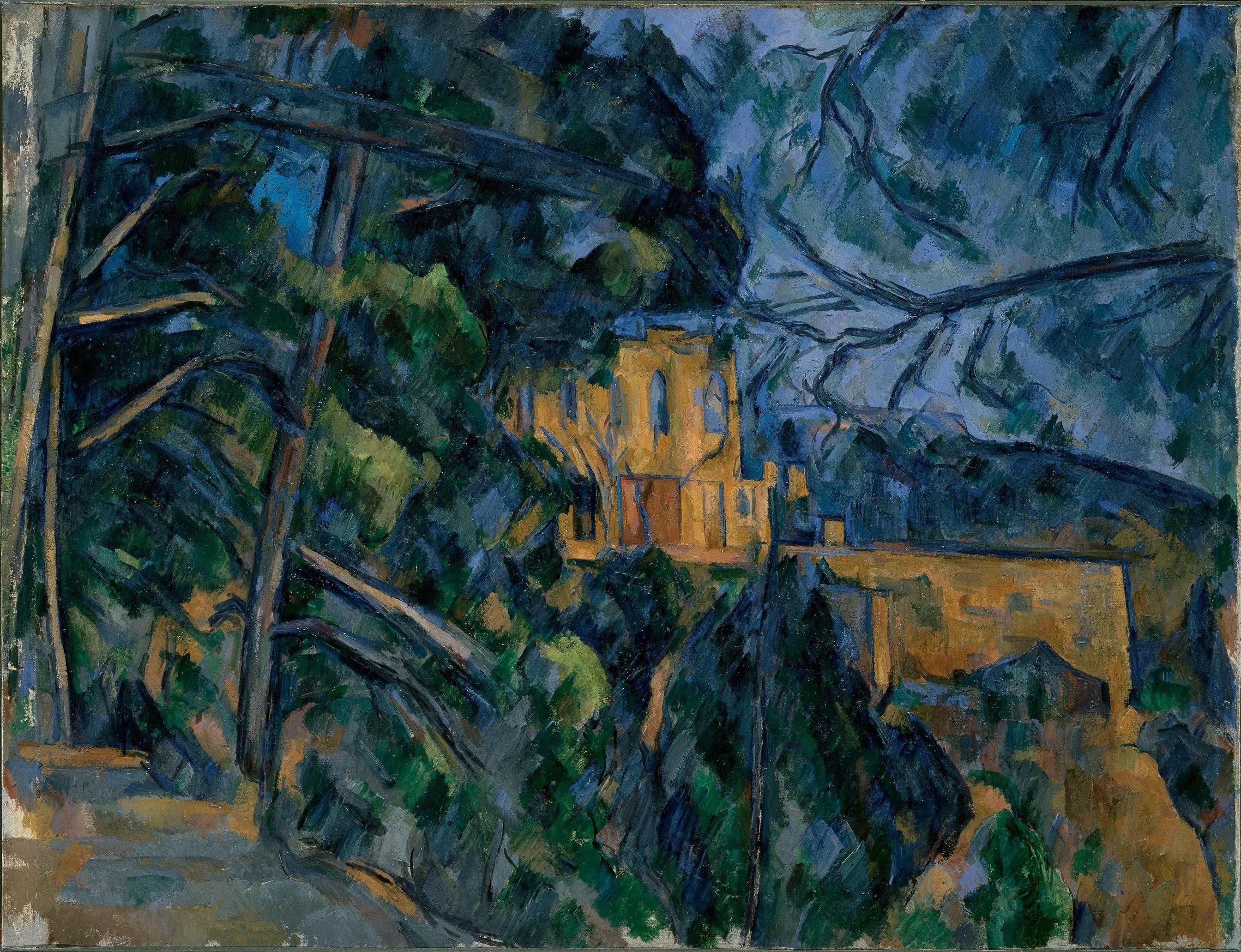
Château Noir
- Original dimensions
- 96.6 x 73.7 cm
- Museum
- National Gallery of Art
- Year
- 1900
Scene depicted
The scene of the painting “Château Noir” transports the viewer into a fairy-tale landscape where the tranquil strength of a majestic castle intertwines with the softness of a Provençal sky. The interaction between the geometric shapes of the castle and the natural lights gives an impression of stability while revealing the dynamics and humidity of the surrounding air, immortalized by Cézanne in this pictorial work .
Historical context
Created in 1900, during the height of Impressionism in Aix-en-Provence, this painting illustrates the genius of one of the masters of color and form. The painting is currently housed at the National Gallery of Art , where it evokes a moment of classical serenity signed by Cézanne. This place, incredibly rich in history, resonates with the pictorial ecosystem that gave birth to masterpieces that revolutionized modern art.
Place in the artist's career
“Château Noir” marks a pivotal moment in Cézanne's career, consolidating him as a true innovator of his time. Situated in a period of maturity, the work parallels other iconic paintings such as “La Montagne Sainte-Victoire” and “Les Grandes Baigneuses,” revealing the evolution of his technique and formal language. Each painting testifies to an incessant search for the link between art and nature.
Anecdote
“I have always sought poetry in nature.” Thus speaks Cézanne, inspired by a gentle Provençal morning. In contemplating this painting , one feels this eternal quest: the passage from shadows to light, a breath of freshness, and the fragrance of warm pines under the sun. Each brushstroke testifies to a vibrant emotion, a moment suspended in time.