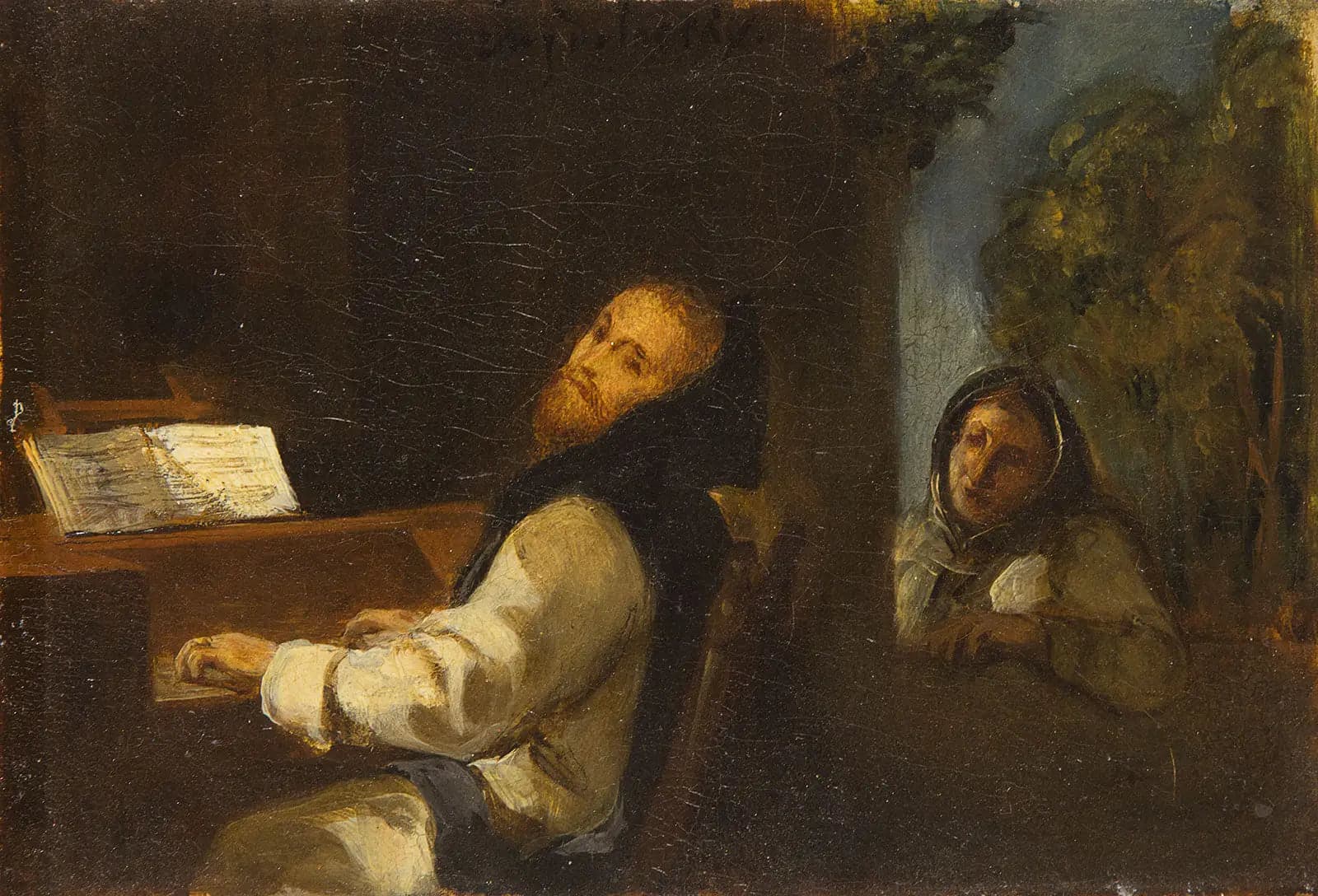
Charles V at the Monastery of Yuste
- Original dimensions
- 25 x 17 cm
- Museum
- reserves of the Louvre Museum
- Year
- 1837
Scene depicted
The painting depicts Charles V in his retreat, lost in thought, surrounded by the austerity of a monastery that evokes contemplation and inner calm. This painting immerses us in the intimacy of a man who has embraced his destiny, carried by an atmosphere of melancholy and grandiloquence.
Historical context
Created in 1837, this painting is rooted in the history of Spain, within the Monastery of Yuste, where Charles V retreats on a final inner journey. This iconic painting illustrates the romantic period, an artistic style where emotion and passion take precedence over rationality. Today, this masterpiece is carefully preserved in the reserves of the Louvre Museum in Paris, the city of lights and culture.
Place in the artist's career
This painting represents a significant milestone in Delacroix's career, marking a shift towards more introspective compositions. In parallel with his other works such as “ Liberty Leading the People ” and “ The Massacre at Chios ”, this painting reveals a growing maturity and a deep exploration of the human soul.
Anecdote
Delacroix reportedly stated while contemplating the solitude of an old monarch: “Every brushstroke must resonate with a bittersweet nostalgia, like the song of a summer that fades away.” That morning, bathed in soft light, he felt the soul of Charles V floating in the air, inspiring this canvas with striking emotional depth.