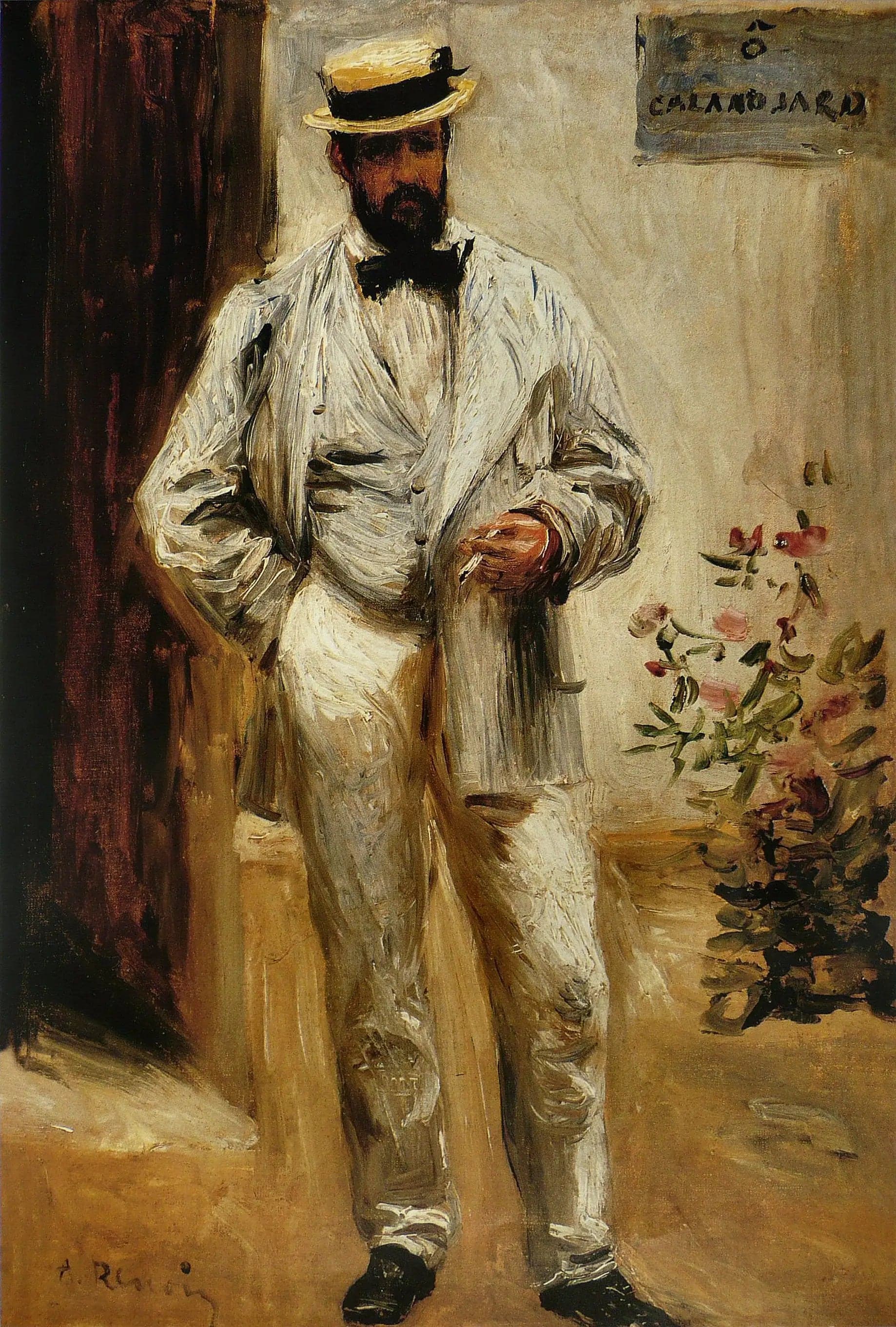
Charles Le Cœur - Pierre
- Original dimensions
- 29 x 42 cm
- Museum
- Orsay Museum
- Year
- 1870
Scene depicted
In “Charles Le Cœur,” Renoir immerses us in an intimate moment. This canvas depicts a young boy, Charles, in a delicate pose, surrounded by an atmosphere of softness and calm. The features of his face convey a palpable innocence, while the nuances of light play on his clothing, blending subtlety and brilliance.
Historical context
Created in 1870, this painting embodies the golden light of Paris, at the heart of the Impressionist movement. This flourishing era saw the emergence of boldly daring artists, and Renoir's canvas stands out for its audacity and the sense of intimacy it conveys. Currently housed at the Orsay Museum , this pictorial work resonates with the harmony of its time while captivating the eye of visitors with its delicate dimensions.
Place in the artist's career
This canvas marks a significant milestone in Renoir's career, reflecting his artistic evolution. It stands at the crossroads between his early Impressionist explorations and the more refined compositions of his later years. In parallel with “Luncheon of the Boating Party” and “The Large Bathers,” one observes a growing mastery of light and form, confirming his status as a timeless masterpiece.
Anecdote
“Capturing life in a burst of light, that’s where the magic happens,” Renoir said while discussing his creative process. Imagine a fresh morning in Paris, the streets still asleep, when suddenly, a bright vision crosses his mind. It was this fleeting encounter and this burst of serenity that inspired this painting , a vibrant echo of natural beauty.