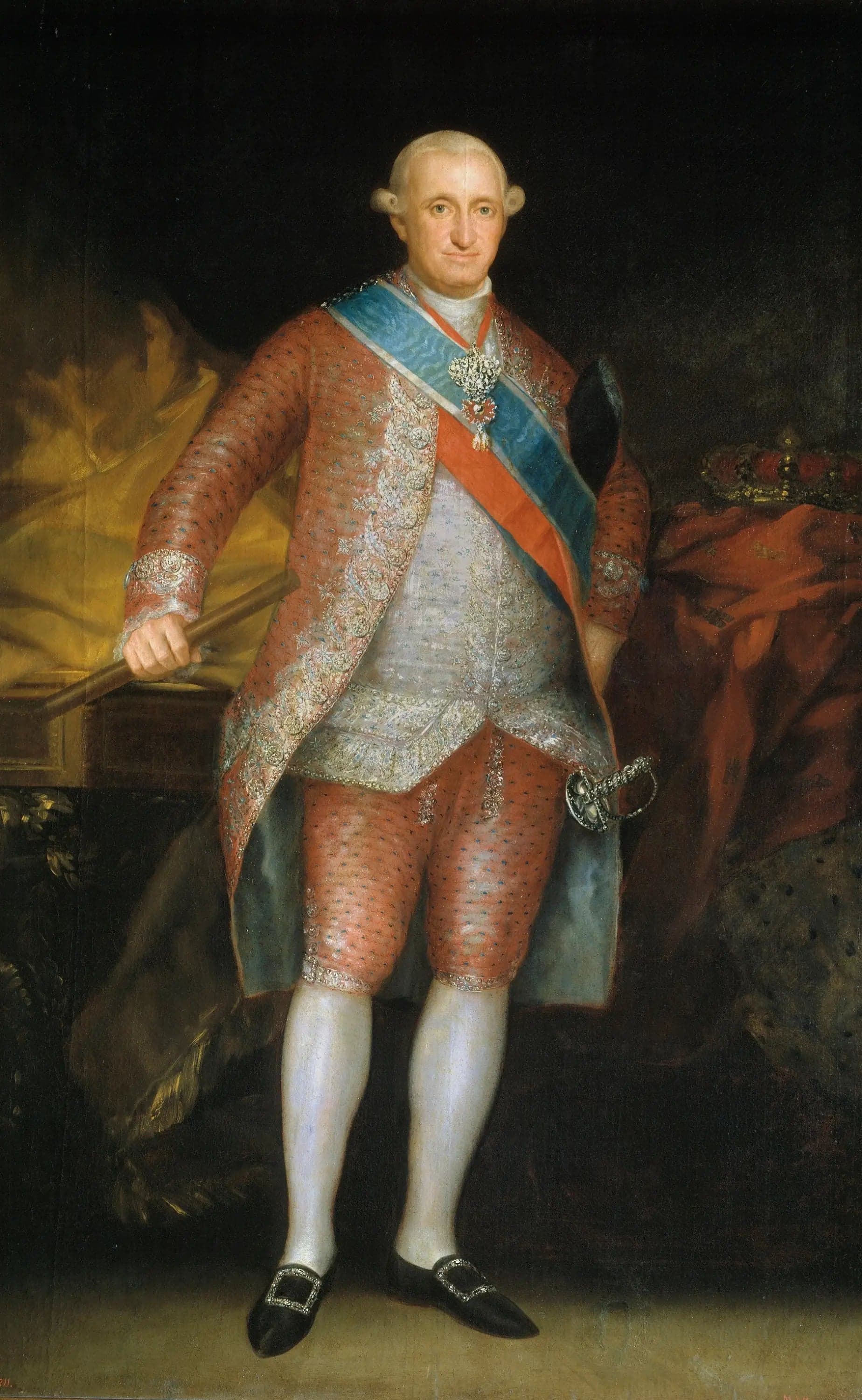
Charles IV
- Original dimensions
- 137 x 203 cm
- Museum
- Prado Museum
- Year
- 1789
Scene depicted
This painting features Charles IV surrounded by his family, a portrait laden with symbolism, where each gaze, smile, or gesture reveals complex dynamics within the Spanish monarchy. The composition is striking, placing the king at the center of an intimate scene while reminding of the weight of his royal responsibilities. Goya does not merely paint figures; he creates a story, a palpable tension between power and human vulnerability.
Historical context
Created in 1789, in Madrid, this painting is emblematic of the romantic movement, at a time when Spanish art asserts itself with renewed vigor. Charles IV , currently on display at the Prado Museum, embodies the tensions and elegance of the Spanish court at the end of the 18th century, while foreshadowing an artistic renewal that will echo through the ages.
Place in the artist's career
This painting marks a significant turning point in Goya's career, perfectly illustrating his transition to bolder compositions. Alongside works such as The Naked Maja and The Disasters of War , this achievement reflects his stylistic evolution and acute sense of human emotions and political realities.
Anecdote
It is said that Francisco de Goya , while painting this canvas , expressed: "The essence of a king lies in his gaze, a faithful mirror of his reign." It was on a quiet morning, where the soft light of Madrid illuminated the alleys, that the artist found inspiration to capture the majesty and humility of a sometimes wavering king, but always present in history.