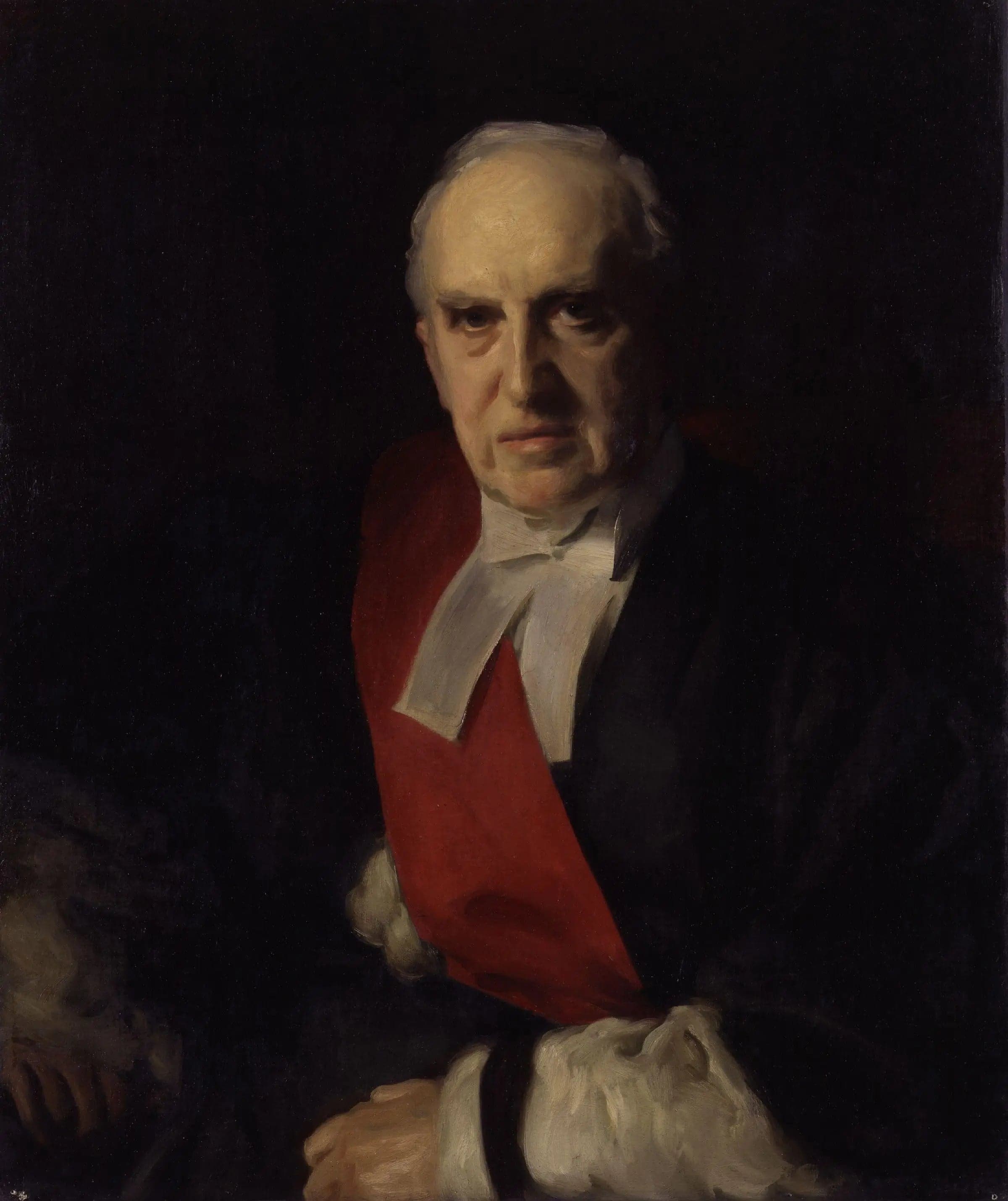
Charles Arthur Russell, Baron Russell of Killowen
- Original dimensions
- 71.1 x 85.1 cm
- Museum
- National Portrait Gallery
- Year
- 1921
Scene depicted
This striking painting immerses us in the world of Charles Arthur Russell, baron Russell de Killowen, who was an influential figure of his time. The baron's face, both imposing and accessible, is highlighted by skillfully orchestrated lighting that creates an atmosphere that is both serious and engaging. The meticulous details of his attire testify to the refinement of fashion of the time and the elevated stature of his subject.
Historical context
Painted in 1921, this iconic painting was conceived in the vibrant historical context of London, the cultural capital of England. Representing a pillar of society at the time, this masterpiece is part of the portraiture movement of the late 19th and early 20th centuries, of which John Singer Sargent is an emblematic figure. The canvas is currently housed at the National Portrait Gallery, where it attracts the attention of art lovers from around the world.
Place in the artist's career
“Charles Arthur Russell, baron Russell de Killowen” is situated at a crossroads in Sargent's career, a moment of maturity where his style reaches an unparalleled emotional depth. By comparing this painting to other works such as “Madame X” and “The Artist's Garden at Grez,” one observes an evolution in his technique, moving from rigid realism to a more free and impressionistic reflection.
Anecdote
John Singer Sargent , fascinated by the complexity of the characters he represents, once stated: “Every portrait I paint is a story in itself.” He found inspiration for this painting during a conversation in a lively gallery, where he captured the essence of Baron Russell, a suspended moment, vibrant with emotions and promises. This canvas transcends the simple portrait to evoke a profound humanity.