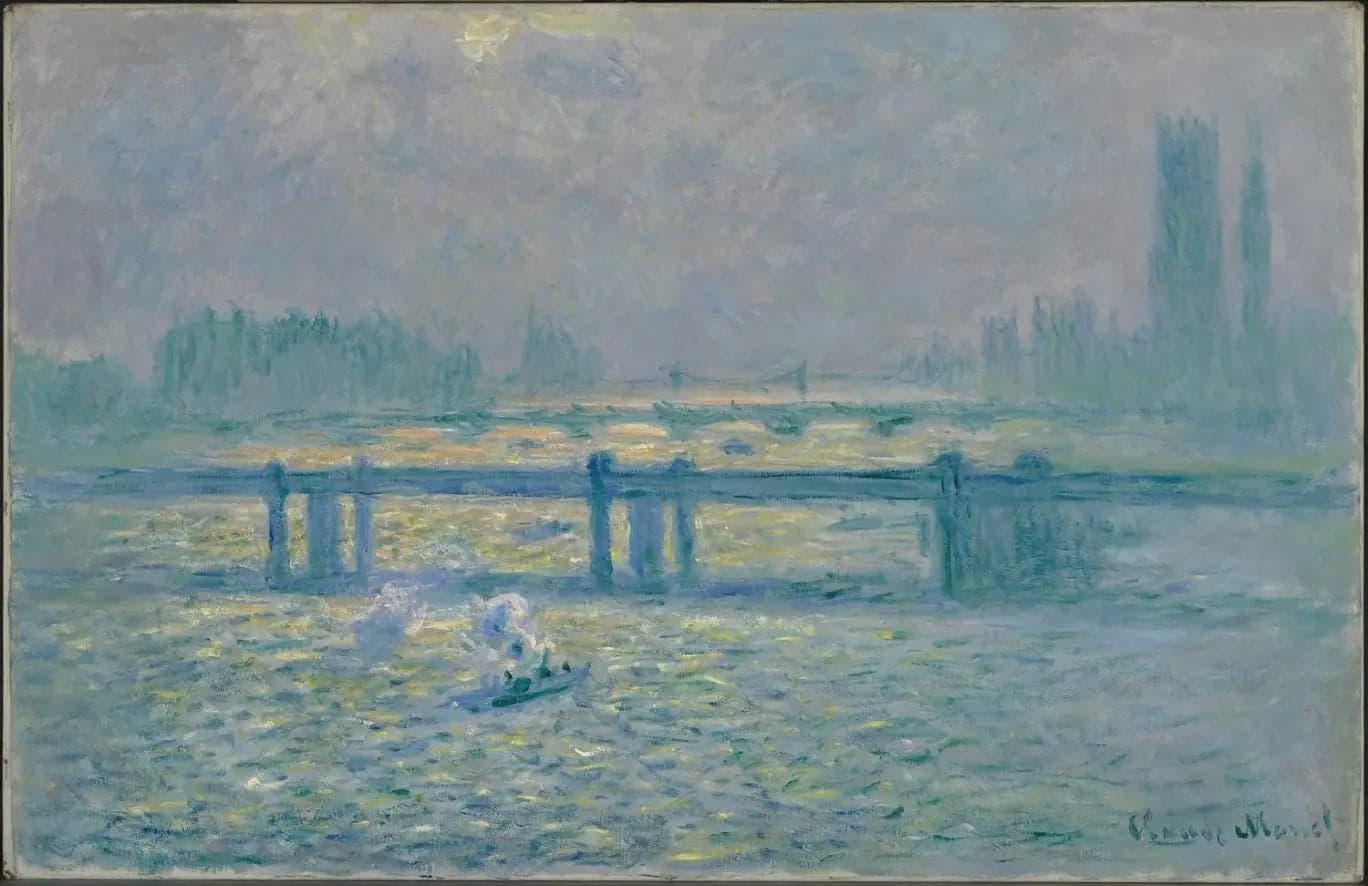
Charing Cross Bridge, reflections on the Thames
Scene depicted
This pictorial work depicts England in the early 20th century, a vibrant period where modernity and the melancholy of nature coexist. The painting presents the Charing Cross bridge, its reflection mingling with the surface of the Thames, enveloped in soft light. Every detail conveyed by the painting evokes an atmosphere of tranquility, mingled with urban liveliness. Monet plays here with shades and reflections, making each element unique in this ballet of imperfect colors, celebrating the beauty of the everyday.
Historical context
Created in 1900, this magnificent painting takes place in London , in the heart of the iconic Westminster district, home to the famous Charing Cross bridge. This painting belongs to the Impressionist movement, a reflection of the era when art sought to capture light and the present moment. Currently, this masterpiece is housed in the Baltimore Museum of Art , with dimensions of 100 x 65 cm, ideal for in-depth examination and introspective contemplation.
Place in the artist's career
This painting represents a highlight in Monet's Impressionist career. It illustrates the maturity of his style, amalgamating a continuous quest for light, as seen in The Saint-Lazare Station and Impression, Sunrise . These works, while marking significant milestones, show Monet's evolution towards a deeper understanding of color and atmosphere, culminating in this vibrant masterpiece.
Anecdote
Monet, on a bright morning, often confided: “The light dances on the water, a fascinating and inspiring spectacle.” Enveloped in the morning mist of London , he was captivated by the colorful reflections in the Thames, a mystery he endeavored to immortalize on his canvases. This painting evokes his ardent desire to capture the ephemeral, a poetic fusion between nature and the urban environment.