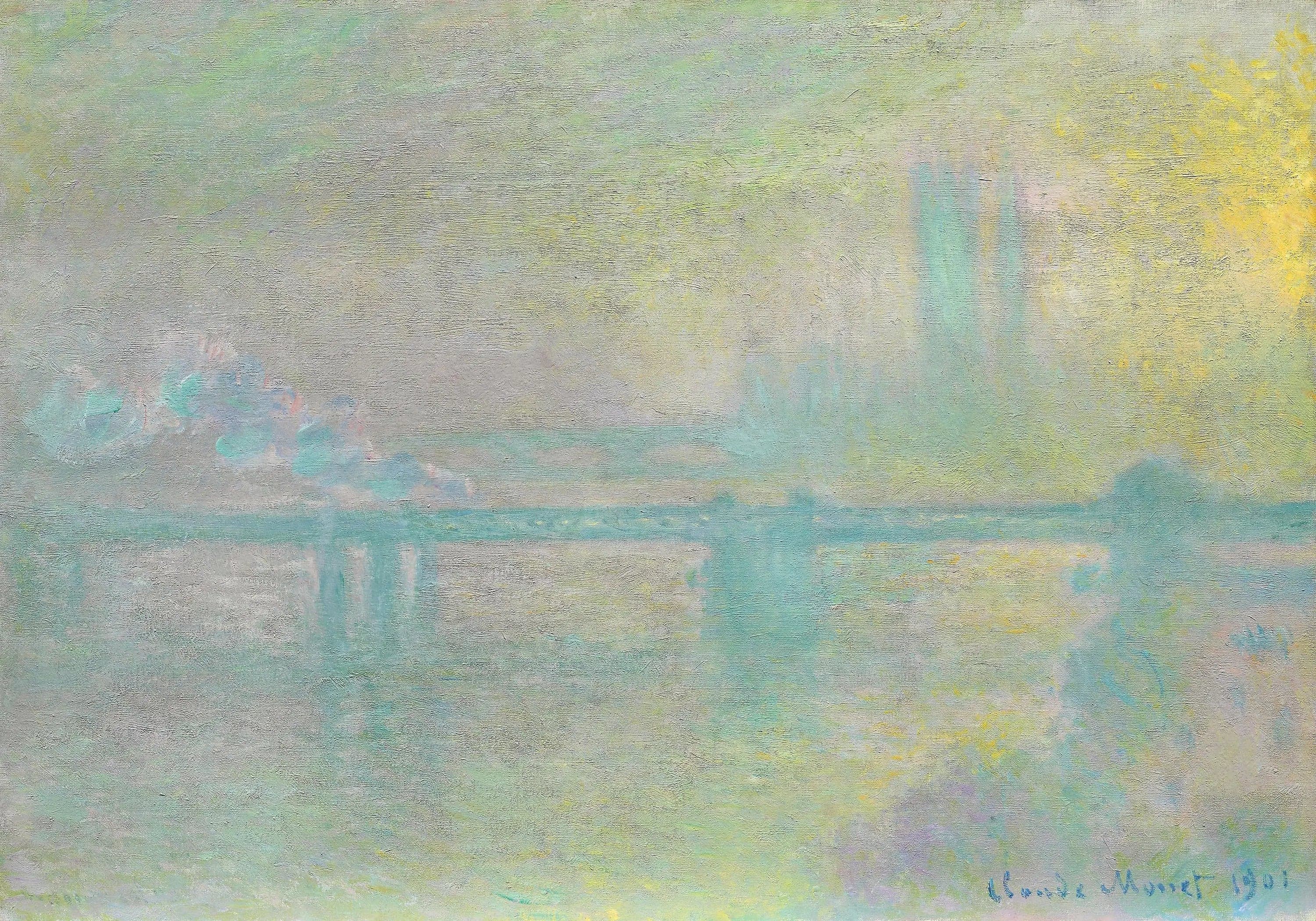
Charing Cross Bridge, London
- Original dimensions
- 92.2 x 65 cm
- Museum
- Art Institute of Chicago
- Year
- 1901
Scene depicted
Charing Cross Bridge, London is a masterful representation of urban architecture intertwined with the impermanence of nature. Monet, with his distinct Impressionist technique, captures not only the bridge itself but also the dynamics of life surrounding it. The inhabitants of London move with ease, while light plays an essential role, bringing an almost surreal dimension to this vibrant canvas . This pictorial work unfolds like a visual narrative at the heart of this iconic city.
Historical context
Year: 1901 |BRK| Museum: Art Institute of Chicago |BRK| Dimensions: 92.2 x 65 cm
Place in the artist's career
Charing Cross Bridge is situated in a period where Monet reaches a stylistic peak, integrating colorful impressions and plays of light that define his work. During this time, he also produced other iconic compositions such as “ Impression, Sunrise ” and “ Water Lilies ”, thus showcasing the evolution of his artistic language. This painting embodies the pinnacle of his quest to capture the ephemeral, testifying to remarkable maturity and technical boldness.
Anecdote
“Light is color, color is life.” It is in this spirit that Monet was inspired one spring morning as he contemplated the shimmering reflections on the Thames. The sound of boats gliding on the water and the laughter of passersby created a melody that resonated within him, and he captured this fleeting scene to create a masterpiece that is timeless. The painting evokes this communion between the artist and his environment, resonating with an incredibly powerful evocative force.