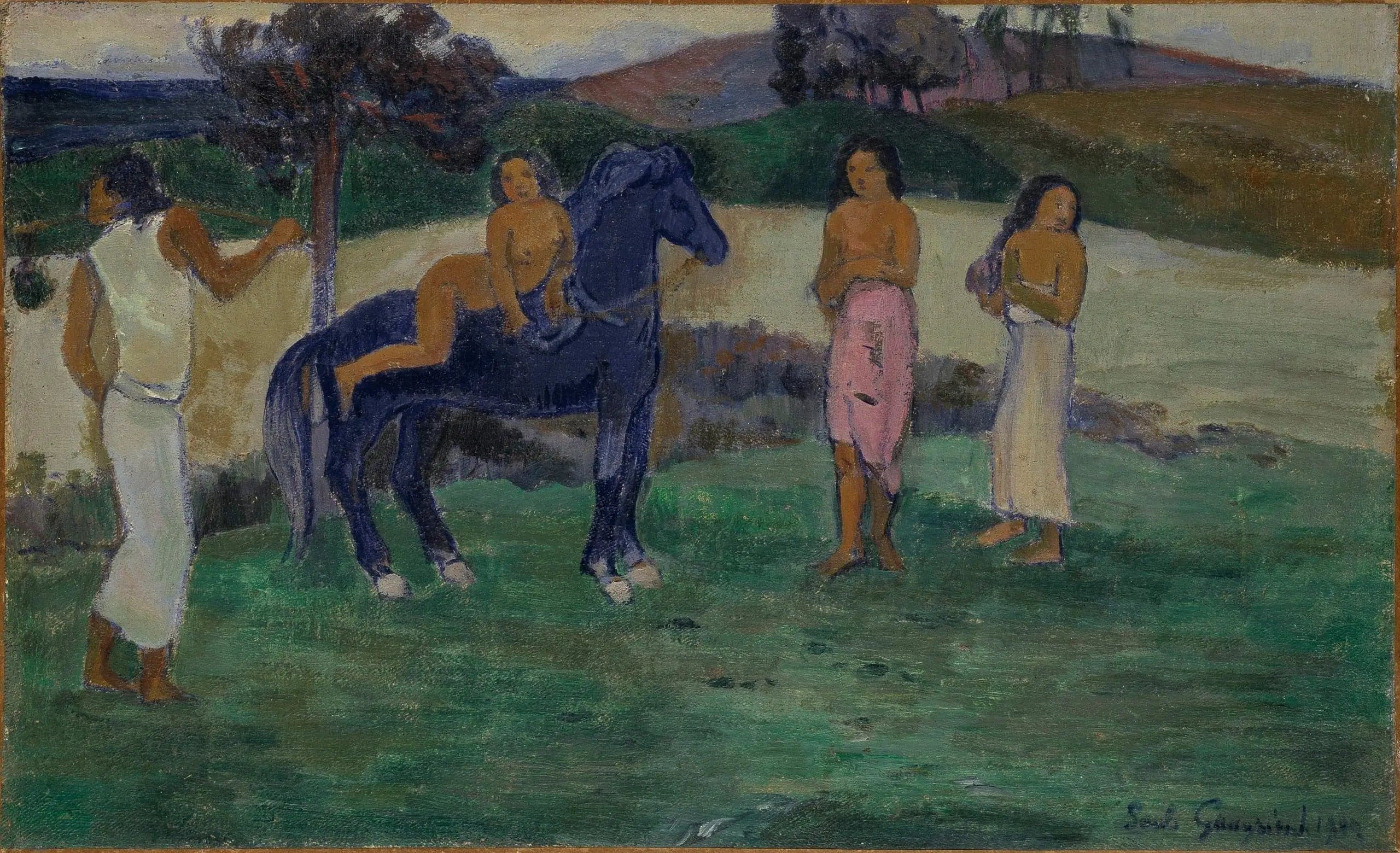
Change of Residence
- Original dimensions
- 45.5 x 28 cm
- Museum
- National museum
- Year
- 1902
Scene depicted
The canvas “Changement de résidence” illustrates a moment of transition, where the silhouettes of the inhabitants move through an intimate and poetic landscape. A fragile harmony between the past and the future, this pictorial work immerses us in an atmosphere of melancholy imbued with humanity. Each character seems laden with a story, thus testifying to the ups and downs of life.
Historical context
Created in 1902, this painting emblematic was born in a context marked by works inspired by nature and the quest for primitive expressions. Paul Gauguin , leading figure of post-impressionism , drew his inspiration from Pont-Aven, Brittany, a town now famous for its artistic influences. This canvas , which is now at the National Museum, reveals the artist's unique perspective on human mobility and the transformation of social life, while measuring 45.5 x 28 cm.
Place in the artist's career
This canvas represents a turning point in Gauguin's career, symbolizing his artistic maturity. In parallel with works like “Vision after the sermon” and “The woman and the parrot,” Changement de résidence testifies to a stylistic evolution towards emotional depth. Gauguin, by exploring universal themes such as change and human nature, forges a path that will forever mark modern art.
Anecdote
“Art is a means of revealing what words cannot describe,” Gauguin is said to have declared one foggy morning in Brittany, as he contemplated the sea. This feeling of strangeness and transition deeply permeates his masterpiece , Changement de résidence, a tender work that transcends the simple canvas to evoke stories of journeys and inevitable changes.
Major exhibitions
Q109467920