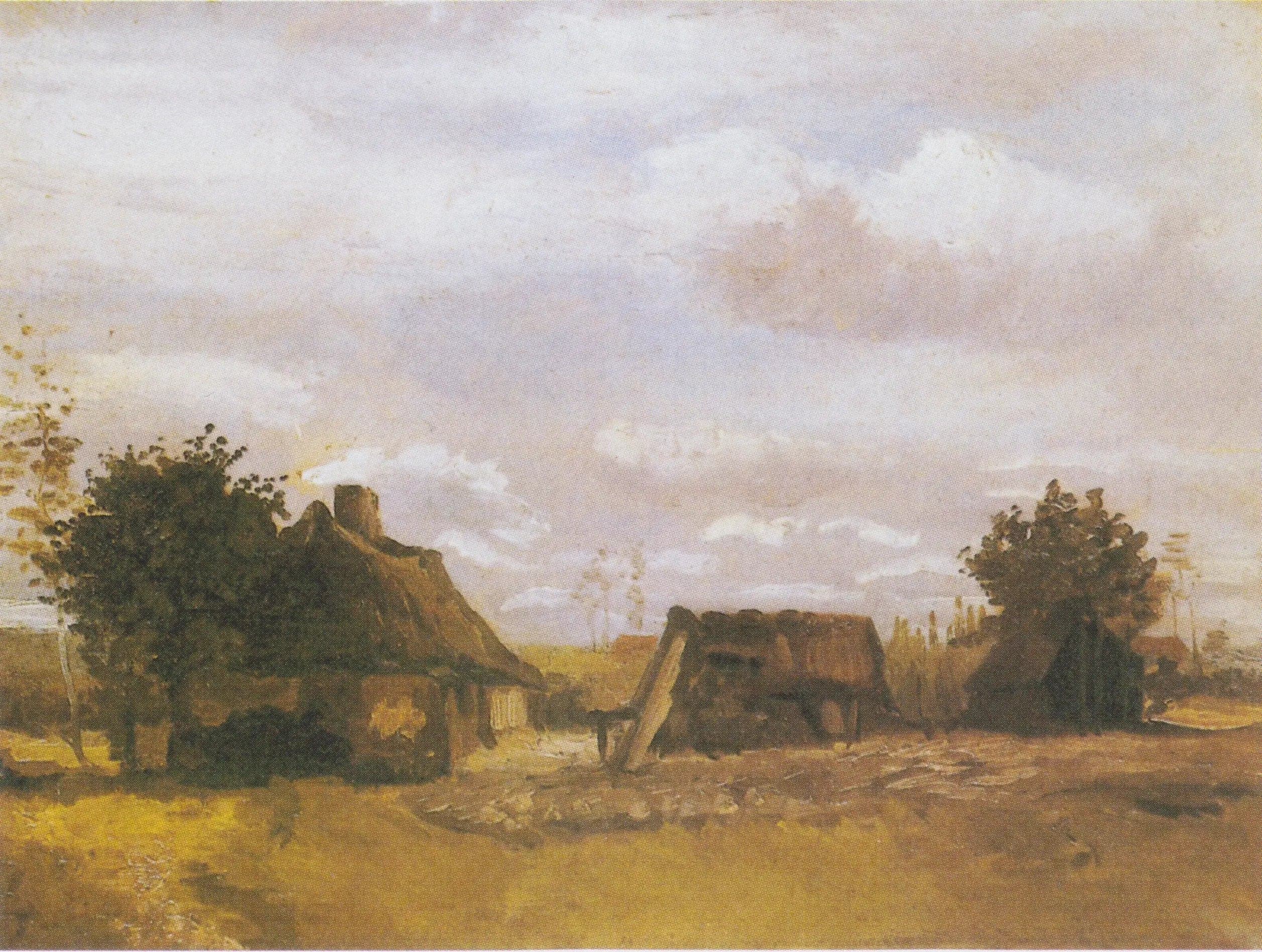
Chalet
- Original dimensions
- 43 x 33 cm
- Museum
- Not specified
- Year
- 1885
Scene depicted
In Chalet , Van Gogh reveals to us a landscape where the refuge, a charming chalet, is outlined under a bright sky. The rustic structure harmoniously integrates into the landscape , evoking a sense of security and peace. The impressions of greenery blur the boundaries between the natural and the architecture, making this painting both simple and majestic, an exploration of rural life, imbued with delicate nuances.
Historical context
Created in 1885, the painting titled Chalet transports us to the heart of Nuenen , a village with hidden treasures, during a time when Vincent van Gogh intensely explores nature and daily life. This pictorial work is part of the artist's promising beginnings, emerging in the post-impressionist movement, an aesthetic installation frozen in a unique moment in the history of art.
Place in the artist's career
This canvas , Chalet , is part of a learning period for Van Gogh, marked by the exploration of light and forms. In parallel, other works like The Potato Eaters and The Sower illustrate his technical evolution. Each painting testifies to his quest for authenticity and his commitment to emotional depth, which makes Chalet a milestone in his career.
Anecdote
“The morning light caresses the fields, revealing an ephemeral beauty at every moment” could have been said by Vincent as he contemplated the Dutch landscape . It is this gentle connection with nature, this tranquility, that inspired the creation of Chalet . The artist, immersed in a moment of silent contemplation, managed to capture the very essence of this fleeting moment, filling the canvas with vibrant colors and palpable emotions.