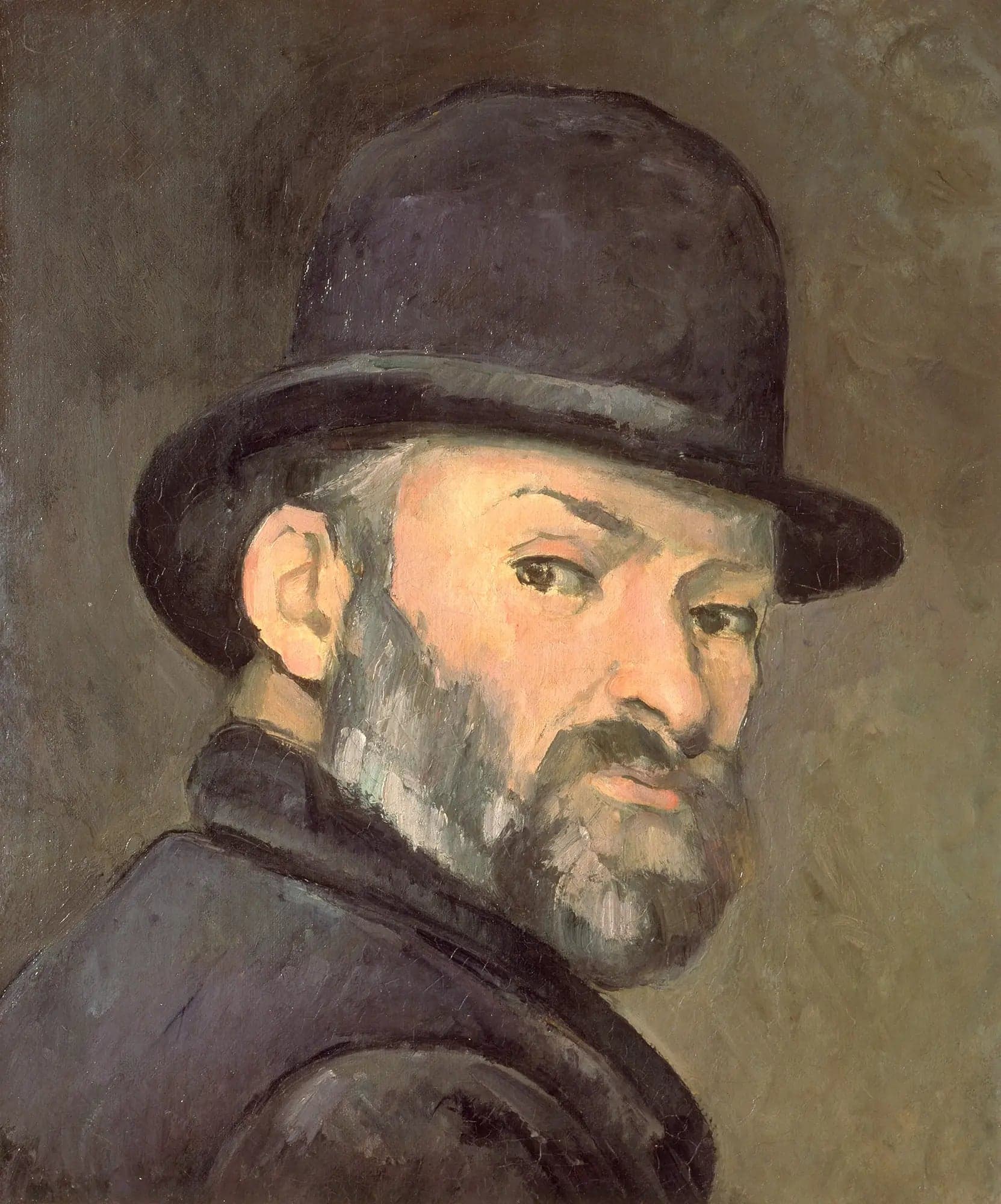
Cezanne with a Bowler Hat
- Original dimensions
- 34 x 42 cm
- Museum
- Stávros Niárchos Collection
- Year
- 1886
Scene depicted
The playful slate of Paul Cézanne reveals the human being at the heart of his existence, thoughtful and introspective. This painting reveals the face of the artist himself, capturing the complexity of the human soul. The harmony of colors and shapes testifies to a quest for truth, expression, and beauty. Each brushstroke tells a story, that of an individual facing the world, sitting with serenity.
Historical context
Created in 1886, this painting is located in Aix-en-Provence, France, during the post-impressionist movement. It is a flourishing period where Cézanne, master of the canvas , gradually detaches himself from impressionist conventions to explore a new dimension in his art. Currently, the painting is part of the prestigious Stávros Niárchos collection, where it benefits from an enriching exhibition for art lovers.
Place in the artist's career
Cezanne au chapeau melon is a reflection of Cézanne's artistic journey, marking a threshold towards stylistic maturity. Among his other iconic paintings like “Apples and Biscuits” and “The Bridge of Maincy,” this painting conveys his unique vision of composition, linking structure to emotional instinct.
Anecdote
“Light is the soul of painting,” said Cézanne. In the early morning of a sunny spring, a soft light filtered through the branches of an oak, caressing the face of a man dressed in a bowler hat. This fleeting moment inspired a masterpiece that, through timelessness, offers us both fragility and strength. In Cezanne au chapeau melon , this anecdote transforms into a vibrant pictorial work .