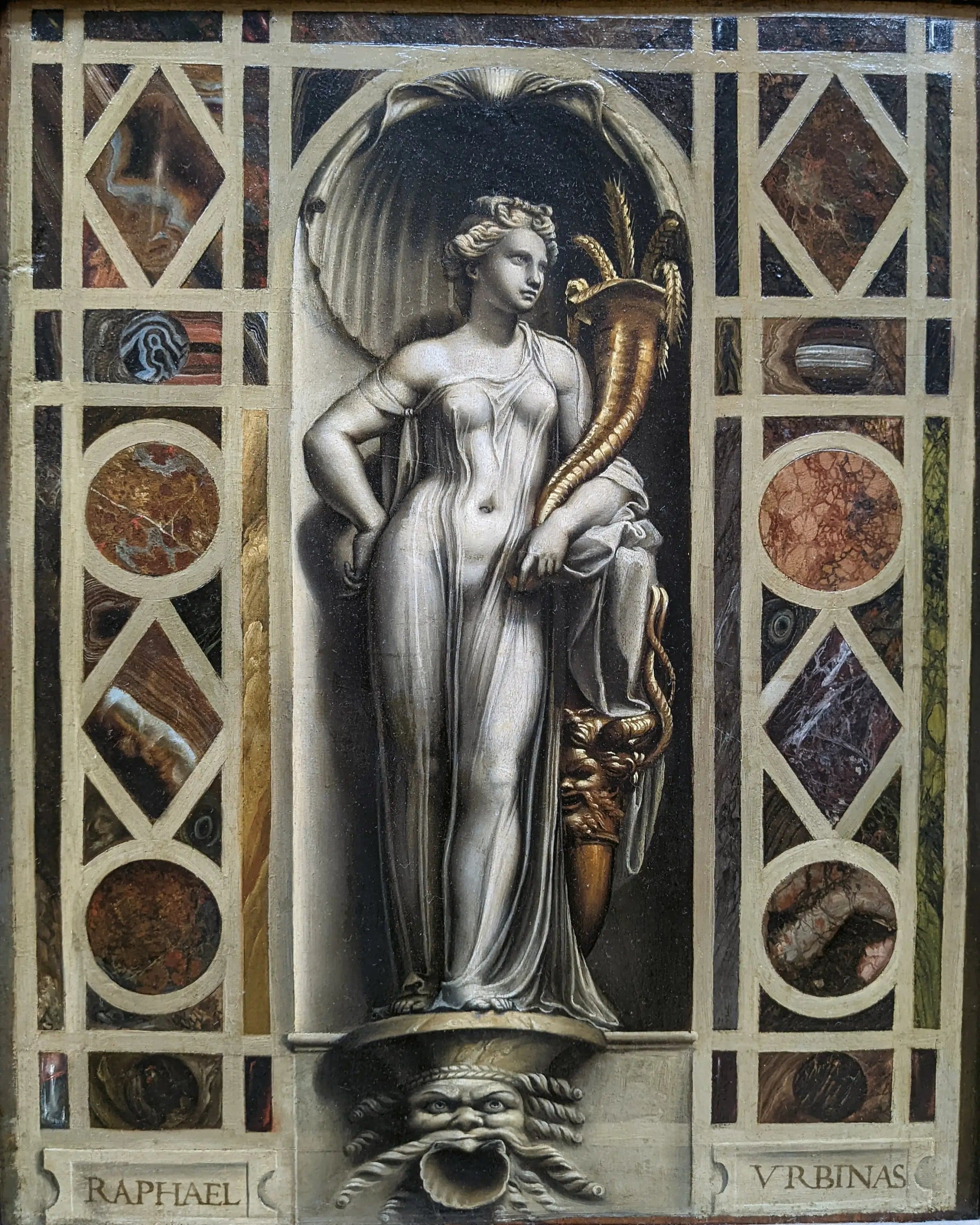
Ceres
- Original dimensions
- 31.3 x 38.4 cm
- Movement
- High Renaissance
- Museum
- room 710
- Year
- 1516
Scene depicted
"Ceres" constitutes an emblematic representation of the Roman goddess of agriculture, where mythology intertwines with reality. This composition takes us into a dialogue between humanity and nature, promising the cycle of seasons and the fertility of the fields. A true homage to the power of nature orchestrated by Raphael, who manages to immortalize the divine beauty of this iconic figure.
Historical context
Created in 1516 in the heart of the High Renaissance , the painting "Ceres" by Raphael results from a time when art transcends the boundaries of thought and perception. Currently displayed in room 710 of a prestigious museum, this canvas not only captures the eye, it embodies the soul of the city of Rome, a moving crossroads of cultures and knowledge, where each brushstroke resonates with the very essence of the artistic movement of the time.
Place in the artist's career
"Ceres" stands as a milestone in Raphael's career, illustrating his transition to artistic maturity. In parallel with his works such as "The Madonna with the Long Neck" and "The School of Athens," this painting reveals an evolution: both artistic and emotional, where the influences of nature and ancient forms perfectly merge in an enchanting visual ballet.
Anecdote
Raphael once said: "Inspiration is often a gentle breeze that caresses the soul in the early morning." That morning, under the sweet scent of spring blooms, he wove dreams on his canvas, creating a pictorial work that speaks to us through the ages. The scene depicted seems to vibrate with a palpable, memorable, and eternal emotion.