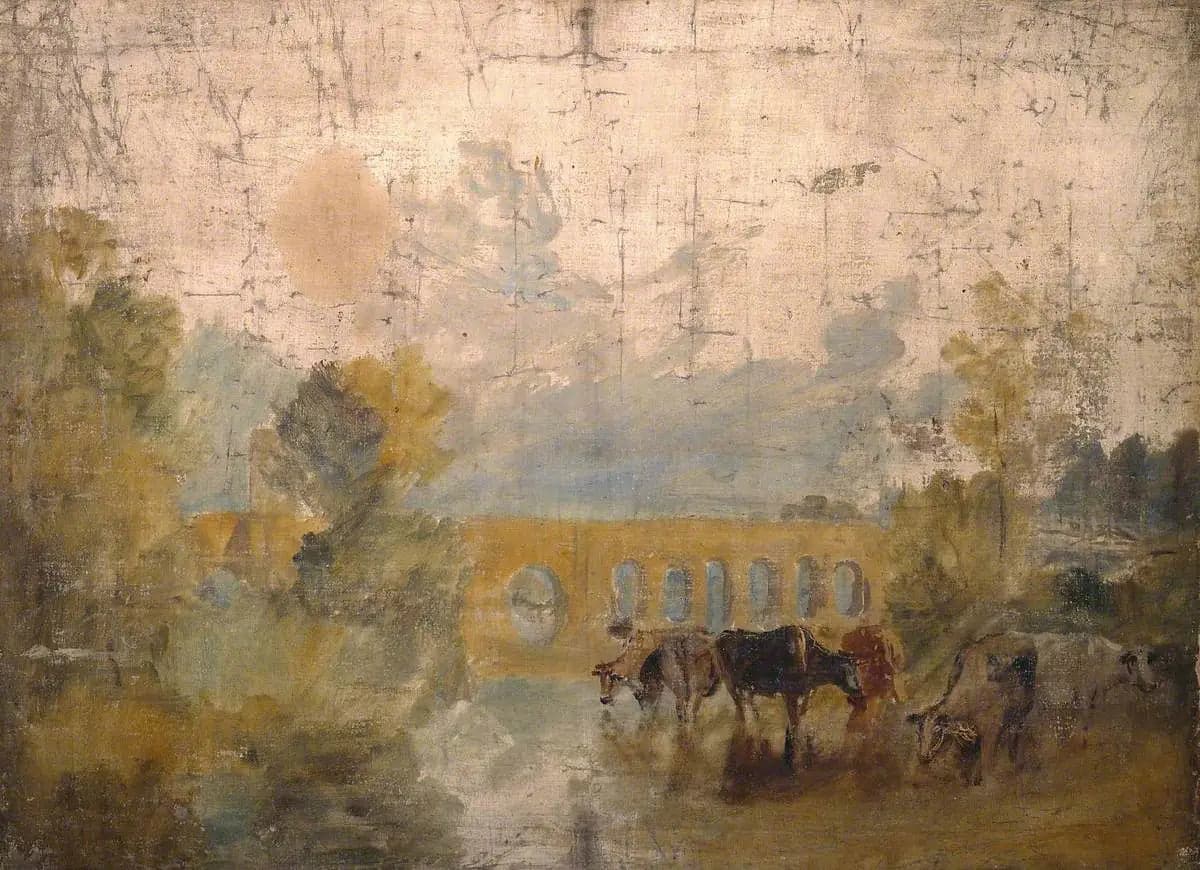
Caversham Bridge with Cattle in the Water
- Original dimensions
- 85.4 x 115.8 cm
- Museum
- Tate
- Year
- 1806
Scene depicted
This painting depicts a scene floating in time where cows graze by the river, while a delicately rendered wooden bridge connects the banks. Light plays on the water, bringing life and movement to this pictorial work. The horizon seems infinite, inviting the observer to immerse themselves in this moment of tranquility.
Historical context
Created in 1806, this painting is an iconic work by Joseph Mallord William Turner that belongs to the Romantic movement, an artistic current that values emotional expression and nature. The canvas, currently displayed at the Tate museum in London, offers a fascinating glimpse into rural life in England in the early 19th century, merging idyllic atmosphere and subtle nuances.
Place in the artist's career
Caversham Bridge with Cattle in the Water is at the heart of Turner's career, illustrating his transition to mastering the Romantic landscape. In parallel with works such as The Fighting Temeraire and The Slave Ship, this painting shows a refinement of his technique and emotional interpretation of the natural world.
Anecdote
“My brush is like a feather dancing in the wind.” Such were Turner's words, evoking his inspirations that often arose in the heart of vibrant landscapes. The morning he sketched the relationship between cattle and river is the perfect illustration of the symbiosis between man and nature, capturing the soul of the canvas .