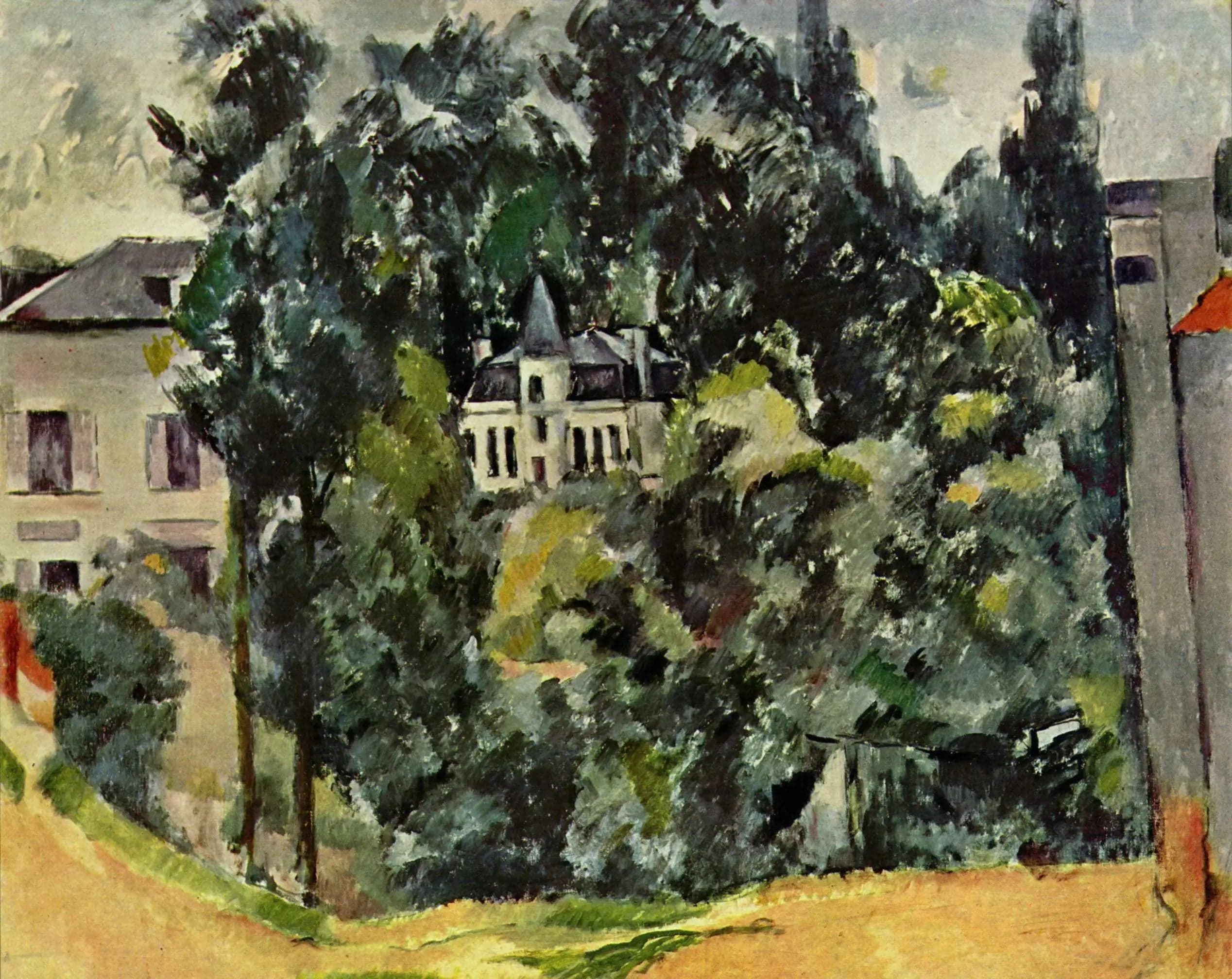
Castle near Paris
- Original dimensions
- 92 x 73 cm
- Museum
- Museum of Fine Arts Bern
- Year
- 1888
Scene depicted
The captivating scene of the canvas “Château des environs de Paris” depicts a charming, soft, and luminous landscape, surrounded by lush greenery. Cézanne strives to illustrate the harmony between the castle and its natural environment, thus capturing an essence of tranquility and rural beauty. This painting aims to be a visual contemplation, a moment suspended in time.
Historical context
Created in 1888, this painting , emblematic of the Impressionist movement, is set in a Paris experiencing a vibrant artistic effervescence. Paul Cézanne , a major figure of this era, captures the essence of the landscapes of southern France, where light and color intertwine. The canvas is currently housed at the Museum of Fine Arts Bern , reminding art admirers of the extraordinary evolution of painting during this period.
Place in the artist's career
The canvas “Château des environs de Paris” is part of a pivotal period in Cézanne's career, marking his transition from traditional Impressionism to a more structured work. In parallel, one can observe works like “The Large Bathers” and “Mont Sainte-Victoire,” which testify to the evolution of his painting technique and his emotional approach to painting .
Anecdote
“A canvas must be a reflection of nature, a burst of light on the canvas.” These words resonate when contemplating this work, painted on a spring morning, awakening the senses through the serenity of its landscape. The masterpiece , a symbol of harmony between man and nature, reveals itself through a vibrant display of colors and forms.