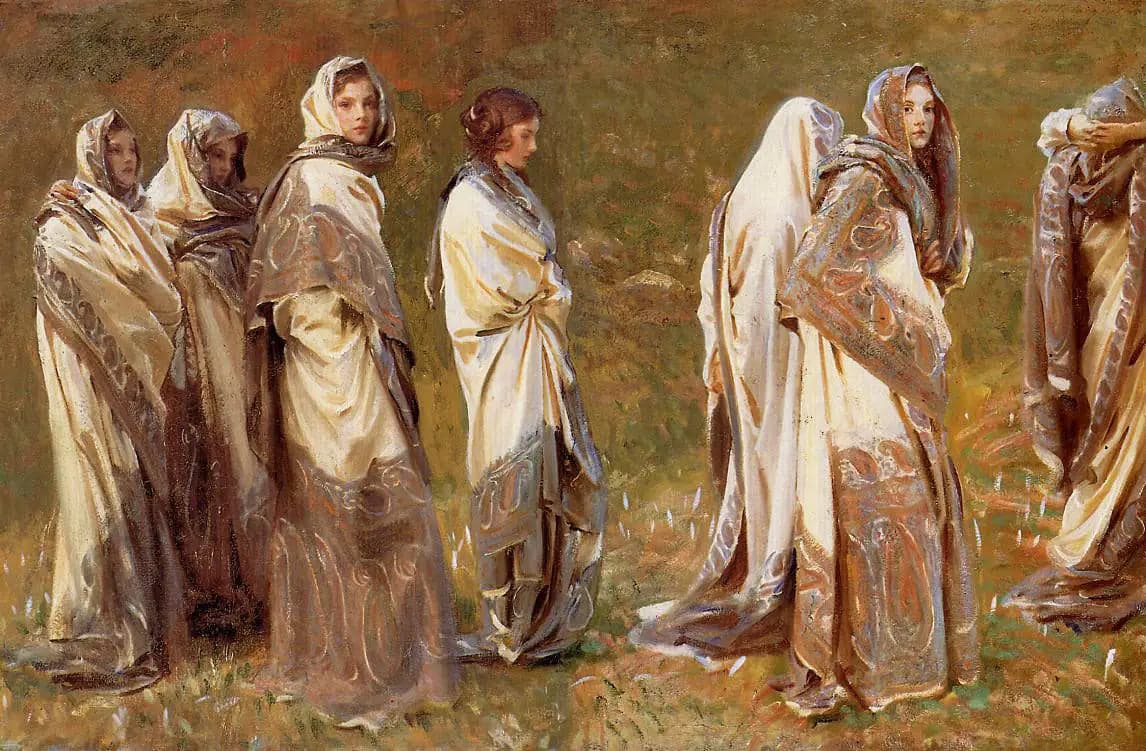
Cashmere
- Original dimensions
- 109.2 x 71.1 cm
- Museum
- Not specified
- Year
- 1908
Scene depicted
In this captivating painting , Sargent manages to capture the essence of a world where the majestic mountain stands against lush nature. Every element, from the shadows of the trees to the clarity of the skies, harmoniously dialogues, celebrating the balance between man and his environment. This painting becomes an open window to visual wonders, offering a glimpse into the eternal beauty of Kashmir.
Historical context
Created in 1908, this canvas comes to life in a world where Impressionist art dominates minds, at a pivotal time in the history of painting. John Singer Sargent , a renowned artist, casts his dazzled gaze upon the enchanting landscapes of Kashmir. The vivid colors and dynamic forms of this painting evoke a vibrant reality, merging elements of the East with Western sensibility. Although the location of this tableau is not specified, its artistic legacy continues to enchant art lovers.
Place in the artist's career
This painting marks a turning point in Sargent's career, situated in a period of artistic maturity. Compared to other works like “Portrait of a Young Woman” and “The Gardens of the Villa of Portofino,” there is a growing desire to explore freer and more poetic compositions. "Kashmir" thus represents a constant search for harmony between light and emotion.
Anecdote
“The light of Kashmir dances on the canvas , like a summer melody, infusing unprecedented life into every brushstroke.” Thus, Sargent captures the magic of the moment, inspired by the brilliant lights and the sweet scent of spices that float in the air. Every detail of this painting evokes a living tableau of colors and sensations.