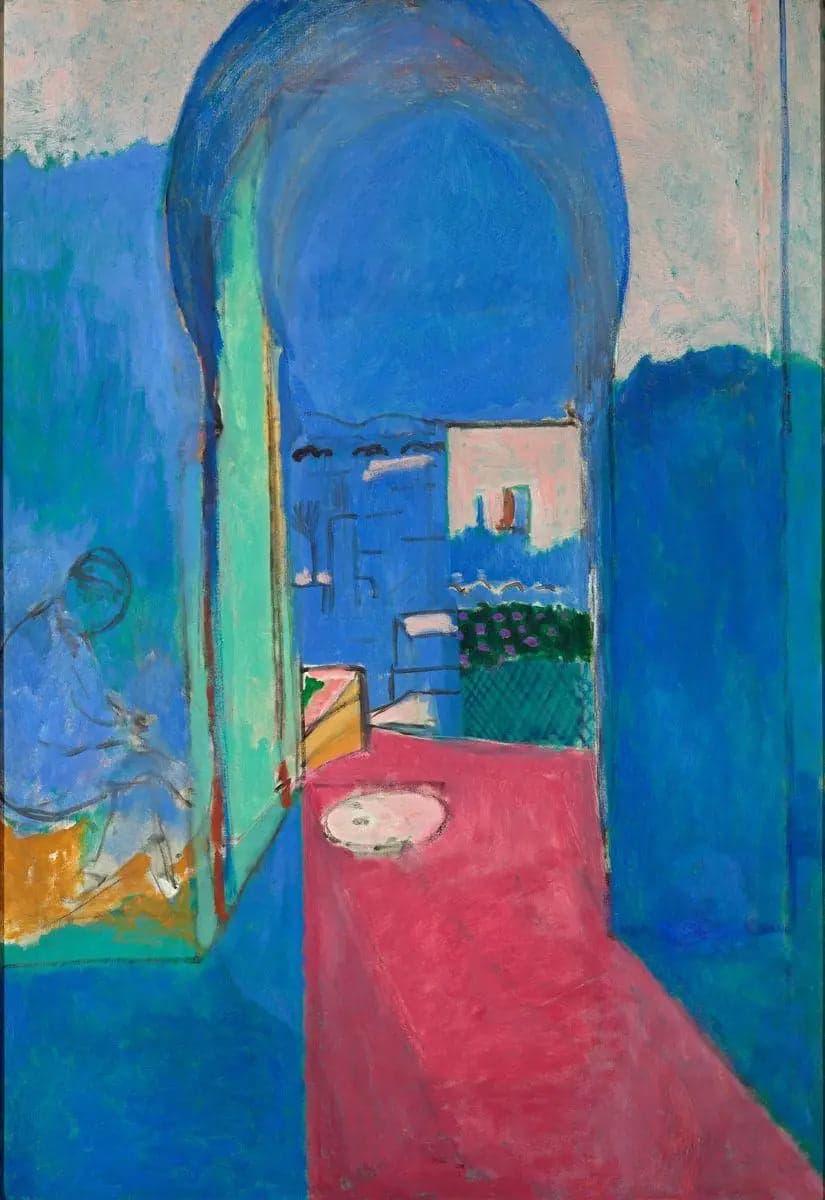
Casbah Gate
- Original dimensions
- 80 x 116 cm
- Museum
- Pushkin Museum of Fine Arts
- Year
- 1912
Scene depicted
In this composition , Matisse invites us to cross the Porte de la Casbah, this archetypal emblem of Mediterranean architecture. Geometric shapes intertwine, light plays with shadows, and every shade of color evokes the age-old traditions of Algeria. The canvas exudes an almost palpable serenity, engaging the viewer in a sensory journey through its history.
Historical context
In 1912, at the heart of the Fauvist movement, Henri Matisse created the sensational Porte de la Casbah . This iconic canvas, displayed at the Pushkin Museum of Fine Arts in Moscow, is the result of an era where color and light break free from conventions. Matisse draws his inspiration from the sunny streets of his Algerian lawn, where beauty and simplicity meet, creating a masterpiece of modern expressionism.
Place in the artist's career
The Porte de la Casbah represents a turning point in Matisse's career, marking the peak of his Fauvist style. Compared to The Dance and The Women of Algiers , this work highlights the evolution of his approach, blending vibrant colors and formal simplicity, which reflects his artistic maturity.
Anecdote
“Art must be a source of light and color,” Matisse reportedly said during the creation of this painting . Imagine a morning scented with the floral essences of the gardens of Algiers. This magical moment, filled with vibrant light, nourished the soul of this unique canvas , capturing the essence of a fascinating culture.