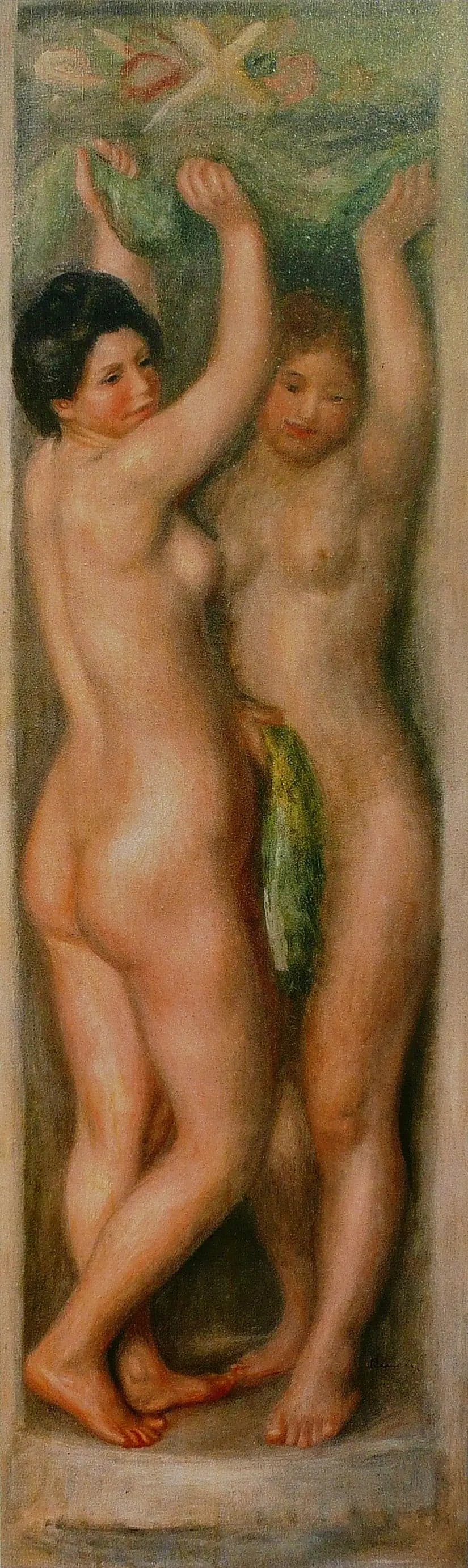
Caryatids - Pierre
- Original dimensions
- 41 x 130 cm
- Museum
- Renoir museum
- Year
- 1909
Scene depicted
In the painting Cariatides , Renoir depicts graceful female figures, symbols of beauty and femininity, emerging like delicate pillars within a lush landscape. Every detail of this canvas evokes a harmony between nature and the human soul, creating a scene of moving sensuality and fragility.
Historical context
Created in 1909, the painting Cariatides by Pierre- Auguste Renoir embodies the impressionist movement, born in France in the 19th century. This canvas came to life in the picturesque setting of Cagnes-sur-Mer, where Renoir retreated to soak in the lights and colors of the South of France. Today, this remarkable painting is housed in the Renoir museum, a place dedicated to the legacy of this iconic artist.
Place in the artist's career
Cariatides stands as a significant milestone in Renoir's career, illustrating his period of artistic maturity. After notable works like Lunch of the Boaters and The Bathers , this painting reveals a transition towards a more subtle and introspective treatment of light and form, as well as his concerns about human beauty, enhancing the cascade of emotions he transposes onto canvas.
Anecdote
“When I paint these feminine forms, I feel the light of a spring morning caressing every curve,” Renoir is said to have tenderly remarked. This moment of inspiration, born from a gentle light and a peaceful atmosphere, gave life to this masterpiece that celebrates the eternal beauty of women.