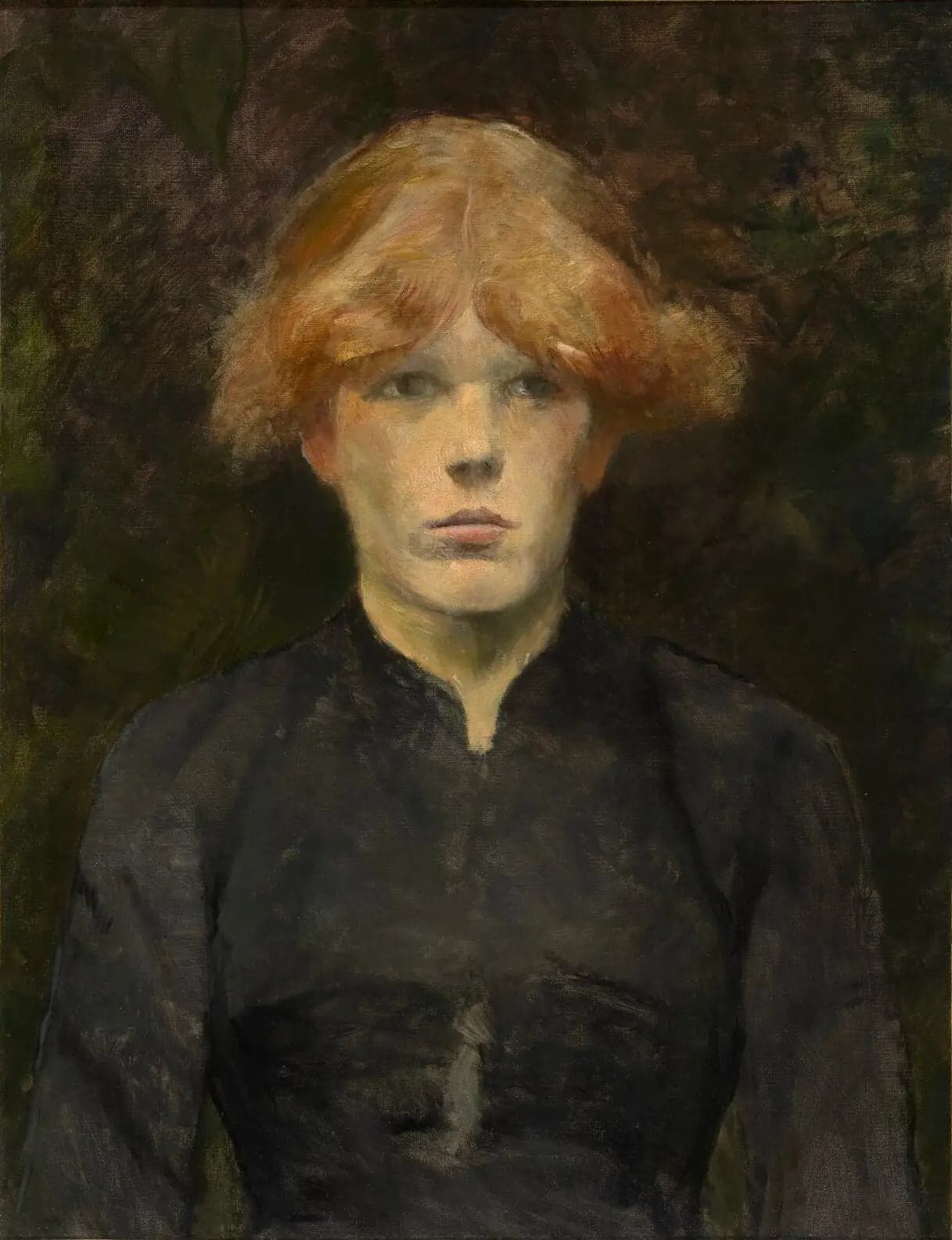
Carmen - Henri de Toulouse
- Original dimensions
- 54 x 65 cm
- Museum
- Clark Art Institute
- Year
- 1884
Scene depicted
The canvas features the famous figure from the opera "Carmen," exalting passion, tumultuous love, and tragedy. In one gesture, Toulouse-Lautrec combines dance with human emotion. This painting captures not only a performance but a vibrant sound universe, transcending the viewer into a world rich in sensations and poignant confrontations.
Historical context
Created in 1884, in Paris, this painting is at the heart of the artistic movement of impressionism , marked by modernity and the intimacy of everyday life scenes. The canvas is currently exhibited at the Clark Art Institute , a collection where art history intertwines with emotion. This masterpiece illustrates the genius of Toulouse-Lautrec, an artist who, through his sensitivity, managed to capture the essence of fleeting moments of life.
Place in the artist's career
Carmen represents a turning point in Toulouse-Lautrec's career, showcasing his ability to merge realism and psychological analysis. It is interesting to compare this pictorial work to other creations, such as "At the Moulin Rouge" and "The Café-Concert Singer," which all reflect his quest for expression and authenticity. Thus, the painting Carmen fits into a period where the artist engages these ideas with unprecedented intensity, paving the way for deeper explorations of the human condition.
Anecdote
“I aspire to transcribe life in all its splendor and delicacy,” said Toulouse-Lautrec, recalling a moment spent in a cabaret, where the magic of colors and movements inspired him. This particular moment perfectly aligns with the evocative power of the painting Carmen, immortalizing a dance that transcends time and space.