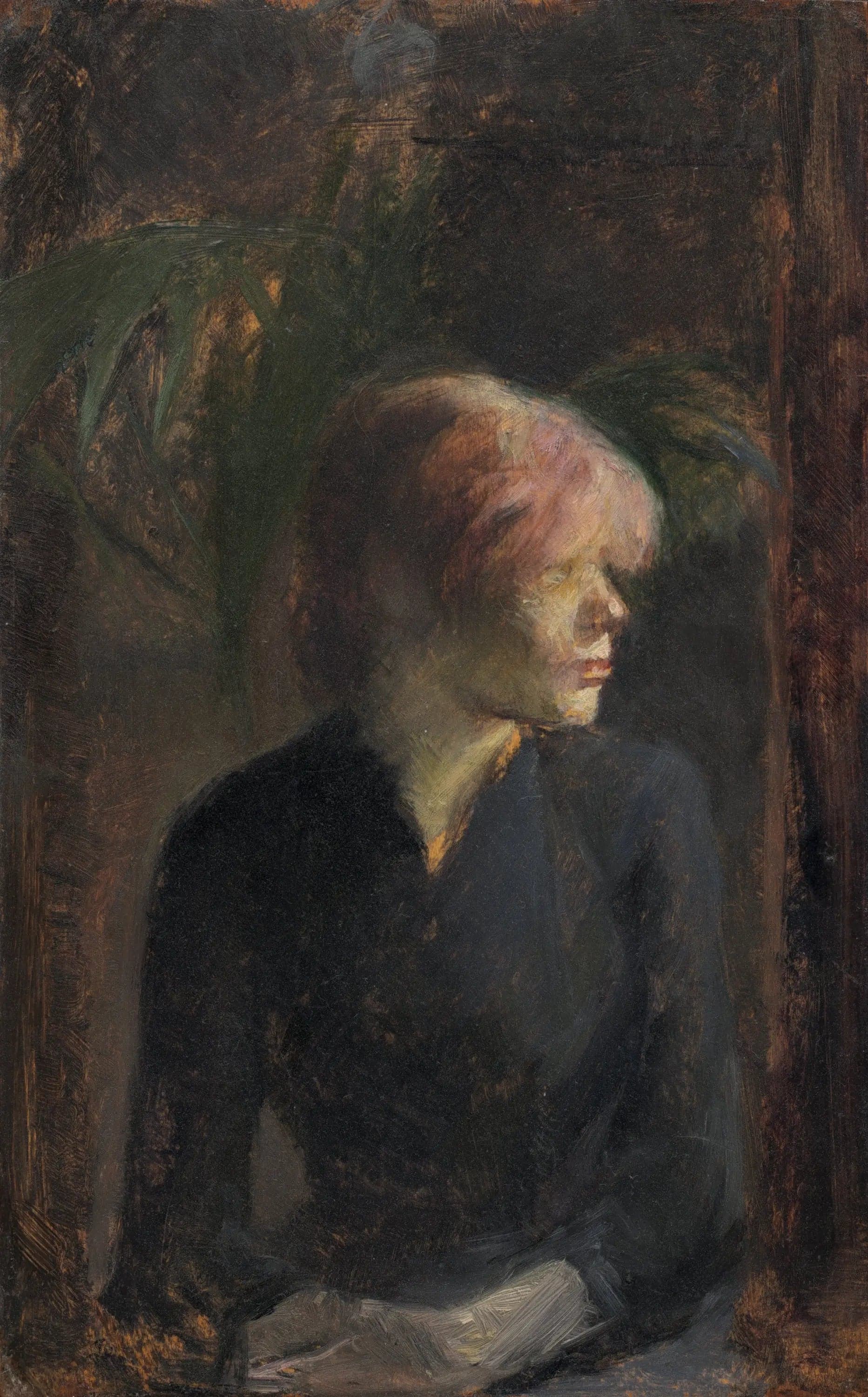
Carmen Gaudin - Henri de Toulouse
- Original dimensions
- 14.9 x 23.8 cm
- Museum
- National Gallery of Art
- Year
- 1885
Scene depicted
The painting “Carmen Gaudin” captures the essence of a fascinating woman, sitting with tranquil grace. In the midst of an intimate environment, the soft light plays on her delicate features, revealing complex emotions behind a serene face. This painting skillfully illustrates not only the outer beauty of its subject but also a palpable emotional depth, a reflection on the feminine nature of the time.
Historical context
Created in 1885 in Paris, the vibrant capital of France, this iconic canvas is part of the artistic movement of Post- Impressionism . At that time, the city was the home of an unprecedented cultural and artistic effervescence. The painting represents an era where realism blends with a joyfully colorful aesthetic, and where Parisian nightlife inspires many artists, including the talented Henri de Toulouse-Lautrec . The painting is currently displayed at the National Gallery of Art , a prestigious place that preserves this work that is both tactile and vibrant.
Place in the artist's career
This painting marks one of the early stages of Toulouse-Lautrec's artistic maturity, a true creative turning point. Through “Carmen Gaudin,” he unfolds his unique talents that would be even more successful in his later works such as “At the Moulin Rouge” and “The Toilette.” This painting illustrates his remarkable technical evolution, particularly the use of colors and forms that would transform throughout his career to become emblematic of his style.
Anecdote
“Every face I meet is a blank canvas, a story to tell.” This quote from Toulouse-Lautrec evokes the magic of a sunny morning in Montmartre, where the artist crossed paths with the captivating gaze of Carmen Gaudin. It is there that inspiration blossomed to bring this masterpiece to life, his first encounter with a muse who would capture his imagination.