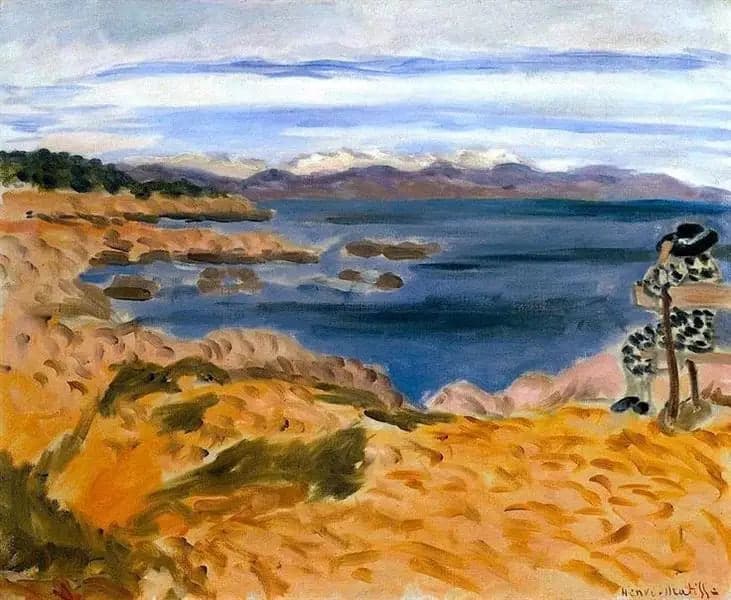
Cap d'Antibes
- Original dimensions
- 50.6 x 61.2 cm
- Museum
- Tate
- Year
- 1922
Scene depicted
This canvas illustrates the striking beauty of the Mediterranean Sea, where azure hues blend with vibrant yellows, oranges, and greens. The gaze is immediately captivated by the horizon, where the sky meets the waves, creating a composition filled with light and life. Matisse wonderfully translates the almost dreamlike allure of this coastal landscape, echoing his explorations of Impressionism while imposing his unique vision.
Historical context
Created in the heart of the 1920s, Cap d'Antibes is part of the Fauvist movement, filled with bold colors and liberated forms. This painting , created by Henri Matisse , evokes a dazzling summer on the Côte d'Azur, at a time when art and landscape meet in a vibrant embrace. Currently housed in the Tate Museum, this canvas measuring 50.6 x 61.2 cm becomes a witness to a place where natural beauty transcends time.
Place in the artist's career
Cap d'Antibes is situated at an important crossroads in Matisse's career, marking the beginning of his artistic maturity. Two other canvases , such as “The Dance” and “The Joy of Life,” reflect a technical evolution towards the use of color as an emotional language. This painting summarizes the very essence of his style, establishing a dialogue with his earlier works while paving the way for future explorations.
Anecdote
“Every color in the world sings a word that only the soul can hear.” On a radiant morning on the Côte d'Azur, Matisse felt a deep connection with the light and landscapes, inspiring the genesis of this luminous masterpiece . The softness of the sea air and the whisper of the waves give the painting an original emotion, inviting the viewer to intimate contemplation.