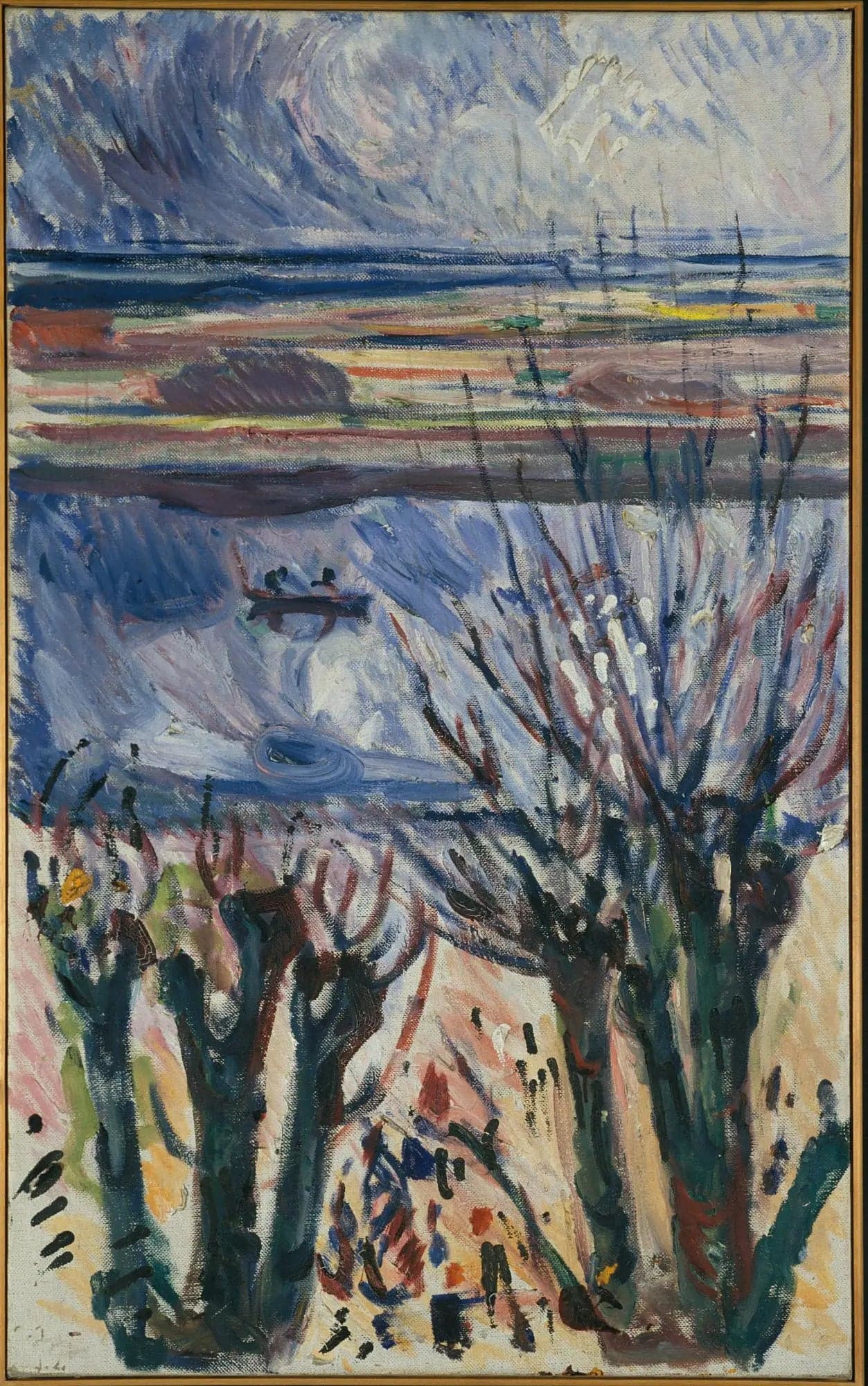
canal in Warnemünde
- Original dimensions
- 100 x 72 cm
- Museum
- Munch Museum
- Year
- 1908
Scene depicted
The scene depicted in "canal in Warnemünde" is an invitation to contemplate the balance between urbanity and nature. The vibrant colors describe a suspended moment where lights play on the calm waters, while sailboats trace delicate lines on the surface. It is a landscape that evokes both tranquility and movement, testifying to Munch's inner quest.
Historical context
Created in 1908, the painting "canal in Warnemünde" evokes the picturesque port of Warnemünde, a coastal town on the Baltic Sea in Germany. This painting is part of the Symbolist movement, a time when Edvard Munch explored themes of melancholy and human nature. Today, this painting is exhibited at the Munch Museum in Oslo, a temple dedicated to the unique vision of this artist. Its dimensions, 100 x 72 cm, testify to the detail and precision of this invaluable pictorial work.
Place in the artist's career
This painting marks a pivotal period in Munch's career, revealing his shift towards a more experiential approach to painting. Compared to his earlier works like "The Scream" and "The Madonna," "canal in Warnemünde" shows an evolution towards subtle beauty and an internalization of emotions, solidifying his stature in modern art.
Anecdote
"The beauty of nature, even in its melancholy, is the source of my inspiration." This quote resonates deeply with the creation of this masterpiece . Munch, on a clear morning by the canal, felt the gentle whisper of the waves and the light breeze caressing his face. He immediately immersed himself in the very essence of Warnemünde, capturing this harmony in his painting .
Major exhibitions
Munch and Warnemünde: 1907-1908