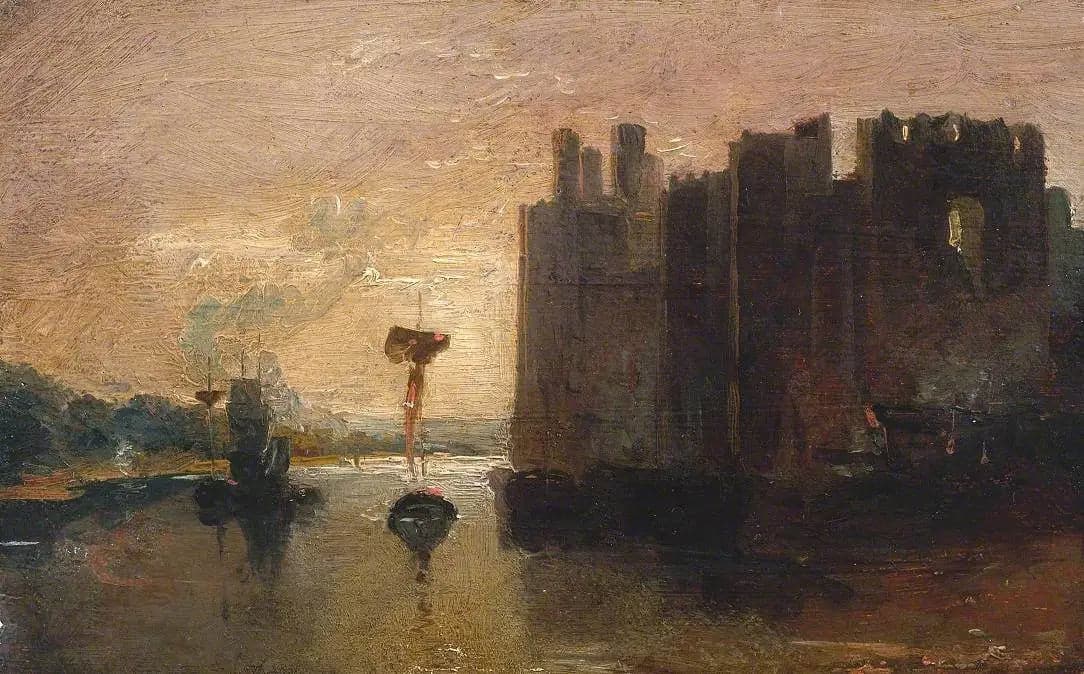
Caernarvon Castle
- Original dimensions
- 15.2 x 23.2 cm
- Museum
- Tate
- Year
- 1798
Scene depicted
The painting "Caernarvon Castle" unveils a composition that is both majestic and intimate of the historical ruins overlooking the sea. The sparkling waters and dynamic sky, sometimes engulfed by dark clouds, sometimes illuminated by the sun, testify to the climatic and atmospheric variations that fascinate Turner. This canvas , much more than a simple representation, evokes the spirit of the place, capturing the very soul of the castle and the energy of the surrounding landscape.
Historical context
The painting emblematic "Caernarvon Castle" was created in 1798, at the height of a revolutionary period artistically. Turner, a prominent figure of the romantic movement, captures here the majesty of Caernarvon Castle, located in Wales. In this era when England stands as a beacon of culture and creativity, this canvas positions itself as a witness to an innovative aesthetic, celebrated today at the Tate museum in London.
Place in the artist's career
"Caernarvon Castle" is part of Turner’s artistic maturity period, where he merges romantic elements with an almost impressionistic approach. By placing it alongside other works such as "The Fighting Temeraire" and "Rain, Steam and Speed", we understand the stylistic evolution of the artist, moving from the precision of outlines to a greater abstraction inspired by light and atmosphere.
Anecdote
“Light reveals hidden worlds” Turner is said to have remarked while standing before the castle at dawn on a misty morning. This quote resonates as a metaphor for his work. It is the meeting between the tangible and the ethereal, where each brushstroke evokes the serenity of a landscape and the echo of a glorious past, giving the painting an evocative power.