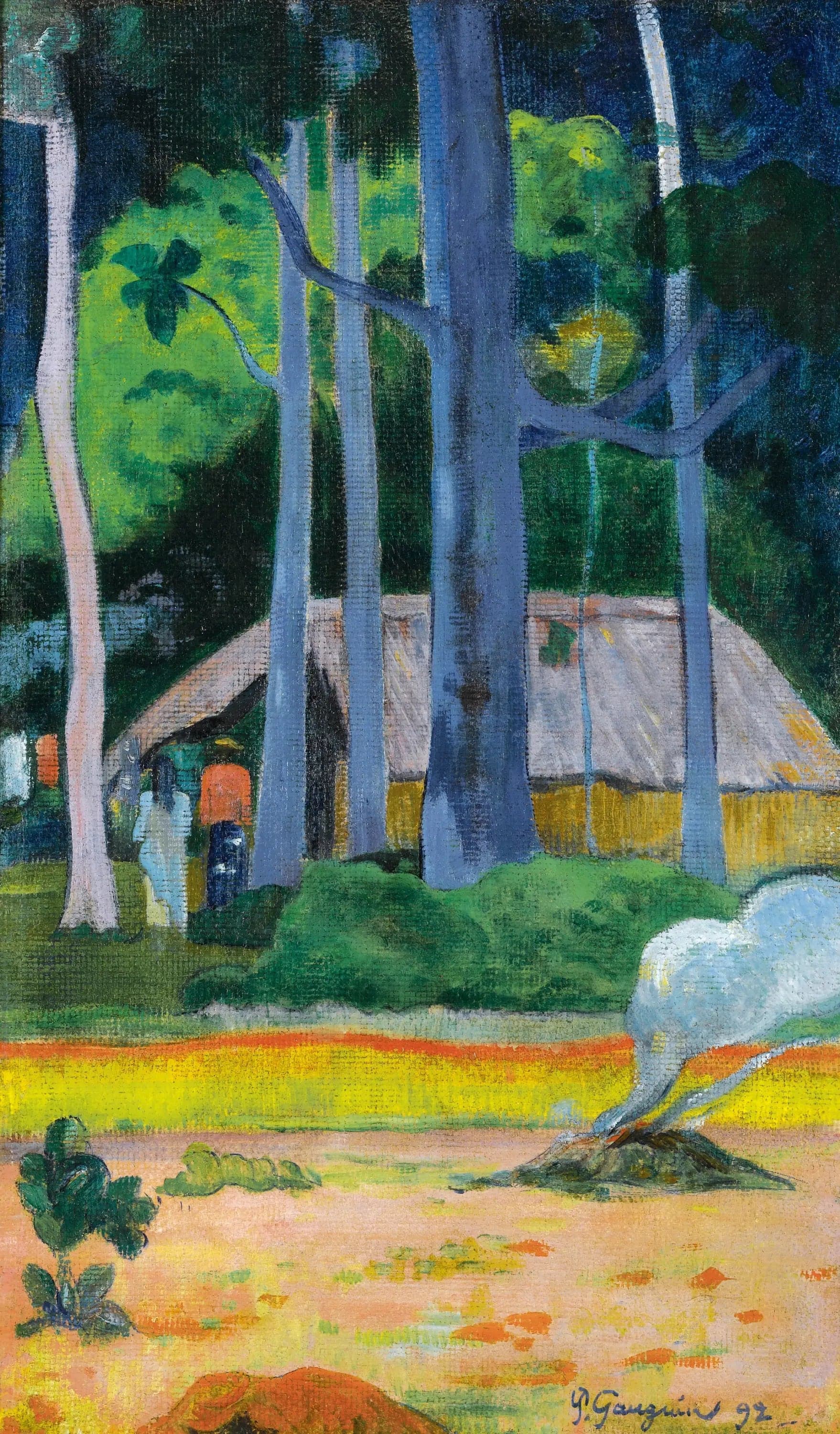
Cabin in the Trees
- Original dimensions
- 43.5 x 72.4 cm
- Museum
- Not specified
- Year
- 1892
Scene depicted
The painting “Cabin in the Trees” by Gauguin depicts a peaceful dwelling nestled among lush greenery. This masterpiece highlights the harmonious relationship between man and nature. The cabin, a symbol of refuge, becomes the silent witness of a space where the gaze wanders, encouraging the viewer to feel the tranquility of the place.
Historical context
Created in 1892, this painting is emblematic of the post-impressionist period of Paul Gauguin , an artistic movement that emerged primarily in Paris, but also in Pont-Aven where the artist found a second homeland. The painting, imbued with poetic melancholy, is not housed in a specific museum, but is part of the cultural heritage of the time that celebrates nature and introspection. The dimensions of 43.5 x 72.4 cm create a manifest presence on any wall, inviting escape.
Place in the artist's career
This painting is at the heart of Gauguin's career, a period when he refines his style, creating a mark that sets him apart in the art world. Alongside other famous paintings like “Vision after the Sermon” and “The Lusignan,” “Cabin in the Trees” illustrates the transition to a more intimate expression of his artistic vision, marking the peak of his pictorial explorations.
Anecdote
“I wish to get closer to nature, to soak it in. This painting is my communion with the essence of the earth.” This quote, although inspired, perfectly conveys the emotion felt by Gauguin at the dawn of his creation. The “Cabin in the Trees” evokes a morning intoxicated with the scents of humus and freshness, a suspended moment where the artist lets his imagination run free.