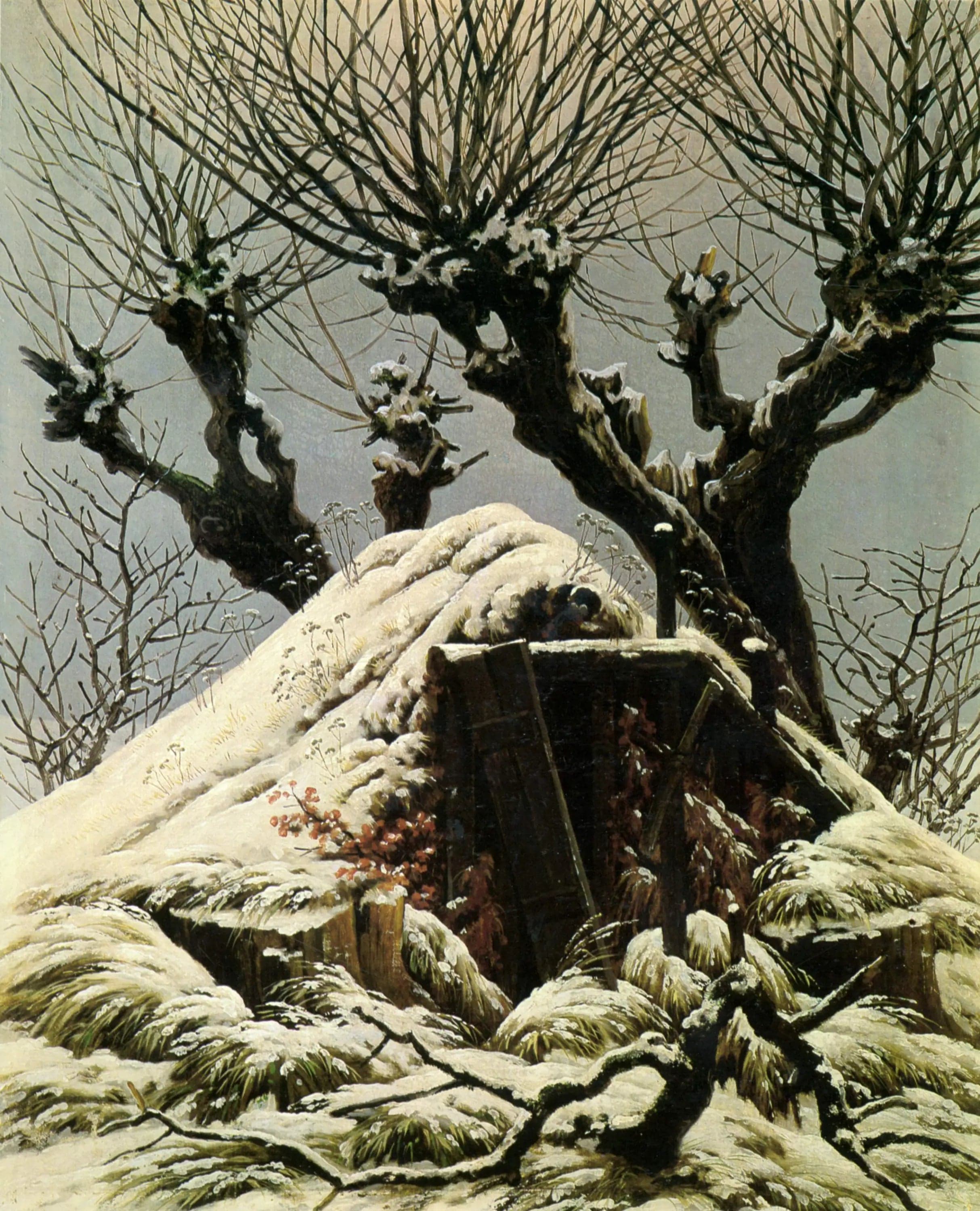
Cabin in the Snow
- Original dimensions
- 25 x 31 cm
- Museum
- Alte Nationalgalerie
- Year
- 1827
Scene depicted
In Cabin in the Snow , Friedrich captures a winter scene where a modest cabin, buried under snow, stands with dignity. The surrounding landscape, calm and enveloping, evokes a gentle melancholy, a soothing solitude. The bare branches of the trees bend under the weight of the snow, while the winter atmosphere transports the viewer into a world of silent contemplation, where nature and man coexist in fragile harmony.
Historical context
Created in 1827, right in the midst of the Romantic era, Cabin in the Snow is an emblematic painting of the aesthetic sensitivity of Caspar David Friedrich . This movement, born in Germany and spreading across Europe, celebrates nature and human emotions, exploring the soul in the face of the grandeur of the world. The painting , currently exhibited at the Alte Nationalgalerie in Berlin, reveals the beauty of a winter landscape imbued with melancholy, measuring 25 x 31 cm.
Place in the artist's career
Cabin in the Snow represents an essential phase in Friedrich's career, illustrating his mature style. Compared to other paintings such as The Traveler above the Sea of Fog and The Monk by the Sea , this composition reveals his exploration of human solitude in the face of majestic nature. Each work shows an evolution of his emotional approach, combining powerful visuals and spiritual introspection.
Anecdote
“The snow hides the details but reveals the essence of solitude.” This quote, inspired by Friedrich's work, evokes the moment he observed an isolated cabin, drowned in the bright whiteness of winter. It is a silent morning, where nature is quiet and each snowflake whispers a story. This feeling of peace and isolation powerfully reflects in Cabin in the Snow , this painting alive with the human soul.