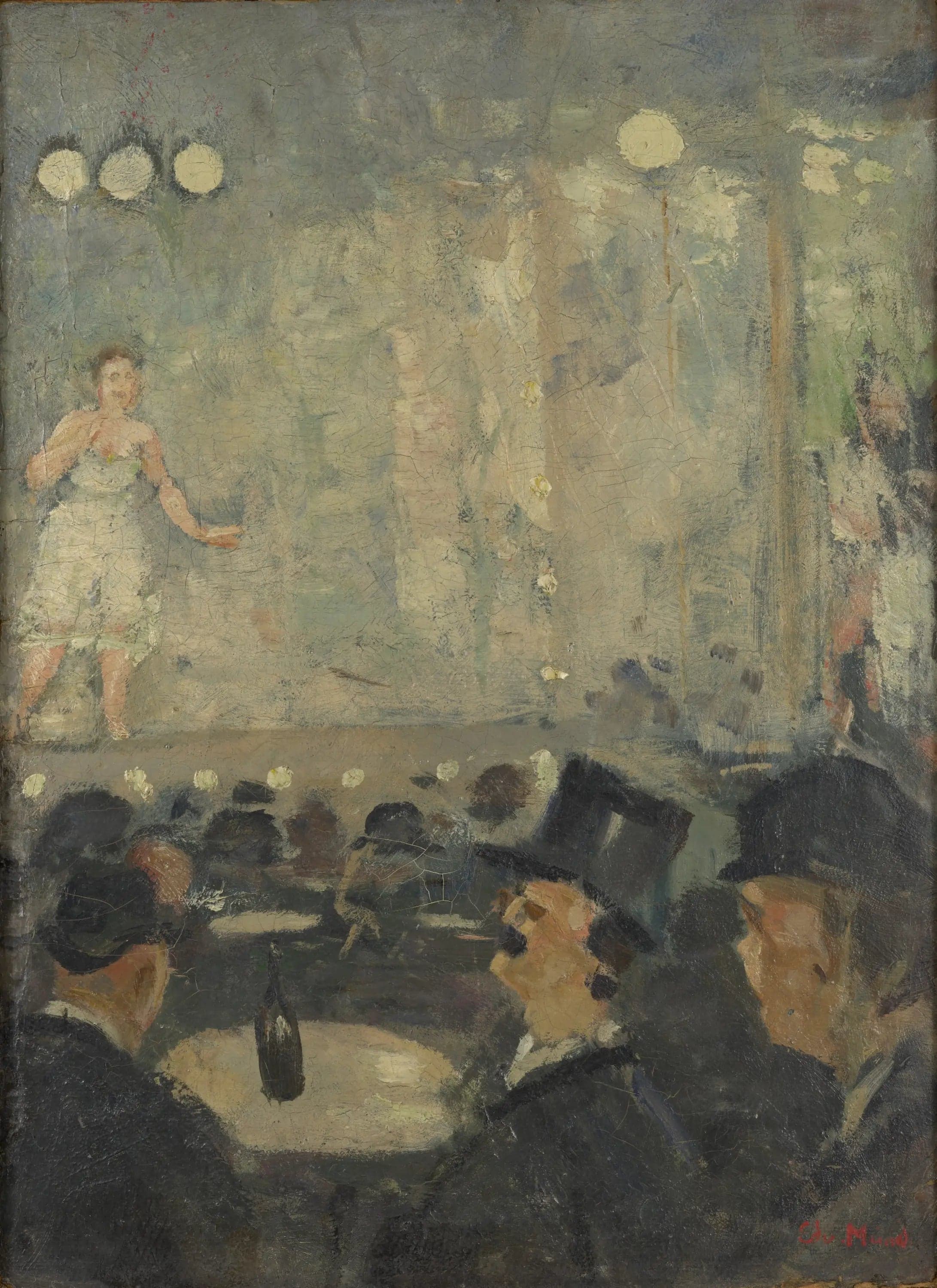
Cabaret
- Original dimensions
- 44 x 60 cm
- Museum
- Stenersen Museum
- Year
- 1887
Scene depicted
"Cabaret" immerses us in a lively scene where nightlife is expressed through vibrant silhouettes. The painting captures the intensity of the moment with a bold composition, revealing the contrasts of festive brightness and insidious shadow, a duality that lies at the heart of the human experience. Munch, with his inimitable flair, transcribes this ambiance into a rich and evocative visual experience.
Historical context
Created in 1887, the painting "Cabaret" by Edvard Munch is set against a vibrant backdrop of cultural effervescence in Oslo, Norway. This canvas , emblematic of the Expressionist movement, evokes a time when creativity was in full bloom. Today, it resides in the Stenersen Museum, where it continues to amaze visitors with its dimensions of 44 x 60 cm, conveying a unique atmosphere.
Place in the artist's career
This painting , a product of Munch's exploratory period, represents a crucial milestone in his career. Alongside "The Scream" and "The Dance of Life," "Cabaret" illustrates the artist's stylistic evolution, oscillating between rigorous formalism and liberated expressiveness. This canvas reflects a passionate quest, where Munch constantly questions the human soul.
Anecdote
"Human emotions plunge into darkness before rising to the light," said Edvard Munch . This quote resonates deeply with the genesis of his masterpiece , "Cabaret." Inspired by the tumultuous atmosphere of a Parisian cabaret, the artist captured a fleeting moment where joy and melancholy intertwine, thus giving birth to a memorable canvas .
Major exhibitions
Kan hende er det vakkert. Kunstsamleren Rolf Stenersen