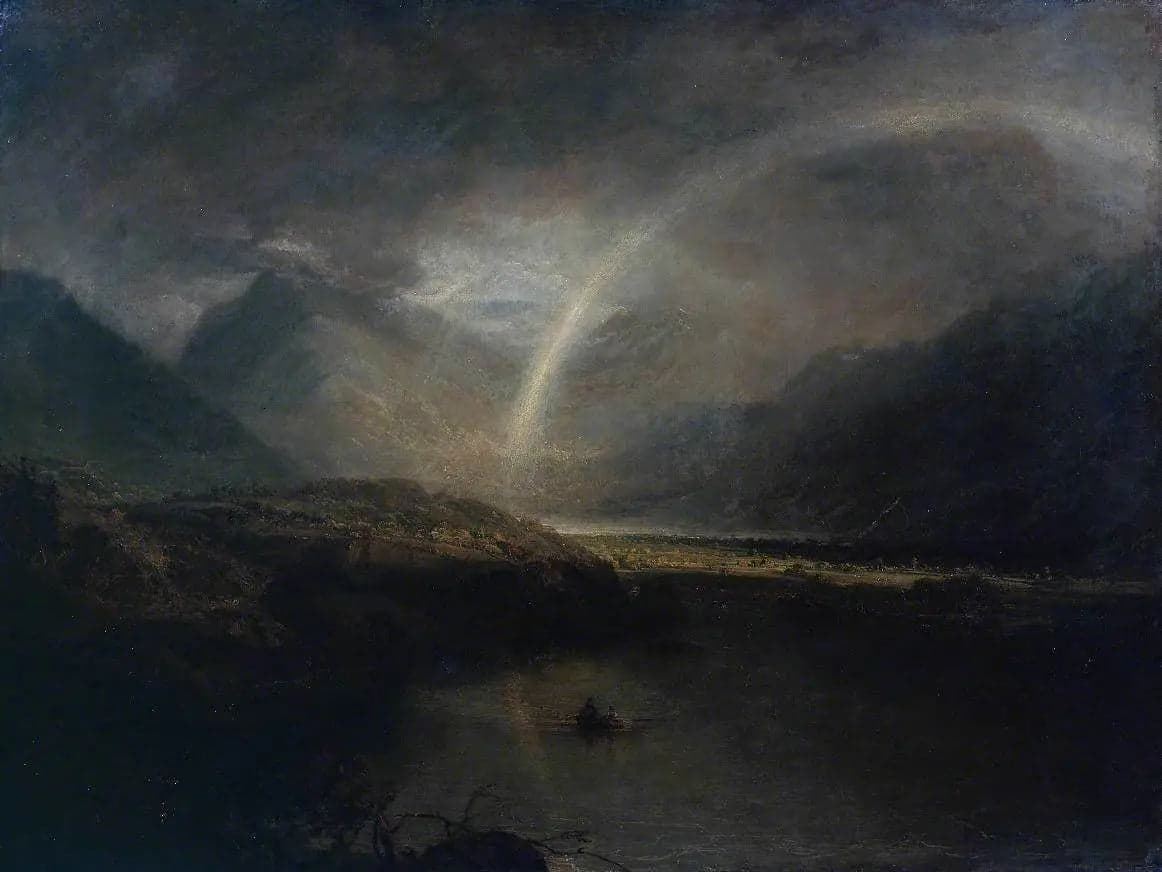
Buttermere Lake, with Part of Cromackwater, Cumberland, a Shower
- Original dimensions
- 88.9 x 119.4 cm
- Museum
- Tate
- Year
- 1798
Scene depicted
The painting depicts the majesty of the lakes of western England, where the muted light reflects on the calm water, disturbed by the ripples of sudden rain. The lush hills, bathed in an almost mystical atmosphere, invite the viewer to feel this communion with nature, sublimated by the subtle play of shadows and light.
Historical context
Created in 1798, this masterpiece is anchored in the breathtaking landscape of Cumberland, a region of the United Kingdom, famous for its lakes and mountains. This painting is emblematic of the romantic movement, a time when the artist, Joseph Mallord William Turner , was able to capture the wild beauty of nature with haunting precision. The canvas is currently on display at the Tate , a prestigious London museum.
Place in the artist's career
“Buttermere Lake” represents a pivotal moment in Turner’s career, a leap towards bolder and more emotionally charged compositions. This painting foreshadows his later masterpiece, “The Fighting Temeraire,” and subtly dialogues with works like “Rain, Steam and Speed,” where emotion and light intertwine in unprecedented ways.
Anecdote
“The light of a storm moving away is the most beautiful of spectacles,” said Turner when discussing his passion for tumultuous landscapes. This quote takes on full meaning in light of the canvas “Buttermere Lake,” which evokes the power of the elements during a shower. The artist was inspired by a tranquil morning, where nature expressed itself in all its splendor, heralding the rage of an impending storm.