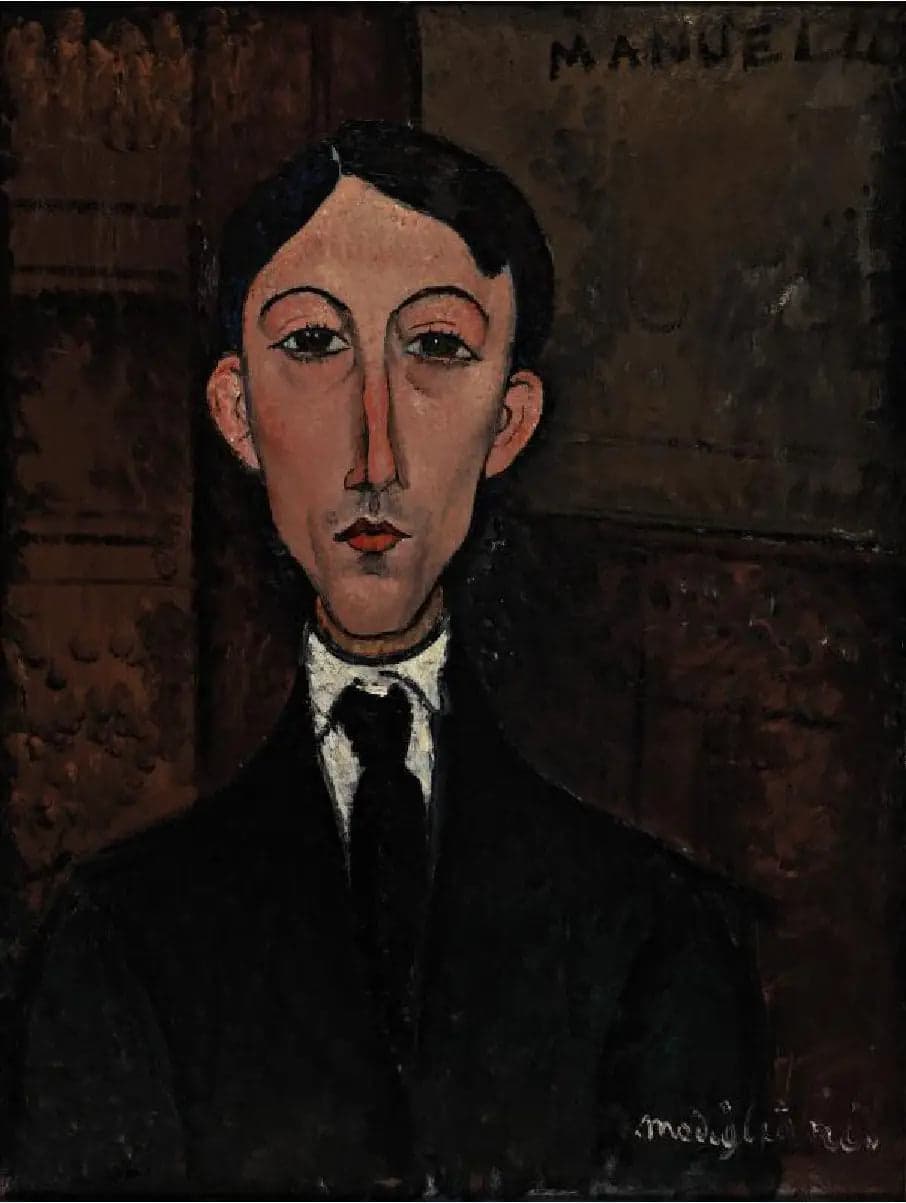
Bust of Manuel Humbert
- Original dimensions
- 51.4 x 66 cm
- Museum
- Not specified
- Year
- 1916
Scene depicted
The painting “Bust of Manuel Humbert” reveals a striking portrait, where pulses of feelings and stylized forms intertwine to create a vibrant atmosphere. With fluid contours and earthy color, this pictorial work is not just a simple portrait: it embodies a timeless elegance that emanates from the depths of the human soul.
Historical context
Created in 1916, during a period of artistic turmoil in Paris, this painting is part of the modernist movement. The painting captures the essence of an era where Modigliani, in his studio located on rue de la Grande-Chaumière, wove inextricable links between art and life. Although the exact location of this canvas is not documented, its imprint in the art world remains undeniable. Its size of 51.4 x 66 cm allows for a striking intimacy, inviting each viewer to dive into the heart of the work.
Place in the artist's career
This painting is part of a pivotal period in Modigliani's career, where his style evolves towards a simplification of forms and an increased emotional depth, similar to those of his famous “Heads” and portraits of Jeanne Hébuterne. “Bust of Manuel Humbert” represents a maturation, marking his stylistic peak in modern art.
Anecdote
“Every face I paint is a reflection of a lost soul, a fragment of the world in which I live.” This quote resonates like an echo of the painting created in the shadow of the Parisian Bohemia. In painting Manuel Humbert, a close friend, Modigliani captured not only a face but the very essence of an artistic camaraderie rooted in the breath of creation.