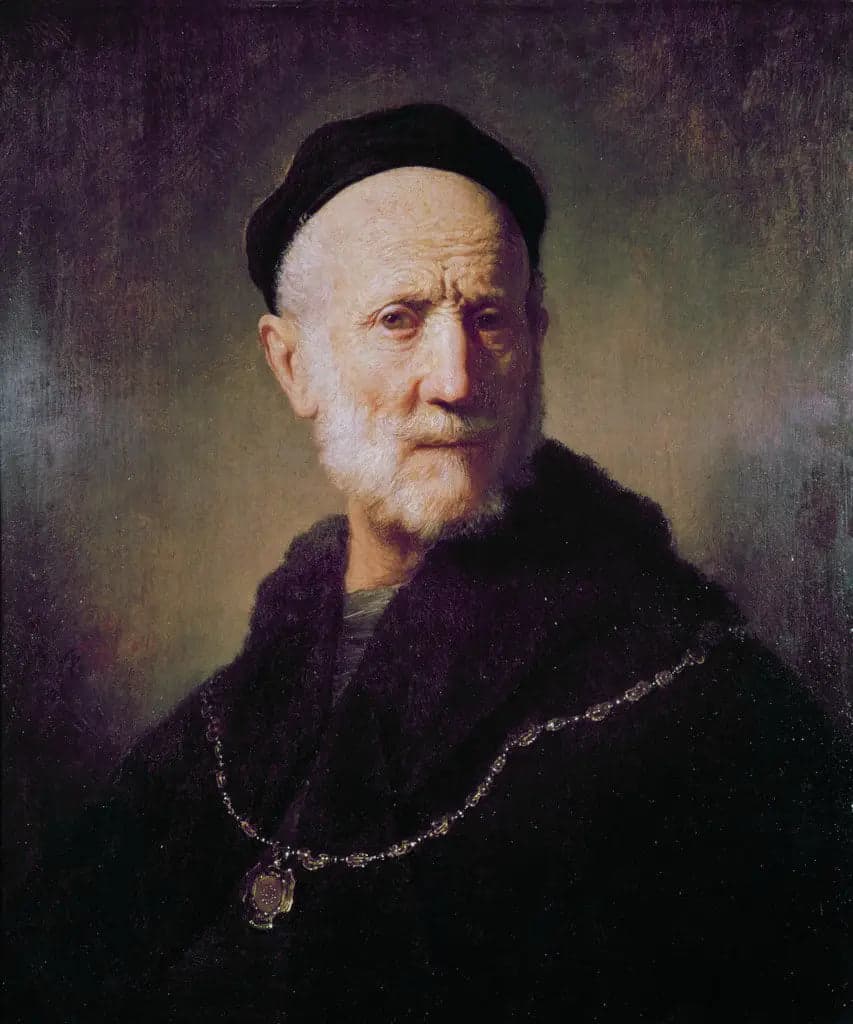
Bust of an old man
- Original dimensions
- 49 x 60 cm
- Museum
- private collection
- Year
- 1651
Scene depicted
This pictorial work focuses on the face of the elderly man, a bust that embodies wisdom and introspection. The features marked by time tell a life rich in experiences, while a soft light bathes his face, conveying an atmosphere of serenity and meditation. The composition challenges the viewer to contemplate not only the appearance but also the soul of this fascinating character.
Historical context
Created in 1651, during the Dutch golden age, this painting emblematic of Rembrandt is part of the baroque tradition. The canvas was painted in Amsterdam, a vibrant city of artistic and cultural exchanges. Currently, the painting is part of a private collection, thus preserving the essence of its time and its immense value.
Place in the artist's career
The Bust of an Old Man represents a phase of maturation in Rembrandt 's career. At this time, the artist brilliantly merges previous influences while laying the foundations of his unique technique. In parallel, works such as The Night Watch and Self-Portrait testify to a constant evolution towards a stronger emotional depth in his paintings.
Anecdote
Rembrandt is said to have declared: “Every face tells a story, and in every wrinkle hides a poem.” It was in the softness of a spring morning, in the heart of the peaceful streets of Amsterdam, that the artist found inspiration for this masterpiece . This fleeting moment precedes the timeless expression captured in the deep gaze of this old man, resonating with a unique evocative power.