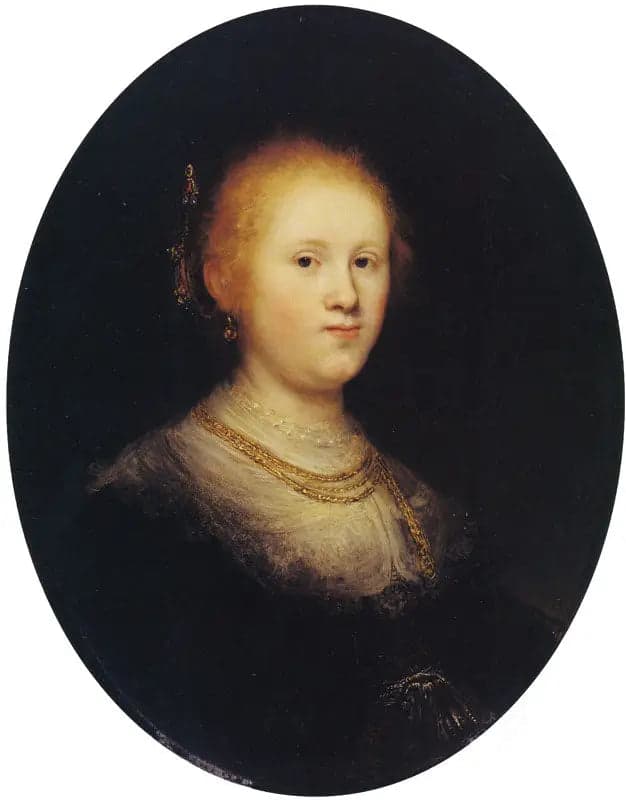
Bust of a Young Woman
- Original dimensions
- 49.2 x 63.8 cm
- Museum
- Allentown Art Museum
- Year
- 1632
Scene depicted
This painting depicts the bust of a young woman, whose serene expression engages the viewer. The artist succeeds in capturing the light in her hair, revealing the subtleties of her face. The gentle and thoughtful gaze seems to tell a story, filled with unexpressed emotions. Through this painting, Rembrandt invites us to introspection, to a connection with the soul of the subject.
Historical context
Created in the heart of the 17th century, in Amsterdam, the painting "Bust of a Young Woman" is part of the rich period of Baroque , an artistic movement centered on emotion and movement. At that time, the city is a dynamic cultural crossroads, a springboard for artists such as Rembrandt , whose innovative vision profoundly influenced the history of art. Today, this painting is part of the precious collections of the Allentown Art Museum, where it continues to amaze visitors with its depth and authenticity.
Place in the artist's career
The painting "Bust of a Young Woman" is situated at a turning point in Rembrandt's career, representing a peak in his mastery of chiaroscuro. At the same time, works such as "The Anatomy Lesson of Dr. Tulp" and "The Night Watch" showcase his technical and emotional evolution, reaffirming his status as an innovator in oil painting.
Anecdote
"Beauty lies in the light that dances on the face," is said to have remarked Rembrandt during its creation. Imagine an April morning, with the sweet scent of blooming flowers in the fresh air, where the artist encounters an ephemeral face in the alleys of Amsterdam. This fleeting meeting is said to have inspired the delicacy and psychological depth of this masterpiece , capturing the very essence of youth and feminine beauty.