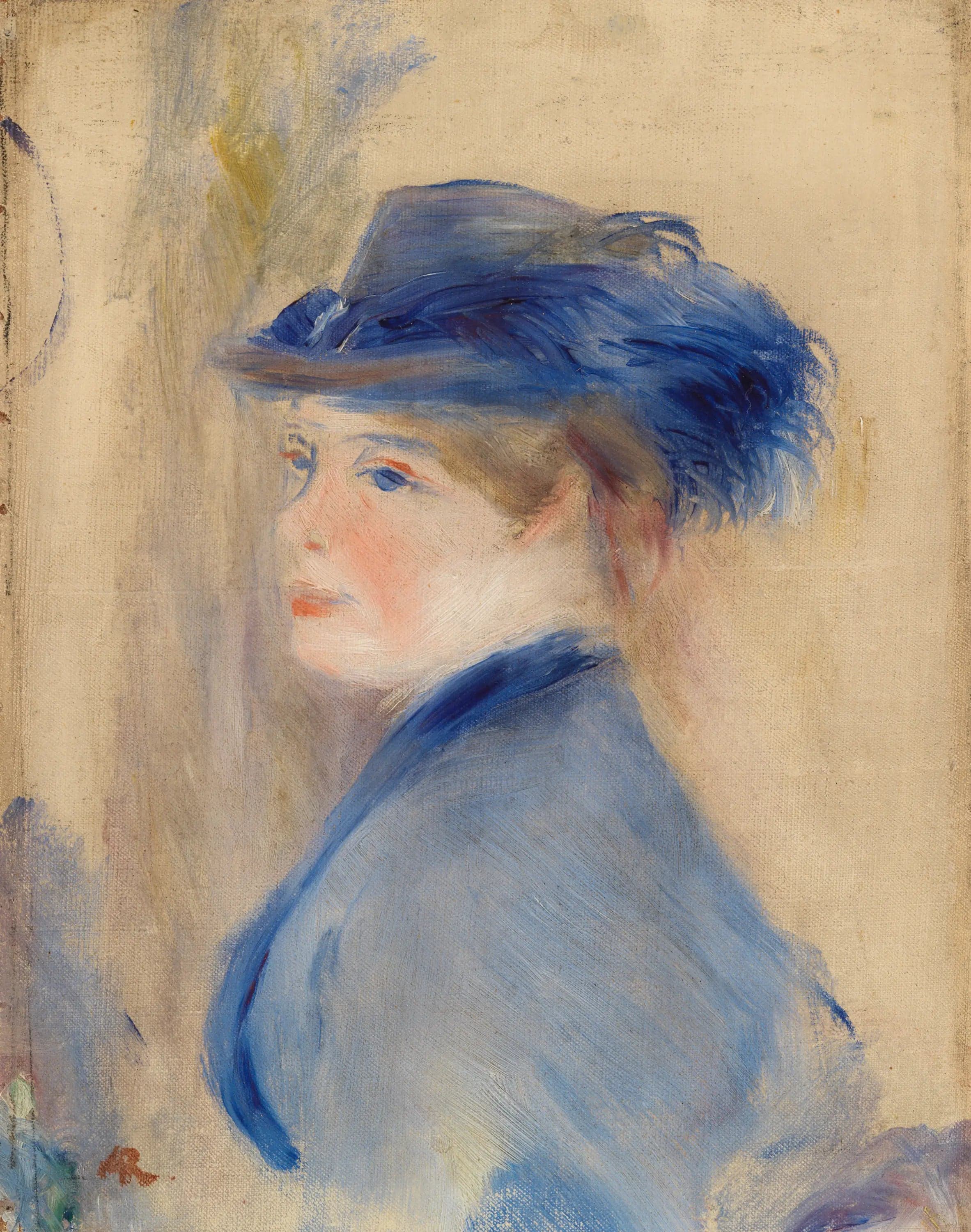
Bust of a Woman - Pierre
- Original dimensions
- 15 x 20 cm
- Museum
- Barnes Foundation
- Year
- 1875
Scene depicted
In this pictorial work, Renoir presents us with a delicately executed female bust, embodying an ideal of grace and serenity. The composition is centered on the face of a woman whose features are subtly rendered, bearing the marks of a simple yet touching beauty. It is not just a portrait, but a vivid expression of the human soul that, in the gaze, captures a story, a moment suspended in time.
Historical context
Created in 1875, this painting is set in the muted backdrop of the beautiful city of Philadelphia, at a time marked by the beginning of the Impressionist movement. The scene depicts not only an ideal of beauty but also reflects the cultural and artistic transformations of the 19th century. Currently housed at the Barnes Foundation , this canvas measures 15 x 20 cm, capturing a timeless essence within its small dimensions.
Place in the artist's career
The Bust of Woman stands as one of the first manifestations of Renoir's genius, situated in the midst of the Impressionist period. Indeed, it is a key turning point that precedes other canvases like The Grand Boulevards and Dancing in the City , works where he explores light and movement. Each painting reveals an evolution in his technique, this one being among the first stammerings of his artistic quest for luminosity.
Anecdote
Renoir once stated, “Beauty has no fixed form, it is found in the moment.” This quote could very well describe the fleeting moment that inspired him to create this masterpiece . Imagine a spring morning, where the soft light, filtered through the leaves, illuminates a delicate face encountered along the way. This canvas becomes the perforated case of human emotions, revealing the strength of his inspiration.