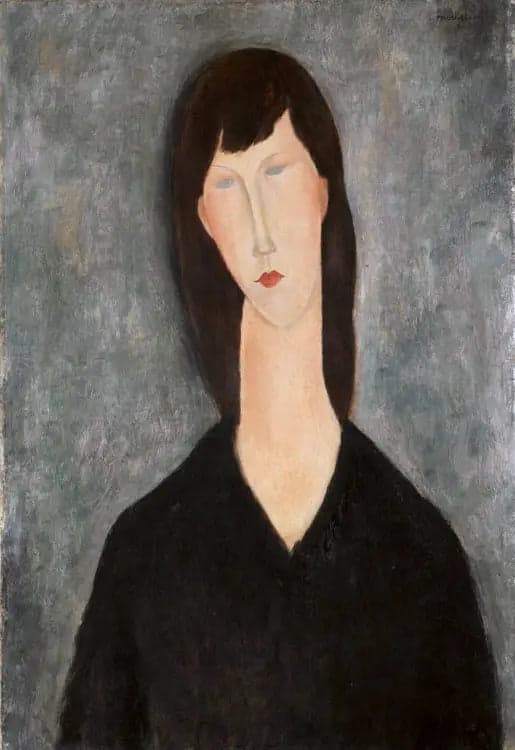
Bust of a Woman
- Original dimensions
- 50 x 73 cm
- Museum
- National Museum of Fine Arts Buenos Aires
Scene depicted
In this canvas , the elongated face of the woman, stylized, draws the gaze with its serenity. With soft contours and a gaze lost in the void, this pictorial work evokes a palpable intimacy and melancholy. Every detail, from the delicate neck to the skin tone, contributes to its majestic presence on the canvas.
Historical context
Created in 1917, this painting represents a pivotal time, where Modigliani, in search of new aesthetic horizons, influences modern art at the heart of Paris. The painting, a true tribute to feminine beauty, finds its place in the figurative movement, synonymous with intense emotion. Currently exhibited at the National Museum of Fine Arts in Buenos Aires, this canvas is a treasure of 20th-century art.
Place in the artist's career
This painting fits into a period of full maturity for Modigliani, where he explores simplified forms and captivating portraits. Compared to works such as “The Artist's Daughter” or “Reclining Nude,” Bust of Woman marks a stylistic evolution towards a more refined abstraction, while maintaining a connection to humanity.
Anecdote
Modigliani reportedly stated: “Beauty is not in the face, it is in the heart and mind.” It was on a sunny afternoon, while wandering the streets of Montparnasse, that he was struck by the grace of a feminine silhouette. This fleeting encounter breathed new life into his masterpiece , capturing the essence of womanhood in all its simplicity and complexity.