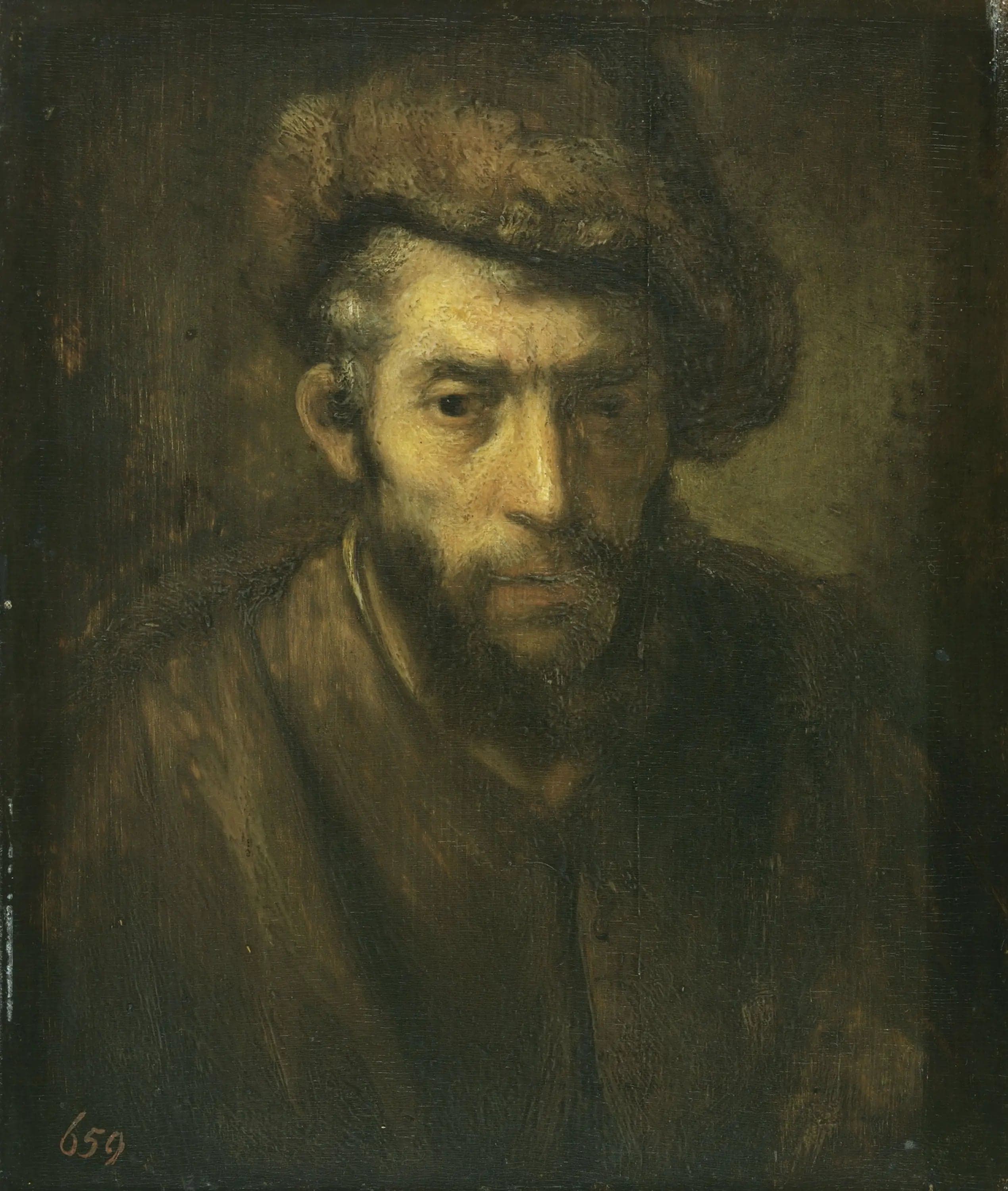
Bust of a man with a fur hat
- Original dimensions
- 17 x 21 cm
- Museum
- private collection
- Year
- 1645
Scene depicted
The painting “Bust of a Man with a Fur Hat” depicts a man with a noble appearance, his face imbued with a depth that intrigues the viewer. The meticulous details of the clothing and the play of light on the fur hat create a captivating atmosphere, revealing the mastery of Rembrandt and his attention to the psychology of the subject. While appearing to be deep in thought, the man also seems to be in silent dialogue with the world around him.
Historical context
Created in 1645, this iconic canvas by the Dutch master Rembrandt van Rijn is located in the heart of Amsterdam, a vibrant and dynamic city rich in artistic movements, within the baroque movement. At that time, the art of painting was developing with remarkable intensity, and the work perfectly illustrates the excellence of the artist's portraits. Currently, the painting is preserved in a private collection, attesting to its rarity and immense value.
Place in the artist's career
This painting represents a turning point in Rembrandt 's career, marking a period of creative maturity. Placed among other masterpieces such as “The Night Watch” and “Portrait of Saskia,” “Bust of a Man with a Fur Hat” testifies to a stylistic evolution towards a more personal introspection and a refined use of light and shadow, characteristic of his artistic journey.
Anecdote
“Every face tells an invisible story,” Rembrandt might have said as he contemplated the reflection of this mysterious man. Inspiration arose on an enchanting morning, perhaps when he crossed paths with a stranger wearing a fur hat in an alley of Amsterdam, illuminated by the first rays of sunlight. This fleeting moment crystallizes the emotion captured in the masterpiece, echoing the soul of every pictorial work.