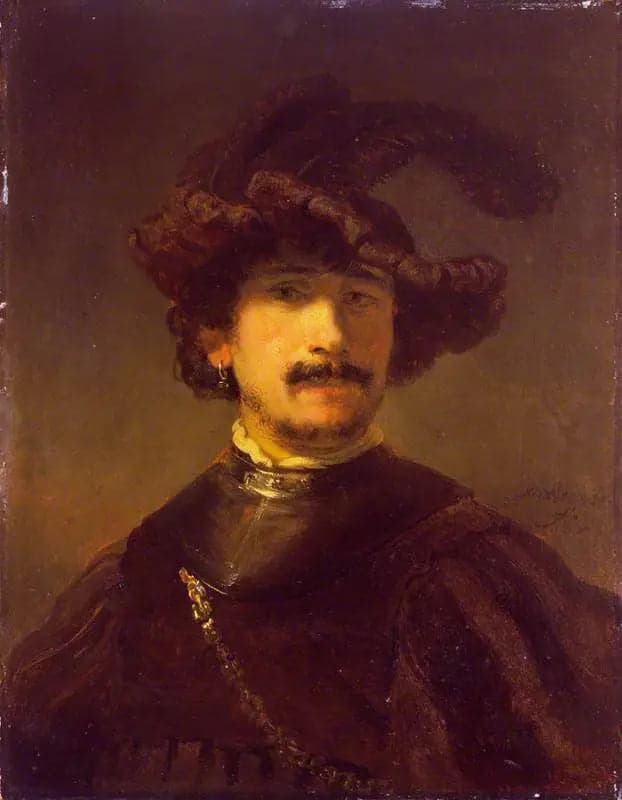
Bust of a man in a gorget and feathered cap
- Original dimensions
- 52.2 x 67.2 cm
- Museum
- Wallace Collection
- Year
- 1634
Scene depicted
This painting captures the very essence of Dutch portraiture, offering a striking introspection into the personality of its subject. The bust, adorned with a rich ruff and an elegant feathered cap, rises majestically, while the skillfully worked shadows provide dramatic depth. The confident posture and intense gaze of the model testify to an inner richness, defying time.
Historical context
Created in 1634, this majestic painting is part of the rich artistic tradition of Amsterdam, where Rembrandt , the undisputed master of chiaroscuro, left an indelible mark. At that time, Dutch painting was experiencing unprecedented growth, reflecting a bourgeois society in search of representation and meaning. The painting now finds its place within the prestigious Wallace Collection in London, revealing its impressive dimensions and exceptional craftsmanship.
Place in the artist's career
Bust of a man in ruff and feathered cap is situated at a major turning point in Rembrandt 's career. At the heart of a period of artistic maturity, this painting is one of many iconic portraits, alongside The Night Watch and The Portrait of Saskia. In these works, Rembrandt employs innovative techniques that make him a central figure of the northern baroque .
Anecdote
“The light of knowledge always guides souls in search of authenticity,” could have declared Rembrandt during the creation of his masterpiece. This painting was born one spring morning, in the soft light of a studio, where the delicate face of this young man captivated the artist, marking a meeting between humanity and sensitivity.