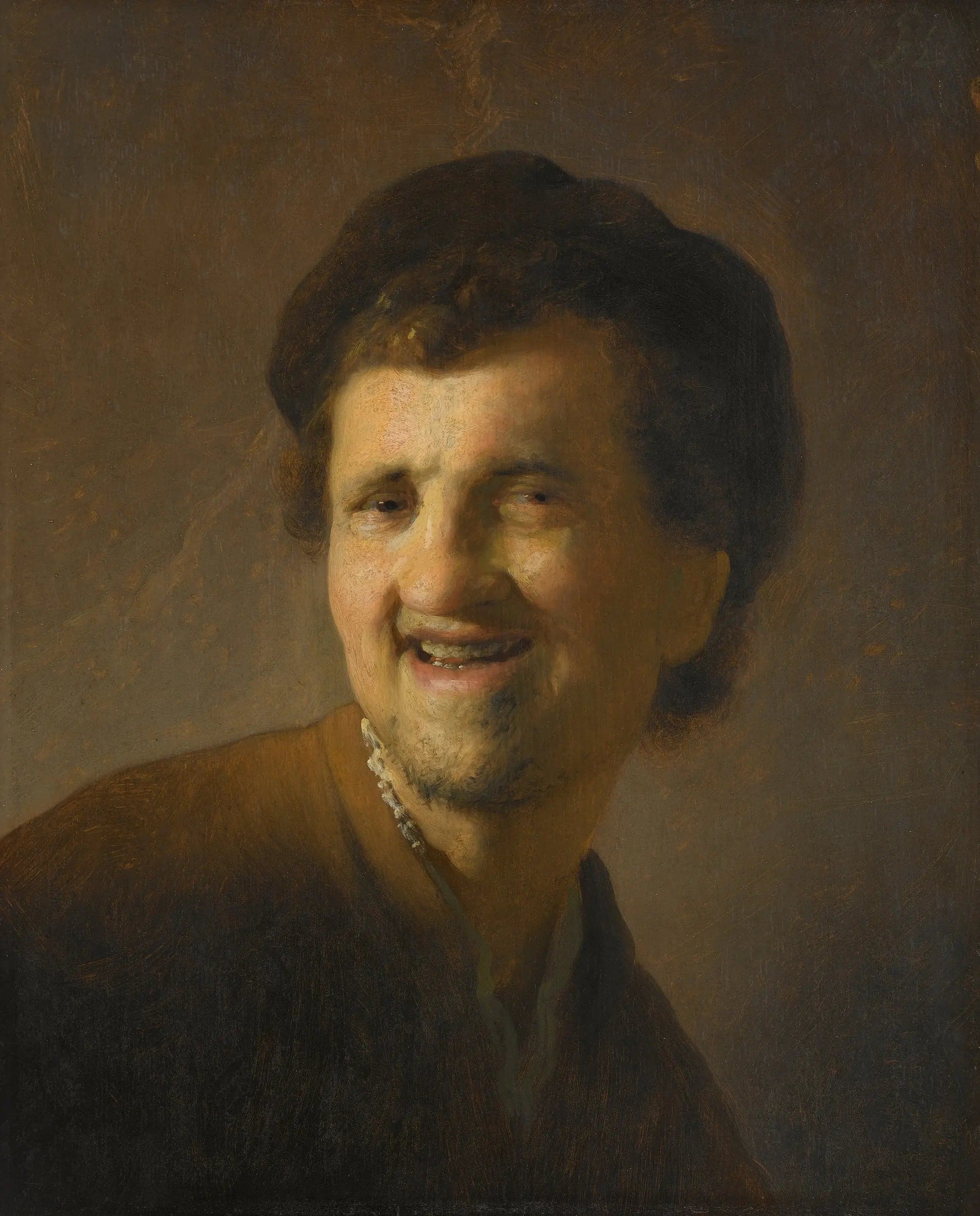
Bust of a Laughing Young Man
- Original dimensions
- 33.8 x 41.2 cm
- Museum
- Rijksmuseum
- Year
- 1630
Scene depicted
In this painting , Rembrandt captures the essence of a young man with a joyful expression, revealing through his radiant smile and exalted gaze the quintessence of youth. Every detail, every shadow, and every play of light invites us to share this intimacy, as if we were privileged witnesses to a moment of infinite happiness.
Historical context
This painting , created in 1630 in Amsterdam, is set against the rich backdrop of the Dutch Golden Age. In a vibrant city full of artistic effervescence, Rembrandt establishes himself as a master of light and shadow, borrowing innovative techniques from the baroque . The painting is now preserved in the prestigious Rijksmuseum , a sanctuary of Dutch artistic treasures, testifying to the timeless genius of its creator.
Place in the artist's career
Bust of a Laughing Young Man represents a key milestone in Rembrandt 's career, heralding his transition to a more mature and introspective style. Compared to The Anatomy Lesson of Dr. Tulp and The Night Watch, this painting illustrates a shift towards a more personal expression and a bolder way of using light. These works, although different, resonate with each phase of his artistically rich journey.
Anecdote
“Inspiration comes from a conspiratorial light, from an unexpected smile,” Rembrandt is said to have remarked one April morning, awed by the golden reflection of the sun on the cobblestones of his hometown. That day, he encounters a young man with a laughing face, and the soul of this masterpiece comes to life in his painting . This unique moment is translated in the painting by a burst of joy and unparalleled spontaneity.