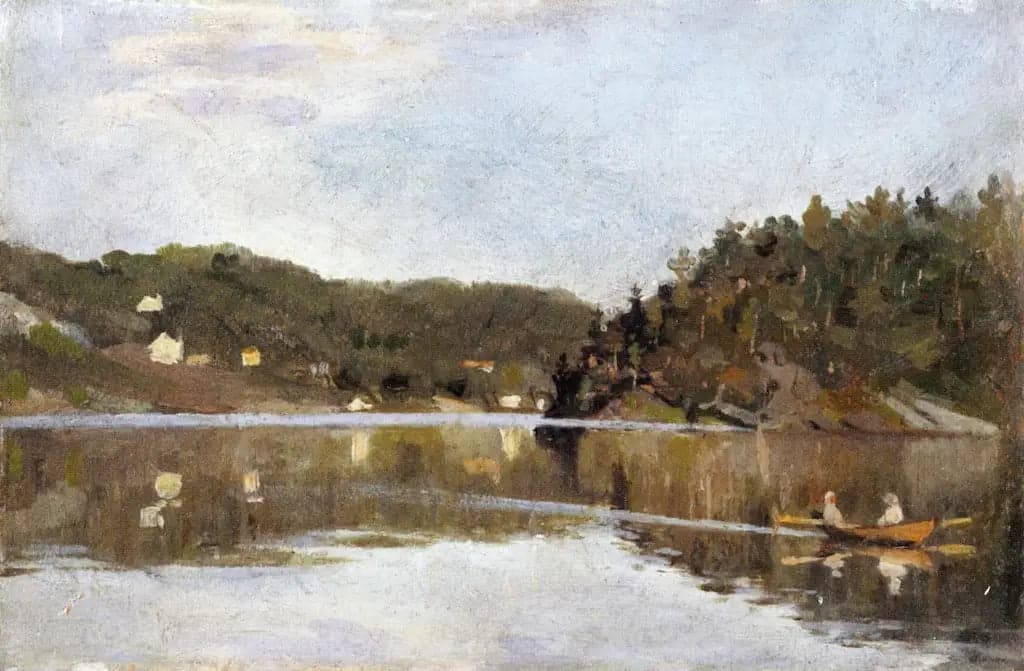
Bunnefjorden
- Original dimensions
- 26.5 x 17.5 cm
- Museum
- Munch Museum
- Year
- 1881
Scene depicted
"Bunnefjorden" depicts a serene scene, where one can see boats floating peacefully on the calm waters of the fjord, surrounded by lush hills. Through this pictorial work , Munch captures the essence of Scandinavian tranquility, using soft colors to convey a feeling of inner peace and harmony with the surrounding nature.
Historical context
Created in 1881, the painting "Bunnefjorden" is the result of the imagination of Edvard Munch in the city of Oslo, Norway. The painting is part of the symbolist movement, marking the emergence of this artistic movement at the end of the 19th century. The painting is currently exhibited at the Munch Museum in Oslo, where it intrigues art enthusiasts with its modest yet revealing dimensions.
Place in the artist's career
This painting is situated in the promising beginnings of Edvard Munch , illustrating his innovative approach. Alongside paintings such as "The Scream" and "The Madonna," "Bunnefjorden" marks a stylistic evolution towards candid emotions and landscapes explored with relevance and depth.
Anecdote
"Art must be a cry of the soul," said Munch. Created on a spring morning, this painting evokes the soothing calm of a Norwegian fjord, inspired by natural elements and the emotion of a privileged moment. This quote perfectly illustrates the evocative power of the canvas , where nature intertwines with the human.