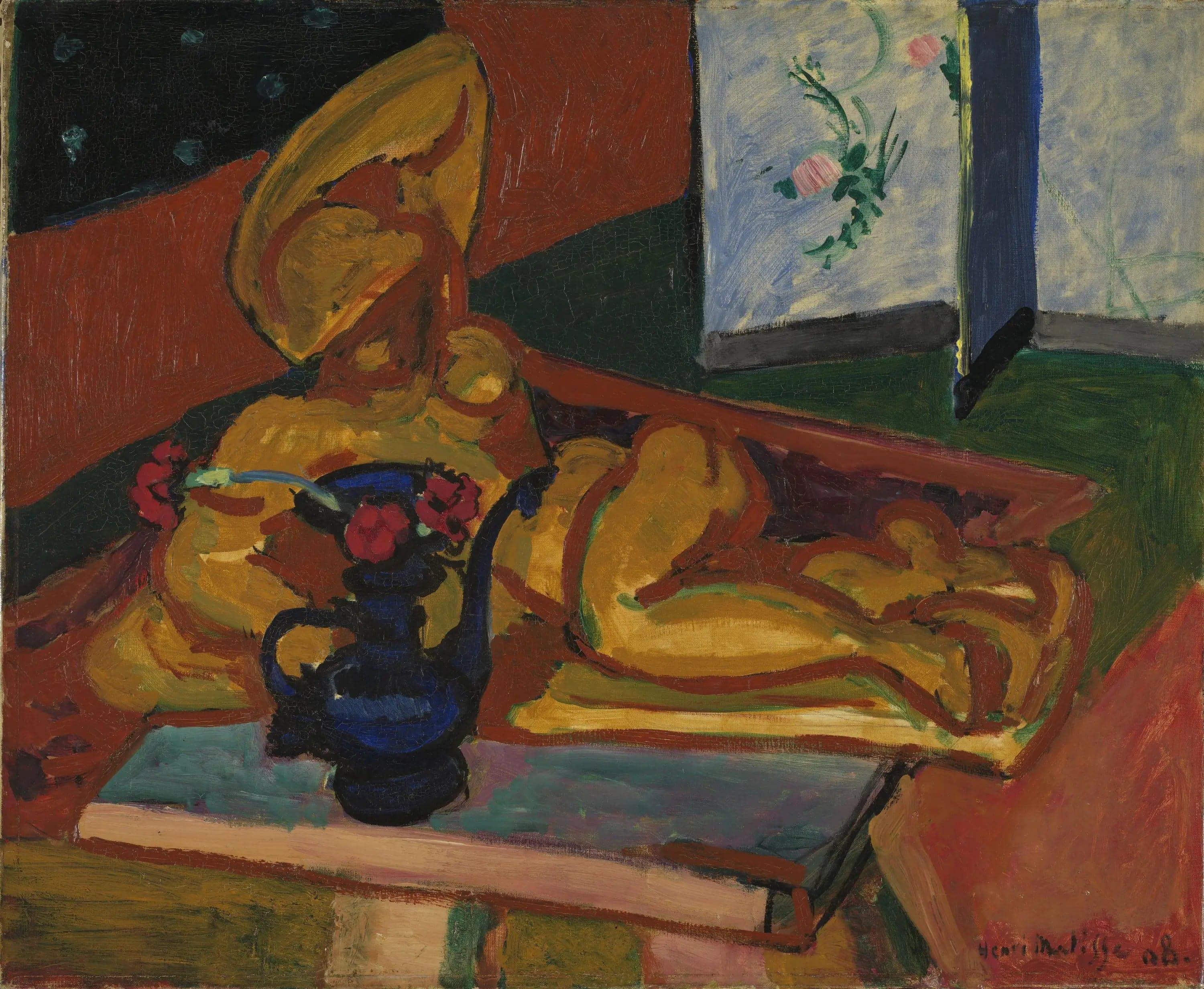
Bronze Figurine
- Original dimensions
- 73 x 60.5 cm
- Museum
- National Museum
- Year
- 1908
Scene depicted
In Bronze Figurine , Matisse captures a silhouette imbued with life, oscillating between abstraction and reality. This painting illustrates a statuary figure, merging the beauty of the human form with the sensuality of colors. The composition leads the gaze into a dialogue between light and shadow, a visual language that invites contemplation.
Historical context
Created in 1908, Bronze Figurine is an iconic painting embodying the Fauvist movement. It was born in the vibrant milieu of Paris, the cradle of an unprecedented artistic effervescence. Nestled in the vast collections of the National Museum, this canvas , with an imposing size of 73 x 60.5 cm, bears witness to a time when color and form emancipated from academic conventions.
Place in the artist's career
The painting Bronze Figurine marks a turning point in Matisse's career. This masterpiece illustrates his Fauvist period, alongside other paintings such as The Dance and The Joy of Life . Together, these works showcase his technical evolution and quest for a bold color language, laying the foundations of his artistic legacy.
Anecdote
“Color is my language,” said Henri Matisse , captivated by the vitality of everyday life scenes. Inspired by a sunny morning in a Parisian garden, he blends harmony and rhythm in his painting . This fleeting moment, rich in emotions, gives life to Bronze Figurine , a vibrant masterpiece.
Major exhibitions
The Dance of Life - The Collection from Antiquity to 1950